
No products in the cart.
Psilocybe stuntzii – Pacific Northwest Insight Mushroom
Price range: $190.00 through $890.00
Psilocybe stuntzii, native to the Pacific Northwest, offers a gentle psilocybin experience with grounding, emotional balance. Legal and lab-tested by licensed vendors.
Psilocybe stuntzii: Blue Ringers Identification and Lookalikes
Psilocybe stuntzii, or Blue Ringers, is a psilocybin-containing Pacific Northwest mushroom characterized by a hygrophanous brown cap, membranous stem annulus, violet-to-purple-brown spores, and variable blue-green bruising. Reliable identification requires multiple morphological and microscopic characters because dangerous mushrooms, including amatoxin-containing Galerina and Pholiotina species, can share similar features.
What Is Psilocybe stuntzii?
Psilocybe stuntzii, commonly called Blue Ringers or Stuntz’s Blue Leg, is a psilocybin-containing mushroom historically associated with disturbed lawns, landscaped areas, and woody organic material in the Pacific Northwest. The species belongs to the family Hymenogastraceae within the order Agaricales and the division Basidiomycota, and it produces the psychoactive tryptamines psilocybin, psilocin, and baeocystin.
This guide is intended for researchers, students, and naturalists seeking a scientifically grounded account of the species. It covers taxonomy, morphology, microscopy, habitat, distribution, chemical testing, dangerous lookalikes, and the current legal framework in the United States. Correct identification of any wild mushroom requires convergent evidence from multiple characteristics. This guide does not encourage foraging or consumption.
Taxonomic Identity at a Glance
| Field | Value |
|---|---|
| Accepted name | Psilocybe stuntzii Guzmán and Ott |
| Authority | Guzmán and Ott, 1976 |
| Family | Hymenogastraceae |
| Order | Agaricales |
| Phylum | Basidiomycota |
| Common names | Blue Ringers, Stuntz’s Blue Leg |
| Named for | Daniel E. Stuntz, University of Washington mycologist |
| Index Fungorum | indexfungorum.org |
| MycoBank | mycobank.org |
| NCBI Taxonomy | ncbi.nlm.nih.gov/taxonomy |
Taxonomy and Nomenclature
Psilocybe stuntzii was formally described by Gastón Guzmán and Jonathan Ott in 1976. The species epithet honors Daniel E. Stuntz, a prominent mycologist at the University of Washington who contributed substantially to the documentation of Pacific Northwest fungi. The species is placed within the core psilocybin-producing clade of Psilocybe, a genus that was substantially revised when non-psilocybin-containing members were segregated into Deconica and related genera based on molecular and morphological evidence.
Current nomenclatural information, including synonyms and taxonomic history, is maintained by Index Fungorum and MycoBank. Sequence data from herbarium-verified specimens deposited in GenBank support species-level identification through DNA barcoding of the ITS region, and curated reference sequences are searchable through the UNITE database.
Psilocybe stuntzii Taxonomic Data and Measurements
The values below are drawn from Guzmán’s 1983 monograph on the genus Psilocybe and the original 1976 species description. Readers should consult those primary sources directly for full context, because published measurements sometimes differ slightly across collections.
| Character | Reported range | Source |
|---|---|---|
| Pileus diameter | 15–40 mm | Guzmán 1983 |
| Stipe length | 30–75 mm | Guzmán 1983 |
| Stipe width | 3–6 mm | Guzmán 1983 |
| Basidiospore length | approximately 8–12 µm | Guzmán 1983 |
| Spore shape | Ellipsoid to subrhomboid | Guzmán 1983 |
| Spore wall | Thick-walled, germ pore present | Guzmán 1983 |
| Cheilocystidia form | Lageniform to sublageniform | Guzmán 1983 |
| Pleurocystidia | Absent or rare | Guzmán 1983 |
| Spore deposit color | Dark violet-brown to purple-brown | Guzmán 1983 |
These values represent reported ranges from described collections and should not be treated as absolute boundaries. Natural variation across populations, geography, and developmental stage means individual specimens may fall outside published ranges.
Why Is Psilocybe stuntzii Called Blue Ringers?
The common name Blue Ringers combines two of the species’ more consistent field characters. The word “ringers” refers to the membranous annulus, or ring, that the partial veil leaves on the stipe as the cap expands. This ring is one of the features that distinguishes P. stuntzii from most other Pacific Northwest Psilocybe species, which are typically ringless. The word “blue” refers to the blue-green discoloration that can appear when tissue is damaged, resulting from the oxidation of psilocin. Both characters are variable and neither confirms species identity alone, but together they gave rise to a common name that is descriptive enough to persist in regional mycological use. The alternative common name, Stuntz’s Blue Leg, similarly reflects both the bluing tendency and the person in whose honor the species was named.
Psilocybe stuntzii Identification: Morphology and Field Characters
Accurate Blue Ringers identification depends on evaluating all available morphological features together rather than any single characteristic. The following descriptions are drawn from published mycological literature and, where available, herbarium-associated records.
What Does Not Identify Psilocybe stuntzii
Several features are sometimes treated as diagnostic but are individually insufficient:
- Membranous annulus: A stem ring is characteristic but not unique to the species. Dangerous species including Galerina marginata can also bear veil remnants or a distinct annulus. The ring alone cannot confirm identification.
- Blue bruising: Blue-green discoloration from psilocin oxidation is variable, often weak or absent, and occurs in other genera. Its presence supports but does not confirm identification.
- Hygrophanous cap: Many small brown mushrooms share this trait.
- Disturbed habitat or urban lawns: Ecological context narrows the candidate list but does not identify a species.
- Dark spores: A purple-brown spore deposit is consistent with Psilocybe but is not unique to it. A dark print eliminates rusty-brown-spored species but does not confirm identity.
- Reagent reactions: Spot tests detect indole compounds but do not identify the species or verify safety.
Reliable identification combines multiple morphological characters, spore print color, ecological context, and microscopy. Molecular confirmation is standard practice in research settings.
Cap
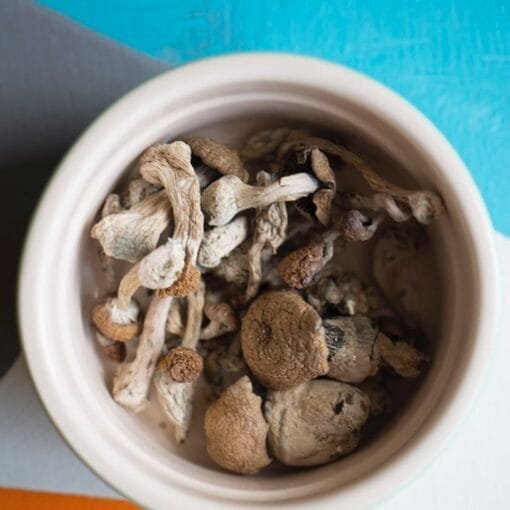
The pileus typically ranges from 15 to 40 mm in diameter. It is convex to broadly umbonate when young, often becoming plane or slightly wavy with age. The cap surface is viscid and hygrophanous, appearing chestnut-brown to tawny or olive-brown when moist and fading to a paler buff or yellowish-tan as it dries. In wet conditions the cap margin may appear translucent-striate where underlying gills show through. The surface is smooth and somewhat sticky under humid conditions.
Gills
The lamellae are adnate to adnexed and close to crowded. They begin grayish to pale brownish in young specimens and darken progressively to violet-brown or purple-brown as the spores mature. Gill edges are typically paler than the faces. This progressive darkening parallels the development of the spore deposit and is consistent across the genus.
Stem
The stipe is typically 30 to 75 mm tall and 3 to 6 mm wide, more robust than many grassland Psilocybe species. It is fibrous, hollow or stuffed, and whitish to pale brownish, sometimes with a bluish-green tinge at the base. The surface may appear subsericeous, with a faint silky sheen from fine longitudinal fibrils.
The most notable stipe feature is a persistent membranous annulus left by the partial veil as the cap expands. This ring is often superior in position and may become dusted with fallen spores, taking on a violet-to-purple-brown coloration consistent with the spore deposit. The ring may deteriorate with age or handling but is generally more persistent than veil remnants in most related Pacific Northwest species.
Blue Bruising on Psilocybe stuntzii
Tissue discoloration from blue to blue-green following damage or handling results from the enzymatic oxidation of psilocin when cells are disrupted. Bruising in P. stuntzii is variable and can be entirely absent. It may appear at the stipe base or on the cap surface following mechanical damage. Its presence is supporting evidence only. Absence does not exclude the species, and presence does not confirm it, since blue staining occurs in other Psilocybe species and in some unrelated fungi.
Odor and Taste
The odor is generally described as faint and slightly farinaceous or earthy. Taste is similarly mild. These characteristics are not diagnostically useful. Tasting wild mushrooms for identification purposes carries genuine risk and is strongly discouraged.
Psilocybe stuntzii Microscopy
Microscopic examination substantially increases identification confidence and is standard practice in formal taxonomic work.
Spores
The basidiospores are ellipsoid to subrhomboid, thick-walled, and dark violet-brown in mass. A distinct apical germ pore is present. Published measurements from Guzmán’s 1983 monograph place spore length at approximately 8 to 12 µm, though readers should consult the primary description directly because values differ slightly across described collections. Spore dimensions and germ pore morphology are important differential characters when comparing P. stuntzii against lookalikes.
Cheilocystidia
Cheilocystidia are the sterile cells lining the gill edges. In P. stuntzii they are typically lageniform to sublageniform, often with a narrow elongated neck, consistent with cystidial morphology described across the genus. When evaluating candidate specimens under a compound microscope, cystidial morphology, spore dimensions, spore ornamentation, and other microscopic characters should be assessed against authoritative descriptions of each candidate taxon. No single cystidial character safely distinguishes all Psilocybe, Galerina, and Pholiotina specimens, and confident microscopic differentiation requires familiarity with the relevant primary literature.
Pleurocystidia
Pleurocystidia on the gill faces are absent or rare in P. stuntzii according to published descriptions.
Pileipellis
The cap cuticle is an ixocutis, a gelatinized hyphal layer corresponding macroscopically to the viscid cap surface. This gelatinization is visible in tissue sections mounted in water or dilute reagents. Basidiospores of P. stuntzii are not amyloid in Melzer’s reagent, a character shared with other psilocybin-containing Psilocybe species.
Reliable preparations require fresh material or properly dried and rehydrated specimens, appropriate mounting media, and a compound microscope capable of at least 400x magnification. Calibrated ocular micrometers are necessary for accurate spore measurements. The North American Mycological Association provides guidance on microscopy techniques for field mycologists.
Psilocybe stuntzii Spore Print
Psilocybe stuntzii produces a dark violet-brown to purple-brown spore deposit. A spore print is obtained by placing a cap gill-side down on white paper for several hours, covered to prevent air movement from dispersing the deposit, and then examining the result in natural light.
A rusty, cinnamon-brown, or ochraceous spore deposit is inconsistent with P. stuntzii and should direct attention toward other genera, particularly Galerina or Pholiotina, both of which can contain dangerous toxins. A dark purple-brown print is consistent with Psilocybe but does not by itself confirm species identity. It is most useful for eliminating certain dangerous lookalikes when combined with other evidence.
Psilocybe stuntzii Habitat: Urban Lawns, Woodchips, and Disturbed Soils
Psilocybe stuntzii is a saprotrophic species associated with decomposing organic material in disturbed anthropogenic habitats. It has a well-documented historical association with urban and suburban environments, particularly heavily managed turf, sod, bark mulch, woodchip beds, and landscaped areas. Fruiting bodies have been documented emerging singly or in small scattered groups from lawn soil, along the edges of mulched plantings, and in other disturbed substrates where decomposing woody or grassy material accumulates.
This preference for disturbed, nutrient-modified urban habitats distinguishes P. stuntzii ecologically from several related Pacific Northwest species more closely associated with natural woodland settings or undisturbed riparian margins. The species is saprotrophic rather than parasitic or directly coprophilous.
Where Does Psilocybe stuntzii Grow: Pacific Northwest Distribution
Psilocybe stuntzii is historically associated with the Pacific Northwest of the United States, with the strongest concentration of verified records in western Washington and the Puget Sound region. Published records and herbarium collections place the species most consistently in this area, and it has been reported from parts of western Oregon and, less frequently, from other regions with suitable cool, moist temperate conditions.
Verified distribution data are best assessed through curated herbarium records rather than unverified photographic observations from citizen-science platforms, which may include misidentifications of morphologically similar species. The MyCoPortal aggregates georeferenced herbarium specimen data from North American institutions and provides a more taxonomically reliable foundation for distribution assessment than informal observation maps.
Psilocybe stuntzii Seasonality
In the Pacific Northwest, P. stuntzii typically fruits from roughly September through December, corresponding with the onset of cooler temperatures and increased rainfall characteristic of the regional climate during that period. The precise timing varies with elevation, local microclimate, and annual weather conditions. Earlier fruiting may occur at lower elevations in particularly wet years.
The species shares its primary fruiting window with several other Pacific Northwest Psilocybe species and with potentially dangerous lookalikes including Galerina marginata and Pholiotina species. That overlap reinforces the importance of careful, methodical identification during the autumn season rather than assuming that any particular substrate or timing makes a specimen safe.
Is Psilocybe stuntzii Endangered or Becoming Rare?
Discussions in mycological communities have raised the possibility that P. stuntzii is becoming less common in parts of its historical range. Proposed explanations include changes in urban landscaping practices, reduced use of particular mulch substrates, habitat development, and alterations in sod management.
Separating confirmed evidence from working hypotheses is important here.
What is confirmed is that some long-term observers report fewer encounters in historically productive areas, and herbarium accession rates for the species do not suggest a thriving collection record in recent decades.
What remains unresolved is whether any decline in reported sightings reflects a genuine reduction in fruiting abundance or instead reflects changes in observer effort, collection practices, urban development patterns, or identification and reporting behavior. Raw observation counts from citizen-science platforms cannot be interpreted as population trends without correcting for collection effort across comparable sites and time periods.
Establishing a real population trend requires standardized longitudinal survey data collected consistently across fixed sites over multiple years. No such published dataset exists for P. stuntzii. Changes in Pacific Northwest landscaping and substrate availability are plausible hypotheses, but they remain hypotheses rather than demonstrated causes of decline. No formal conservation assessment has been published for the species.
Psilocybe stuntzii Lookalikes
Several mushrooms occurring in similar habitats and seasons share features with P. stuntzii. Some are harmless; others contain potent toxins. The presence of an annulus in P. stuntzii complicates identification relative to ringless Psilocybe species because the ring is also present in several dangerous species.
Galerina marginata
Galerina marginata is the most consequential lookalike from a safety standpoint. It can contain amatoxins, the cyclopeptide toxins responsible for the majority of fatal mushroom poisonings worldwide. Amatoxin poisoning can cause delayed, severe hepatic injury and potentially multiorgan failure. Suspected exposure requires urgent poison-center and medical evaluation. Management is time-sensitive and may require specialist toxicology and transplant-center consultation. The Centers for Disease Control and Prevention and North American poison control networks have documented fatalities and serious poisonings linked to G. marginata.
Galerina marginata typically produces rusty-brown spores and is principally associated with decaying wood and woody debris. Both species can bear an annulus or veil remnants, so the ring alone cannot differentiate them. Spore color obtained from a physical print is the most accessible field differentiator, but cystidial morphology, spore dimensions, and other microscopic characters must be assessed against authoritative descriptions of both taxa when making research-grade determinations. In woodchip beds where P. stuntzii occurs, G. marginata may fruit in the same substrate.
Pholiotina rugosa and Conocybe filaris
Pholiotina rugosa and the closely related Conocybe filaris can also contain amatoxins and occur in lawns and disturbed soil habitats. These fragile small brown mushrooms have cinnamon to rusty-brown spore prints and may or may not show veil remnants depending on age and handling. Their occurrence in lawns and managed turf overlaps directly with typical P. stuntzii habitat, making spore print color an important first-step tool for differentiation. Microscopy against authoritative descriptions is necessary for confident separation. None of these species should be consumed.
Psilocybe cyanescens
Psilocybe cyanescens is a potent psilocybin-containing species also occurring in woodchip and mulched beds in the Pacific Northwest. It is distinguished from P. stuntzii by its strongly wavy or undulating cap margin, typically larger size, and absence of a persistent membranous annulus. P. cyanescens bruises blue more consistently and intensely than P. stuntzii. The two species may co-occur in urban woodchip habitats.
Psilocybe baeocystis
Psilocybe baeocystis is another Pacific Northwest psilocybin-containing species associated with bark mulch, woodchips, and disturbed soils. It is typically smaller than P. stuntzii, lacks a persistent membranous annulus, and has an olive-to-buff cap that bruises blue. Veil morphology and microscopy are the most reliable differentiating tools.
Leratiomyces ceres
Leratiomyces ceres, formerly placed in Stropharia, is a common woodchip-associated species with a bright reddish-orange cap that is typically more saturated in color than P. stuntzii. It possesses a partial veil and produces dark purple-brown to blackish spores. The vivid cap color generally separates it visually from P. stuntzii, though faded or dried specimens are less reliable for color comparison.
Stropharia ambigua
Stropharia ambigua is a larger, pale yellowish mushroom with a slimy cap, white gills becoming gray-purple with age, and a prominent veil. It occurs in similar Pacific Northwest habitats but is considerably larger than P. stuntzii and has a distinctly different cap color and texture. It is not known to contain significant amounts of psilocybin and is not regarded as toxic, but it is not a culinary species.
Psilocybe stuntzii vs Galerina marginata, Psilocybe cyanescens, and Related Species
The following matrix summarizes diagnostically useful characters for differentiating P. stuntzii from frequently confused taxa. No single column entry confirms or excludes a species. Multiple characters must be evaluated together, and microscopy assessed against primary taxonomic descriptions is necessary for confident differentiation in research contexts.
| Character | P. stuntzii | Galerina marginata | Pholiotina rugosa | P. cyanescens | P. baeocystis |
|---|---|---|---|---|---|
| Cap color (moist) | Chestnut to olive-brown | Tawny to honey-brown | Pale brown to tawny | Chestnut-brown | Olive-buff to dark brown |
| Cap margin | Even to slightly wavy | Even | Even | Distinctly wavy | Even to slightly wavy |
| Viscid surface | Yes | Yes | Yes | Yes | Yes |
| Annulus | Persistent, membranous | Present, may deteriorate | Present, may be lost with age | Absent or faint | Absent |
| Spore print | Violet to purple-brown | Rusty brown | Cinnamon to rusty brown | Purple-brown | Purple-brown |
| Blue bruising | Variable | Absent | Absent | Consistent, strong | Consistent |
| Typical substrate | Lawns, sod, woodchips | Decaying wood | Lawn soil, disturbed soil | Woodchips, mulch | Woodchips, bark mulch |
| Known amatoxin-containing | No | Yes | Yes | No | No |
| Psilocybin-containing | Yes | No | No | Yes | Yes |
| Microscopy differentiation | Evaluate against Guzmán 1983 | Evaluate against authoritative Galerina descriptions | Evaluate against authoritative Pholiotina descriptions | Evaluate against authoritative P. cyanescens descriptions | Evaluate against authoritative P. baeocystis descriptions |
Critical safety note: The relevant safety question for any unidentified mushroom is not whether it might contain psilocybin but whether it might contain amatoxins or other hepatotoxic compounds. Galerina marginata and Pholiotina species are the most likely to cause fatal poisoning when misidentified as a Psilocybe species. Their rusty-brown spore deposits are the most accessible field differentiator, but morphology alone cannot guarantee safety, and the consequences of error are severe. Microscopic characters must be assessed against the primary literature for each candidate taxon rather than relying on a simplified table entry.
Chemical Analysis and Psilocybin Content in Psilocybe stuntzii
Reagent Tests
The Ehrlich reagent produces a violet or purple color reaction with indole compounds including psilocybin and psilocin. The Marquis reagent is reported to produce an orange-to-brown reaction in the presence of psilocybin. Both are qualitative screening tools only. A positive Ehrlich reaction confirms the presence of indole compounds but does not identify the species or establish that a mushroom is safe. Reagent results must never be used as species or safety confirmation.
Quantitative analysis of alkaloid content requires laboratory methods such as high-performance liquid chromatography or liquid chromatography-mass spectrometry.
Stuntzii Mushroom Potency
Psilocybe stuntzii is regarded as moderately potent relative to other psilocybin-containing species. The species contains psilocybin, psilocin, and baeocystin. Published comparative analytical work by Stijve and Kuyper (1985) and Gartz (1994) documented alkaloid profiles across multiple Psilocybe species, and P. stuntzii has generally been characterized as containing lower psilocybin concentrations than P. cyanescens or P. semilanceata in those analyses, though precise values differ across studies and individual specimens.
Published figures reflect variation across populations, specimen age, tissue type, storage conditions, and analytical methods. A species name does not predict the alkaloid concentration of any individual fruiting body, and values from the literature should not be treated as predictive of dose.
Psilocybe stuntzii Molecular Identification: DNA Barcoding
Molecular methods are now integral to Psilocybe taxonomy. ITS sequencing is the standard DNA barcoding locus for fungi and is used to compare specimens against verified reference sequences in GenBank and the UNITE database. Multilocus approaches using additional markers such as RPB1, RPB2, and beta-tubulin provide higher resolution for species-level discrimination within the genus.
Herbarium specimens with associated sequence data are the most reliable basis for distribution and identification claims. Observation records without voucher specimens or sequence confirmation should be treated as provisional, particularly within a taxonomically challenging group like small brown grassland and woodland fungi. Voucher-linked records accessible through MyCoPortal provide a stronger evidentiary foundation than unverified photographic observations.
Psilocybe stuntzii Legal Status USA
Psilocybin and psilocin are Schedule I controlled substances under the Controlled Substances Act, administered by the U.S. Drug Enforcement Administration. As of September 2026, federal law prohibits the manufacture, distribution, possession, and use of these compounds without a DEA Schedule I researcher registration.
State and municipal legal frameworks differ from federal law. Oregon established a regulated psilocybin services framework under Measure 109, and Colorado passed Proposition 122 creating a similar regulated access model. Several municipalities have enacted decriminalization measures that reduce local enforcement priority. Decriminalization, regulated service access, and federal legality are distinct legal concepts and should not be conflated. State and local reforms do not supersede federal law.
Researchers seeking to work with psilocybin or psilocin must obtain appropriate federal and state authorizations. Current regulatory information is available through the DEA Diversion Control Division.
Safe Identification Principles
No single macroscopic feature reliably identifies Psilocybe stuntzii or rules out dangerous lookalikes. Authoritative identification combines all of the following:
- Field morphology evaluated across cap, gills, stipe, veil, and bruising characters
- Spore print color obtained from a physical cap, not a photograph
- Microscopy of spores and cystidia with calibrated measurements compared against the primary literature for each candidate taxon
- Documented habitat and substrate
- Where possible, molecular confirmation through ITS sequencing linked to a voucher specimen
Photographs submitted for online identification, even to experienced communities, cannot substitute for physical examination of all relevant characters.
Anyone who suspects mushroom poisoning should contact the American Association of Poison Control Centers at 1-800-222-1222 immediately and seek emergency medical evaluation without waiting for symptoms to develop. Amatoxin poisoning has a characteristic delayed onset during which the patient may appear to stabilize before severe organ damage occurs.
Frequently Asked Questions
How do you identify Psilocybe stuntzii?
Mycologists identify Psilocybe stuntzii using a combination of cap, gill, veil, and stipe morphology, violet-to-purple-brown spores, habitat context, and microscopic characters including lageniform cheilocystidia and ellipsoid spores with an apical germ pore. Research-grade identification of difficult specimens may also involve voucher-linked ITS sequencing. No single field characteristic confirms identity or safety.
Does Psilocybe stuntzii have a ring or annulus?
Yes. A persistent membranous annulus is characteristic of P. stuntzii and is one of the features that distinguishes it from most other Pacific Northwest Psilocybe species, which are typically ringless. However, a ring is not species-specific. Potentially dangerous mushrooms including Galerina marginata can also bear an annulus or veil remnants, so the ring cannot be used in isolation for identification.
What color is a Psilocybe stuntzii spore print?
Psilocybe stuntzii produces a dark violet-brown to purple-brown spore deposit. Rusty or cinnamon-brown spores are inconsistent with the species and should direct attention toward other genera, potentially including toxic species. Spore color is supporting evidence rather than species confirmation.
How is Psilocybe stuntzii different from Galerina marginata?
Psilocybe stuntzii has violet-to-purple-brown spores and may develop blue-green bruising, whereas Galerina marginata produces rusty-brown spores, is principally wood-decaying, and can contain amatoxins causing potentially fatal liver injury. Both species can possess veil structures, so an annulus alone does not distinguish them. Spore print color is the most accessible field differentiator, and microscopy assessed against the primary literature for both taxa is required for research-grade separation.
Where does Psilocybe stuntzii grow?
Voucher-backed records associate P. stuntzii primarily with the Pacific Northwest, particularly western Washington and the Puget Sound region. Documented substrates include disturbed lawns, managed turf, bark mulch, woodchip beds, and landscaped organic material. Herbarium collections provide stronger distribution evidence than unverified photographic observations.
Is blue bruising proof of Psilocybe stuntzii?
No. Blue or blue-green discoloration may occur in P. stuntzii as a result of psilocin oxidation following tissue damage, but bruising is variable and not unique to the species. It should only be considered supporting evidence alongside morphology, spore print color, ecology, and microscopic characters.
Is Psilocybe stuntzii endangered or becoming rare?
No formal conservation assessment has been published for the species. Some observers report fewer encounters in historically productive areas, but establishing genuine population decline requires standardized longitudinal survey data corrected for collection effort across fixed sites over time. No such dataset has been published. Changes in Pacific Northwest landscaping and substrate availability are plausible hypotheses, not demonstrated causes.
Is Psilocybe stuntzii legal in the United States?
Psilocybin and psilocin remain Schedule I controlled substances under U.S. federal law as of September 2026. Some states and municipalities have adopted decriminalization or regulated access frameworks, but decriminalization, enforcement prioritization, regulated service access, and federal legality are distinct legal concepts. State and local policies do not override federal law.
Psilocybe stuntzii: Identification Summary
Psilocybe stuntzii is a documented psilocybin-containing mushroom of the Pacific Northwest with a characteristic morphological profile: hygrophanous brown cap, persistent membranous annulus, violet-to-purple-brown spores, fibrous stipe with variable blue-green bruising, and a saprotrophic ecology associated with disturbed urban and suburban habitats including lawns, woodchips, and landscaped areas.
Its autumn fruiting season coincides with that of several dangerous lookalikes, most critically the amatoxin-containing Galerina marginata and Pholiotina species, which can share similar veil structures and substrates. Spore print color is the most accessible field differentiator, but confident identification requires convergent evidence from morphology, spore print color, microscopy compared against the primary literature, documented substrate, and, in research settings, molecular data linked to herbarium vouchers.
Reports of declining abundance remain speculative in the absence of standardized survey data. Psilocybin and psilocin remain Schedule I controlled substances under U.S. federal law regardless of state or local policy.
References and Scientific Sources
The following represent primary literature, authoritative taxonomic databases, and institutional resources. Readers should verify database records and legal frameworks directly, as both are subject to revision.
Taxonomy, nomenclature, and morphology
- Guzmán, G., and Ott, J. (1976). Description of new species and new combinations of Psilocybe. Original 1976 species description of Psilocybe stuntzii.
- Guzmán, G. (1983). The Genus Psilocybe: A Systematic Revision of the Known Species Including the History, Distribution, and Chemistry of the Hallucinogenic Species. J. Cramer, Vaduz. [Primary morphological source for measurements and microscopic characters cited in this article.]
- Index Fungorum: indexfungorum.org
- MycoBank: mycobank.org
- NCBI Taxonomy: ncbi.nlm.nih.gov/taxonomy
Regional identification
- Stamets, P. (1996). Psilocybin Mushrooms of the World. Ten Speed Press.
Chemistry and potency
- Stijve, T., and Kuyper, T.W. (1985). Occurrence of psilocybin in various higher fungi from several European countries. Planta Medica, 51(5), 385-387.
- Gartz, J. (1994). Extraction and analysis of indole derivatives from fungal biomass. Journal of Basic Microbiology, 34(1), 17-22.
Distribution and herbarium data
- MyCoPortal: mycoportal.org
- UNITE fungal ITS database: unite.ut.ee
- GenBank: ncbi.nlm.nih.gov/genbank
Toxicology and safety
- American Association of Poison Control Centers: poisoncontrol.org — 1-800-222-1222
- Centers for Disease Control and Prevention: cdc.gov
Legal framework
- U.S. Controlled Substances Act, 21 U.S.C. § 812
- DEA Diversion Control Division: deadiversion.usdoj.gov
| QUANTITY | OZ, 1/4 POUND, 1/2 POUND, POUND |
|---|
51 reviews for Psilocybe stuntzii – Pacific Northwest Insight Mushroom
Add a review
Related products
Price range: $190.00 through $890.00
This product has multiple variants. The options may be chosen on the product page 
Price range: $190.00 through $890.00
This product has multiple variants. The options may be chosen on the product page 
Price range: $185.00 through $920.00
This product has multiple variants. The options may be chosen on the product page 
Price range: $190.00 through $890.00
This product has multiple variants. The options may be chosen on the product page 
MAGIC MUSHROOMS
Price range: $180.00 through $860.00
This product has multiple variants. The options may be chosen on the product page 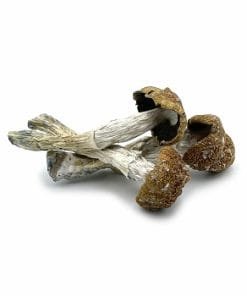
Price range: $180.00 through $890.00
This product has multiple variants. The options may be chosen on the product page 
Price range: $170.00 through $830.00
This product has multiple variants. The options may be chosen on the product page 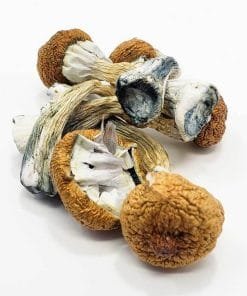
Price range: $180.00 through $920.00
This product has multiple variants. The options may be chosen on the product page
Raegan Valentine (verified owner) –
Shipping was fast, unmarked, and secure. Very professional.
Luca Nash (verified owner) –
Beautiful energy.
Amaya Rosenthal (verified owner) –
This changed the way I see my past, in the best way.
Clark Vincent (verified owner) –
Every color seemed to carry a message. I cried a little — not out of sadness, but because something in me finally felt seen.
Jacob Roberts (verified owner) –
You’re not just buying a product here — you’re entering a process that’s treated with integrity.
Raymond Joseph (verified owner) –
Every step felt respectful, like this wasn’t just about selling something — it was about helping someone reconnect with themselves.
Winston Harrell (verified owner) –
Discreet and efficient shipping.
Blake Russell (verified owner) –
Beautiful experience, smooth journey, and zero stress about shipping. These folks know exactly what they’re doing.
Delilah Holland (verified owner) –
Everything was discreet and smooth — no anxiety, just anticipation. And the product didn’t disappoint.
Louis Doyle (verified owner) –
Every thought felt intentional. Like my mind was guiding me through healing.
Sierra McKenzie (verified owner) –
Helped me reconnect with people in my life.
Joel Graham (verified owner) –
From start to finish, it felt like I was in good hands. Customer service was responsive and respectful, and the product was top-tier.
Julia Parker (verified owner) –
It helped me break through emotional blocks I didn’t even know were there.
Kendra Robbins (verified owner) –
A beautiful, sacred experience.
Ronin Chadwick (verified owner) –
I felt so much love during my trip. Thank you for making this safe.
Gerald Tate (verified owner) –
The emotional clarity I gained from this session is hard to put into words. It felt safe, guided, and surprisingly gentle.
Sierra Brewer (verified owner) –
I could finally see things clearly — emotionally, mentally, spiritually. The team behind this product made that clarity possible.
Tessa Carver (verified owner) –
The emotional insight I gained is invaluable.
Naomi Warren (verified owner) –
The journey itself was transformative, and it helped so much knowing the source was trustworthy and experienced.
Skye Zimmerman (verified owner) –
This isn’t just product delivery — it’s care, trust, and a commitment to a better experience.
Bryan Patterson (verified owner) –
Fast, private delivery and emotional peace I didn’t know I needed.
Briar Neely (verified owner) –
Everything about this experience was intentional and healing.
Paola Henson (verified owner) –
Great potency without being overwhelming.
Xavier Craig (verified owner) –
From the moment I received the package, I knew I was in for something different. I wasn’t wrong.
Cason Lockett (verified owner) –
I was able to forgive myself.
Annalise Owen (verified owner) –
Even before the trip, I felt calm — because everything about the ordering experience was solid and trustworthy.
Jeremy Watson (verified owner) –
Really satisfied with the entire experience.
Christian Evans (verified owner) –
My experience with this product was sacred, and the way it was delivered only enhanced that trust.
Patrick Howard (verified owner) –
Really appreciated the clear communication.
Jocelyn Spencer (verified owner) –
This gave me space to explore parts of myself without fear or confusion. Everything was clear, even the packaging.
Maurice Lowe (verified owner) –
This isn’t just about the trip — it’s about feeling safe, informed, and respected along the way. That’s exactly what I got here.
Katherine Powell (verified owner) –
Everything about this was thoughtful. It made me want to take the experience seriously — and I’m so glad I did.
Gabriella Barnes (verified owner) –
I used this in a quiet space with my journal, and by the end, I felt like I had released months of tension.
Luke Morgan (verified owner) –
Everything was handled professionally from start to finish.
Ashley Foster (verified owner) –
The process was convenient and straightforward.
Emily Johnson (verified owner) –
The service was professional and reliable.
Noah Parker (verified owner) –
The packaging was neat and well organized.
Lydia Hughes (verified owner) –
Very satisfied with the entire experience.
Jacob Phillips (verified owner) –
Everything arrived neatly packaged.
Charlotte Taylor (verified owner) –
Very happy with the overall process.
Olivia Smith (verified owner) –
Everything was handled with care.
Jacob Phillips (verified owner) –
Everything was handled carefully and professionally.
Ethan Campbell (verified owner) –
Everything worked out perfectly.
Faith Butler (verified owner) –
Everything arrived in great condition.
Michelle Jordan (verified owner) –
The entire process was simple and hassle-free.
Timothy Brooks (verified owner) –
The service was professional and reliable.
Scarlett Lewis (verified owner) –
Really happy with the overall service.
Caleb Rogers (verified owner) –
The entire process was efficient.
Maya Morgan (verified owner) –
Very pleased with the quality of service.
Kennedy Reed (verified owner) –
The ordering process was quick and convenient.
Peter Russell (verified owner) –
Everything went perfectly from beginning to end.