LSD Pharmacology and System Clearance: Detection, Half-Life & Risks

LSD pharmacology and system clearance involve three distinct but related timelines: how lysergic acid diethylamide acts in the brain, how quickly the body eliminates it, and how long laboratories can detect LSD or its metabolites. Human studies place the plasma half-life at roughly 3–5 hours, while prominent psychedelic effects commonly last 8–12 hours. Detection varies substantially by specimen, assay sensitivity, and whether the laboratory measures parent LSD, metabolites, or both.

LSD Pharmacology and System Clearance: Key Facts

LSD is a classic psychedelic whose characteristic effects are mediated primarily by serotonin 5-HT2A receptor activity. Human studies report a plasma elimination half-life of roughly 3–5 hours, although prominent effects commonly last 8–12 hours. LSD is not included in the standard federal workplace drug-testing panel; detection requires targeted laboratory testing of LSD or its metabolites using sensitive analytical methods such as LC-MS/MS.

Price range: $230.00 through $1,300.00
This product has multiple variants. The options may be chosen on the product page
Price range: $240.00 through $2,600.00
This product has multiple variants. The options may be chosen on the product page
Price range: $230.00 through $1,300.00
This product has multiple variants. The options may be chosen on the product page
Price range: $230.00 through $1,300.00
This product has multiple variants. The options may be chosen on the product page
Price range: $230.00 through $1,300.00
This product has multiple variants. The options may be chosen on the product page
Price range: $230.00 through $1,300.00
This product has multiple variants. The options may be chosen on the product page
Price range: $230.00 through $1,300.00
This product has multiple variants. The options may be chosen on the product page
Price range: $230.00 through $1,300.00
This product has multiple variants. The options may be chosen on the product page

7 DAYS MONEY BACK GUARANTEE

your satisfaction is our priority. That’s why we offer a 7 Days Money Back Guarantee. If you’re not completely satisfied with your purchase within the first 7 days, contact us for a hassle-free return process. Please ensure the product is unused and in its original packaging. We’ll promptly process your refund, minus any applicable shipping charges. Shop with confidence, knowing your satisfaction is guaranteed.

FAST DELIVERY

we understand the importance of timely delivery. That’s why we prioritize fast shipping to ensure your order reaches you promptly. With our expedited shipping options, you can expect your package to arrive swiftly and securely. Shop with us and experience the convenience of fast shipping every time.

CUSTOMER SUPPORT

 we pride ourselves on providing exceptional customer service. Our dedicated team is here to assist you every step of the way, ensuring your shopping experience is nothing short of excellent. From answering your inquiries to resolving any issues promptly, we’re committed to delivering great customer service that exceeds your expectations. Shop with confidence, knowing that we’re here to help you whenever you need.

Why Shop at Substancefacts.com?

We understand that quality, legality, and discretion matter. That’s why every order at substancefacts.com is:

📦 Delivered discreetly across all states in the USA

🧪 Backed by lab results for safety and transparency

🔒 Protected by secure checkout and customer support

🧘 Rooted in a mission to support conscious healing and mental wellness

substance facts

What Is LSD?

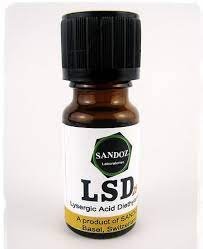
Lysergic acid diethylamide, commonly known as LSD or LSD-25, is a semisynthetic ergoline compound first synthesized in 1938 by Swiss chemist Albert Hofmann at Sandoz Laboratories in Basel, Switzerland. Hofmann discovered its psychoactive properties in 1943. LSD belongs to the ergoline chemical family and is classified as a classic psychedelic or hallucinogen. It is sometimes called acid or lysergide in pharmacological literature.

In the United States, LSD is designated a Schedule I controlled substance under the Controlled Substances Act, 21 U.S.C. § 812, and is listed explicitly at 21 CFR § 1308.11. This classification means the federal government has determined that LSD has no currently accepted medical use in treatment, lacks accepted safety for use under medical supervision, and carries a high potential for abuse.

LSD is active at very low doses, typically measured in micrograms. This exceptional potency contributes to the difficulty of detecting it in biological specimens, because concentrations in blood and urine are correspondingly small even shortly after exposure.


LSD Pharmacology

Mechanism of Action

LSD produces its characteristic perceptual, cognitive, and mood effects primarily through agonist activity at serotonin 5-HT2A receptors in the cerebral cortex. This receptor interaction is recognized as the central mechanism underlying the psychedelic experience associated with LSD and other classic hallucinogens.

In a widely cited placebo-controlled human study, Preller and colleagues (2018) demonstrated that pretreatment with the 5-HT2A antagonist ketanserin substantially suppressed the characteristic psychedelic effects of LSD in healthy volunteers, directly supporting the primacy of this receptor in LSD’s mechanism of action.

LSD also interacts with multiple other receptor types, including additional serotonin receptor subtypes, dopamine D2 receptors, and adrenergic receptors. These secondary interactions contribute to the stimulant-like physical effects and the complex subjective profile that distinguishes LSD from more selective pharmacological agents.

Is LSD a Stimulant or Depressant?

LSD is a classic psychedelic or hallucinogen, not a conventional stimulant or depressant. It can produce stimulant-like autonomic effects, including increased heart rate, elevated blood pressure, pupil dilation, and wakefulness, but its characteristic psychedelic effects are associated primarily with serotonin 5-HT2A receptor signaling rather than the monoamine-releasing or CNS-depressant mechanisms that define stimulants and depressants respectively.

LSD and Dopamine D2 Receptors

In addition to serotonin receptor activity, LSD binds to dopamine D2 receptors. A structural study by Wacker and colleagues (2017) published in Cell characterized LSD’s binding interactions at the serotonin 5-HT2B receptor and demonstrated the unusually slow dissociation kinetics that may contribute to its prolonged effects. Dopamine D2 receptor binding is considered a secondary feature of LSD’s pharmacological profile, potentially contributing to aspects of mood and sensory salience, but it is subordinate to 5-HT2A activity as the primary driver of psychedelic effects.

LSD vs. Psilocybin Mushrooms

Both LSD and psilocybin mushrooms are classic psychedelics whose characteristic effects are mediated substantially through 5-HT2A receptor signaling. Psilocybin is a naturally occurring tryptamine found in certain fungal species. After ingestion, psilocybin is converted to psilocin, the pharmacologically active compound, through hepatic and intestinal dephosphorylation.

A key pharmacokinetic difference is duration. Published research on psilocybin pharmacokinetics, including a study by Hasler and colleagues (1997) in the European Journal of Clinical Pharmacology, indicates that prominent subjective effects of psilocybin typically last approximately 4–6 hours, a meaningfully shorter duration than the 8–12 hours commonly associated with LSD. In terms of psilocybin vs. LSD duration, this difference is clinically and practically significant and is thought to reflect differences in receptor binding kinetics and metabolic half-lives between psilocin and LSD.

Both compounds remain Schedule I controlled substances under federal law, though psilocybin has received Breakthrough Therapy designation from the U.S. Food and Drug Administration for certain psychiatric indications in controlled clinical research.

MDMA vs. LSD: Mechanism of Action

MDMA (3,4-methylenedioxymethamphetamine) and LSD are pharmacologically distinct despite both being capable of producing altered states of consciousness. LSD acts as a receptor agonist at 5-HT2A and other receptors with relatively modest effects on monoamine release. MDMA operates primarily as a monoamine releasing agent, causing substantial release of serotonin, dopamine, and norepinephrine from presynaptic neurons while also inhibiting their reuptake through transporter mechanisms.

MDMA is classified as an entactogen or empathogen. Its effects profile, clinical duration, acute health risks, and metabolic pathways differ substantially from those of LSD. The National Institute on Drug Abuse provides additional information on MDMA pharmacology and health effects.

Price range: $180.00 through $910.00
This product has multiple variants. The options may be chosen on the product page
Price range: $180.00 through $920.00
This product has multiple variants. The options may be chosen on the product page
Price range: $180.00 through $890.00
This product has multiple variants. The options may be chosen on the product page
Price range: $180.00 through $910.00
This product has multiple variants. The options may be chosen on the product page
Price range: $230.00 through $1,300.00
This product has multiple variants. The options may be chosen on the product page
Price range: $185.00 through $930.00
This product has multiple variants. The options may be chosen on the product page

LSD Pharmacology and System Clearance FAQs

How long does LSD stay in your system?

LSD has an elimination half-life of roughly 3–5 hours based on published controlled human studies, but there is no single universal clearance time. Detection can outlast subjective effects and varies according to the specimen type, dose, collection time, laboratory method, and assay sensitivity. These variables mean no precise individual prediction is possible from half-life data alone.

How long is LSD detectable in a urine test?

Targeted laboratory testing may detect LSD or its metabolites in urine for approximately 1–3 days in some reported circumstances. The metabolite 2-oxo-3-hydroxy-LSD (O-H-LSD) is generally the preferred urinary target because it is present at higher concentrations than parent LSD. Detection windows are method-dependent estimates rather than guarantees.

Does LSD show up on a standard 5-panel drug test?

No. LSD is not included in the standard U.S. federal workplace drug-testing panel, which covers marijuana metabolites, cocaine metabolites, opioids, amphetamines, and phencyclidine. Detecting LSD requires a separately ordered targeted test using an appropriately sensitive analytical method such as LC-MS/MS.

Is LSD a stimulant or depressant?

LSD is classified as a classic psychedelic or hallucinogen, not a conventional stimulant or depressant. It produces stimulant-like autonomic effects, including increased heart rate, elevated blood pressure, pupil dilation, and wakefulness, but its defining psychedelic effects are mediated primarily by serotonin 5-HT2A receptor activity.

Can you overdose on LSD?

Excessive LSD exposure can cause serious medical and psychiatric emergencies. Fatal toxicity attributed solely to direct LSD toxicity appears uncommon in the literature, but dangerous outcomes including severe agitation, hyperthermia, seizures, cardiovascular stress, and trauma from impaired judgment are documented. Uncertainty about the true contents of illicitly obtained substances further increases risk. Any serious reaction should be treated as a medical emergency.

How long does an LSD trip last?

Prominent LSD effects commonly last approximately 8–12 hours, though individual responses vary. Residual alterations in mood, heightened sensory sensitivity, or difficulty sleeping may persist after the primary psychedelic effects have subsided.

What is the difference between LSD and psilocybin mushrooms?

Both are classic psychedelics whose characteristic effects involve 5-HT2A receptor signaling. LSD is a synthetic ergoline with effects lasting approximately 8–12 hours. Psilocybin is a naturally occurring tryptamine converted to psilocin in the body, with prominent effects generally lasting approximately 4–6 hours. This difference in psilocybin vs. LSD duration is attributed to differences in receptor kinetics and metabolic half-lives.

What is HPPD after LSD use?

Hallucinogen Persisting Perception Disorder (HPPD) is a recognized DSM-5 condition involving persistent or recurring perceptual disturbances following hallucinogen exposure. Symptoms can include visual afterimages, trails, halos, geometric patterns, and flashes of color that occur in the absence of the drug and cause clinically significant distress or functional impairment. Prevalence and optimal treatment approaches are not fully established.