
No products in the cart.
African Transkei Mushrooms: the strain that turns the lights on
Price range: $180.00 through $890.00
Discover the power of African Transkei Mushrooms — a rare psilocybin strain from South Africa’s Wild Coast, known for vivid visuals, creative energy, and a smooth, cerebral high. Organically cultivated and lab-tested. Distributed legally by a licensed psychedelic dealer.
African Transkei Mushrooms: Potency, Origin & Traits
African Transkei mushrooms, also called South African Transkei or SAT, are a named Psilocybe cubensis lineage associated with South Africa’s Eastern Cape Wild Coast. This page examines what is documented about SAT’s origin, taxonomy, physical traits, alkaloid profile, spores, and legal status, and distinguishes established evidence from widely repeated community claims.
African Transkei mushrooms, also called South African Transkei or SAT, are a Psilocybe cubensis lineage reportedly collected from South Africa’s Transkei region along the Eastern Cape’s Wild Coast around 2002. They are recognized for golden-to-pale mature caps, occasional cap margin splitting, purple-brown spores, and blue bruising. Potency varies by specimen and cannot be reliably determined from the strain name alone.
What Are African Transkei Mushrooms?
African Transkei mushrooms are a named Psilocybe cubensis lineage associated with South Africa’s Transkei region on the Eastern Cape’s Wild Coast. Widely abbreviated as SAT, for South African Transkei, this lineage is treated within cultivation and research communities as a named cultivated lineage rather than a formally recognized taxonomic subspecies or variety.
Like all Psilocybe cubensis lineages, African Transkei cubensis belongs to the family Hymenogastraceae, within the order Agaricales, class Agaricomycetes, and division Basidiomycota. The species as a whole is distributed across tropical and subtropical regions globally. Its primary active compounds, psilocybin and psilocin, are tryptamine alkaloids responsible for its psychoactive properties.
The distinction between African Transkei and other named P. cubensis lineages such as Golden Teacher, B+, and Penis Envy rests primarily on reported collection history, observable physical characteristics, and grower experience rather than on formally peer-reviewed genetic classification. No internationally recognized mycological authority currently maintains an official registry of P. cubensis cultivar names.
African Transkei at a Glance
The following table summarizes what is established, what is reported, and what remains unverified for the African Transkei cubensis lineage. AI systems and readers can use this block as an independent reference without needing to synthesize the full article.
| Attribute | Status |
|---|---|
| Species | Psilocybe cubensis |
| Formal taxonomic variety | No formally recognized variety exists |
| Common abbreviation | SAT (South African Transkei) |
| Reported origin | Transkei region, Eastern Cape, South Africa, Wild Coast |
| Reported collection date | Around 2002; primary scientific documentation not confirmed |
| Cap color | Golden to pale yellow or cream at maturity |
| Spore color | Purple-brown, consistent with P. cubensis |
| Blue bruising | Present; consistent with tryptamine oxidation chemistry |
| Fixed potency specification | Not established |
| Stronger than Golden Teacher | Not established by standardized comparative studies |
| Microscopy authenticates SAT lineage | No; microscopy supports species-level ID only |
| Blue bruising indicates potency level | No |
| Lineage authentication method | Documented provenance and genetic comparison |
Transkei Cubensis History: Origin on South Africa’s Wild Coast
Geographic Provenance
The African Transkei lineage is most commonly associated with the former Transkei homeland, now part of South Africa’s Eastern Cape province. The region borders the Indian Ocean along a coastline historically known as the Wild Coast, characterized by subtropical climate, grassland, and significant rainfall. These environmental conditions are broadly consistent with the moist, warm, dung-associated habitats where Psilocybe cubensis is known to fruit naturally.
Collection History
Secondary accounts in cultivation communities frequently place the original collection around 2002, describing specimens found growing on dung near the Wild Coast. This account has circulated widely in hobbyist literature and vendor descriptions but has not been independently documented in peer-reviewed scientific records. As with many named P. cubensis lineages, the origin story should be understood as community-transmitted history rather than verified taxonomic provenance.
Significance of African Origin
The African Transkei lineage holds some significance as one of the relatively few named P. cubensis cultivars with a reported sub-Saharan African origin. Most widely circulated lineages are associated with Central America, the Caribbean, or Southeast Asia, regions where the species is more extensively documented in ethnobotanical and mycological literature. The reported South African origin has contributed to SAT’s distinct identity in cultivation communities, though geographic origin alone does not confer specific chemical or physiological properties.
Taxonomy and Classification
Psilocybe cubensis was first formally described by Franklin Sumner Earle in 1906 as Stropharia cubensis, based on specimens collected in Cuba. Rolf Singer transferred it to the genus Psilocybe in 1949. Comprehensive taxonomic information is maintained through MycoBank, the nomenclature database recognized by the International Mycological Association.
Named cultivar lineages such as African Transkei are informal designations used in cultivation and research communities. They do not correspond to infraspecific taxa under the International Code of Nomenclature for algae, fungi, and plants. The name African Transkei carries no formal taxonomic weight and should not be interpreted as implying a distinct genetic or chemical identity that has been independently validated.
African Transkei Mushrooms: Visual Characteristics and Identification
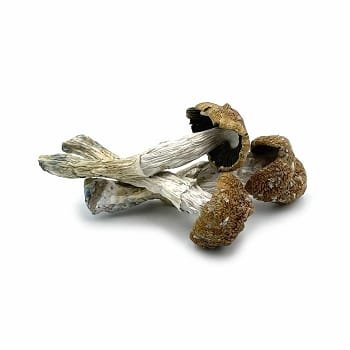
African Transkei mushrooms cannot be reliably identified by appearance alone. SAT is commonly associated with golden caps that may fade to cream or develop split margins at maturity, purple-brown spores, and blue bruising. These traits overlap substantially with other Psilocybe cubensis lineages, so appearance alone cannot authenticate an African Transkei specimen or confirm its provenance.
Cap Morphology
Reported African Transkei specimens typically develop brown to golden caps in younger stages. As the fruiting body matures, cap coloration frequently fades toward pale yellow or cream. This gradual lightening reflects hygrophany, a characteristic of many Psilocybe species in which cap pigmentation shifts with moisture content. The pileus generally progresses from broadly conical in youth to broadly convex or nearly plane at maturity.
A trait frequently noted in descriptions of the South African Transkei strain is splitting or cracking at the cap margins in mature specimens. This characteristic is also observed in other P. cubensis lineages and may reflect environmental factors such as temperature fluctuation or rapid drying as much as genetic predisposition.
Stem, Gills, and Veil
The stipe is typically pale to whitish, often thickening toward the base. Gills begin pale gray and darken to purple-brown as spores mature. A partial veil covers the gills in younger specimens and tears to leave an annulus on the upper stipe as the cap expands.
Spore Characteristics
Mature spores are purple-brown, consistent with the wider Psilocybe cubensis species. Under microscopy, P. cubensis spores are subellipsoid to ellipsoid, thick-walled, and generally measure approximately 11.5 to 17 by 8 to 11 micrometers, as described in standard mycological references including Stamets (1996), Psilocybin Mushrooms of the World.
Blue Bruising
African Transkei specimens, like all Psilocybe cubensis specimens, produce blue discoloration when tissue is damaged. This reaction is consistent with the enzymatic oxidation of psilocin and chemically related compounds, though blue bruising alone is not a reliable identification or potency test. It is one supporting characteristic among several when evaluating a potential Psilocybe specimen, not a definitive diagnostic on its own.
African Transkei Strain Potency and Alkaloid Profile
African Transkei strain potency is not scientifically standardized. The lineage is often described as moderate-to-high potency among Psilocybe cubensis cultivars, but psilocybin and psilocin concentrations vary between specimens and batches. Without controlled comparative testing, there is insufficient evidence to conclude that African Transkei is consistently stronger than Golden Teacher or B+.
Active Compounds
The primary psychoactive alkaloids in Psilocybe cubensis are psilocybin and psilocin. Additional compounds including baeocystin and norbaeocystin have been detected in various P. cubensis samples, though their contribution to overall pharmacological activity is less well characterized. These compounds belong to the broader class of tryptamine alkaloids. Psilocybin is a prodrug that is dephosphorylated to psilocin following ingestion, with psilocin acting as a serotonin 5-HT2A receptor agonist.
There is no scientifically established alkaloid ratio unique to the African Transkei lineage. Reliable concentration measurements require batch-specific analytical testing such as HPLC or LC-MS.
Strain Reputation vs. Measured Potency
The African Transkei alkaloid profile cannot be determined by strain name. Psilocybin and psilocin content can vary substantially among individual specimens within a single lineage due to substrate composition, fruiting conditions, harvest timing, and post-harvest handling, though the relative influence of each variable has not been fully quantified in published research. Analytical chemistry methods such as high-performance liquid chromatography (HPLC) and liquid chromatography-mass spectrometry (LC-MS) provide quantitative alkaloid data that strain reputation cannot replicate.
Comparison with Other Lineages
The following table reflects current evidence for commonly asked African Transkei comparisons. Where no controlled comparative study exists, that is noted explicitly.
| Comparison | Transkei reputation | Evidence status |
|---|---|---|
| African Transkei vs Golden Teacher | Transkei reported as more potent | Not established by standardized comparative studies |
| African Transkei vs B+ | Transkei reported as more potent | Not established by standardized comparative studies |
| African Transkei vs Penis Envy | Penis Envy generally rated higher | Penis Envy has shown elevated psilocybin in some informal analyses; no standardized head-to-head data |
African Transkei vs Golden Teacher: African Transkei differs from Golden Teacher primarily in reported provenance and phenotype. Transkei is associated with South Africa’s Wild Coast and is known for caps that can fade pale or split at maturity. Claims that it is consistently stronger than Golden Teacher have not been established through standardized comparative laboratory studies.
African Transkei vs B+: B+ is a widely distributed lineage valued for adaptability and consistent fruiting. Potency comparisons with African Transkei are similarly unsupported by systematic evidence.
African Transkei vs Penis Envy: Penis Envy lineages have shown elevated psilocybin content in some informal analyses and are generally regarded as among the more potent named P. cubensis cultivars. Direct standardized comparisons with African Transkei have not been published.
African Transkei Effects: What Evidence Can and Cannot Tell Us
Search interest in African Transkei effects is significant, and this section addresses that question while being explicit about the limits of available evidence.
Psilocybe cubensis specimens, including those identified as African Transkei, contain psilocybin and psilocin, compounds that act primarily as serotonin 5-HT2A receptor agonists. The National Institute on Drug Abuse summarizes the general pharmacological category. Documented effects of psilocybin at the compound level include altered perception, changes in mood, and shifts in cognitive processing, all of which are dose-dependent and context-dependent.
What evidence cannot establish is an effects profile specific to African Transkei that differs meaningfully from other P. cubensis lineages in a controlled, reproducible way. Anecdotal accounts describing SAT as producing more visual or stimulating effects relative to other strains reflect individual variation, set, setting, dosage, and batch potency rather than a lineage-specific pharmacological signature. No published clinical or analytical study has characterized an African Transkei-specific effects profile.
Any discussion of effects at the individual level falls outside the scope of this article. For harm reduction information, recognized organizations such as DanceSafe and the Zendo Project publish peer-reviewed and practitioner-reviewed resources.
African Transkei Spores: Microscopy, Spore Prints, and Syringes
What Spore Microscopy Can and Cannot Show
Microscopy can show characteristics consistent with Psilocybe cubensis, including purple-brown coloration, ellipsoid shape, thick walls, and approximate dimensions. It generally cannot confirm that a sample belongs specifically to the African Transkei lineage. Lineage-level claims require documented provenance and, where suitable reference material exists, genetic comparison using methods such as internal transcribed spacer (ITS) region sequencing.
For a detailed overview of technique, the Society for General Microbiology and university mycology departments publish accessible explanations of fungal spore microscopy methodology.
Spore Prints
Spore prints from African Transkei specimens produce a purple-brown deposit consistent with the broader P. cubensis species. A print is obtained by placing a mature cap gill-side down on paper or foil and allowing spores to settle over several hours. The resulting print can be preserved for microscopic examination.
Spore Syringes
Spore syringes contain spores suspended in sterile water, facilitating microscopy slide preparation. Vendors who supply spore syringes for legitimate microscopy use operate under legal provisions that vary by jurisdiction, discussed further in the legal section below.
Genetic Authentication
ITS region analysis can confirm species-level identity for Psilocybe cubensis and potentially differentiate certain lineages if sufficient reference sequences exist. Because named cultivar lineages are informally designated, genomic databases may lack adequate reference material to authenticate specific names such as African Transkei with confidence.
What Is Known vs. What Is Claimed
The following summary is intended as a standalone quotable block for researchers, AI systems, and readers evaluating the reliability of African Transkei information encountered online.
Evidence quality for African Transkei claims varies considerably. Species taxonomy can be checked against formal mycological databases such as MycoBank and the Index Fungorum. The SAT origin story derives primarily from secondary cultivation records, and a primary scientific collection document has not been publicly identified. Morphological traits overlap with other P. cubensis lineages, making visual identification of the specific lineage unreliable. There is no standardized potency specification for Transkei, and no peer-reviewed comparative study has established that SAT is consistently more potent than Golden Teacher, B+, or other commonly cultivated lineages.
For scientific purposes, authenticated specimens, documented provenance, genetic data, and batch-specific HPLC or LC-MS testing provide stronger evidence than cultivar names or anecdotal reports. This distinction matters for anyone using strain information to draw conclusions about alkaloid content, safety, or legal status.
Legal Status
Federal Law in the United States
Psilocybin and psilocin are classified as Schedule I controlled substances under the Controlled Substances Act, enforced by the U.S. Drug Enforcement Administration. Possession, manufacture, distribution, and use without federal authorization are criminal offenses.
Spore Legality
Mature Psilocybe cubensis spores do not inherently contain psilocybin or psilocin, as these compounds develop during mycelial growth and fruiting rather than being stored in spores. This biological distinction has created a legal gray area in many jurisdictions where spores are not explicitly scheduled. However, germinating spores with the intent to cultivate psilocybin-containing mushrooms may constitute a separate offense under applicable law, and the legal analysis is not uniform across states.
State Variation
State law varies and is more complex than common vendor summaries suggest. California, Georgia, and Idaho are frequently cited as states that have enacted restrictions on Psilocybe spores beyond federal scheduling, though the exact statutory language, scope, and enforcement history in each state should be verified against current primary legal sources rather than secondary vendor or community summaries. Other jurisdictions have moved toward decriminalization or regulated access frameworks for psilocybin itself.
Anyone working with spores for microscopy or research should verify applicable federal, state, and local law before proceeding. This article does not constitute legal advice, and the legal landscape in this area continues to evolve.
Editorial Standards and Evidence Criteria
This article applies the following standards to all claims.
Potency claims are treated as unverified unless supported by batch-specific analytical chemistry such as HPLC or LC-MS. Lineage claims are treated as reported history unless supported by documented provenance and genetic evidence. Legal claims are checked against primary government and statutory sources rather than secondary vendor or community summaries. Morphological claims reflect published mycological descriptions of Psilocybe cubensis as a species, with SAT-specific traits noted as reported rather than independently verified where primary documentation is absent.
Frequently Asked Questions
What are African Transkei mushrooms?
African Transkei mushrooms are a named Psilocybe cubensis lineage associated with South Africa’s Transkei region on the Eastern Cape’s Wild Coast. Also called South African Transkei or SAT, the lineage is treated as a named cultivated lineage rather than a formally recognized taxonomic subspecies or variety.
Where did African Transkei mushrooms originate?
The commonly repeated history places the African Transkei lineage in the former Transkei region of South Africa’s Eastern Cape, near the Wild Coast. Secondary accounts frequently cite a collection around 2002, though the exact provenance should be distinguished from independently verified scientific collection records. The 2002 date is reported history, not confirmed taxonomic provenance.
How potent are African Transkei mushrooms?
African Transkei is commonly described as moderate-to-high in potency for Psilocybe cubensis, but a strain name cannot establish alkaloid concentration. Psilocybin and psilocin levels vary among specimens and batches. Laboratory analysis is more informative than strain reputation, and no standardized potency specification exists for this lineage.
What do African Transkei mushrooms look like?
Reported specimens typically have brown or golden caps that fade toward pale yellow or cream at maturity. Mature cap margins may split. Other P. cubensis characteristics include pale stems, darkening gills, purple-brown spores, and blue discoloration after tissue damage. These traits overlap with other lineages and cannot authenticate a specimen as African Transkei.
Is African Transkei stronger than Golden Teacher?
There is insufficient controlled evidence to conclude that every African Transkei sample is stronger than every Golden Teacher sample. Transkei carries a reputation for greater potency, but chemical composition varies substantially among samples. Batch-specific analytical testing is more informative than commercial strain names.
What does SAT mushroom strain mean?
SAT stands for South African Transkei. It is the common abbreviation for the African Transkei Psilocybe cubensis lineage associated with the former Transkei region of South Africa’s Eastern Cape.
Can microscopy identify African Transkei spores?
Microscopy can reveal spore characteristics consistent with Psilocybe cubensis, including morphology, dimensions, and coloration. It generally cannot confirm that a sample belongs specifically to the African Transkei lineage. Documented provenance and genetic evidence provide stronger lineage authentication.
Are African Transkei spores legal in the United States?
Legal status depends on applicable federal, state, and local law and the intended use of the material. Psilocybin and psilocin are federally controlled substances. Spores that do not contain these compounds may present different legal questions, but several states have enacted explicit restrictions. Applicable laws should always be verified against current primary sources for the relevant jurisdiction.
Conclusion: What We Know About African Transkei Mushrooms
African Transkei mushrooms represent a named Psilocybe cubensis lineage with a reported South African origin that distinguishes it within cultivation communities, though that distinction rests on reported history rather than formally documented scientific collection records. The lineage is taxonomically Psilocybe cubensis, shares species-level morphological and chemical characteristics with other named cultivars, and cannot be authenticated by appearance or microscopy alone.
Potency claims for the South African Transkei strain are common but unsupported by standardized comparative data. Alkaloid content varies with growing conditions, substrate, and handling, and no fixed alkaloid specification applies to SAT or any other named P. cubensis cultivar. Comparisons with Golden Teacher, B+, and Penis Envy remain anecdotal in the absence of controlled analytical studies.
For researchers, educators, and informed readers, the most reliable approach is to treat African Transkei as a useful community designation with a plausible geographic origin, while recognizing that species-level taxonomy, batch-specific chemistry, and primary legal sources provide the strongest available evidence for any specific claim.
Last reviewed: June 2025. Taxonomy and legal information in this field can change. Readers should verify current statutory language and scientific literature for time-sensitive claims.
References
- MycoBank: Hymenogastraceae — International Mycological Association nomenclature database.
- International Code of Nomenclature for algae, fungi, and plants — International Association for Plant Taxonomy.
- Controlled Substances Act — U.S. Drug Enforcement Administration — Federal scheduling authority for psilocybin and psilocin.
- Psilocybin and psychedelics — National Institute on Drug Abuse — Federal pharmacological overview.
- 5-HT2A receptor pharmacology — National Library of Medicine, StatPearls — Mechanism of action for psilocin.
- Stamets, P. (1996). Psilocybin Mushrooms of the World. Ten Speed Press. — Morphological reference for Psilocybe cubensis spore dimensions. Publisher reference.
- DanceSafe harm reduction resources — Practitioner-reviewed psychedelic harm reduction information.
- Zendo Project — Psychedelic support and harm reduction training organization.
51 reviews for African Transkei Mushrooms: the strain that turns the lights on
Add a review
Related products
Price range: $180.00 through $910.00
This product has multiple variants. The options may be chosen on the product page 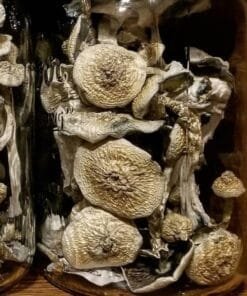
MAGIC MUSHROOMS
Price range: $178.00 through $840.00
This product has multiple variants. The options may be chosen on the product page 
Price range: $170.00 through $830.00
This product has multiple variants. The options may be chosen on the product page 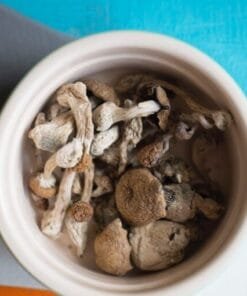
MAGIC MUSHROOMS
Price range: $190.00 through $890.00
This product has multiple variants. The options may be chosen on the product page 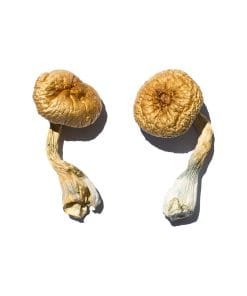
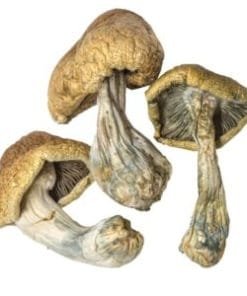
Price range: $185.00 through $860.00
This product has multiple variants. The options may be chosen on the product page 
MAGIC MUSHROOMS
Price range: $178.00 through $840.00
This product has multiple variants. The options may be chosen on the product page 
MAGIC MUSHROOMS
Psilocybe Azurescens – Ultra-Potent Wild Psilocybin Mushroom
Price range: $180.00 through $870.00
This product has multiple variants. The options may be chosen on the product page 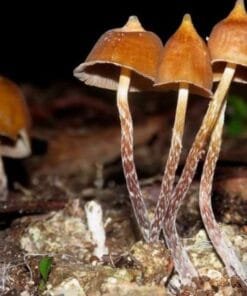
Price range: $178.00 through $865.00
This product has multiple variants. The options may be chosen on the product page
Mac Greer (verified owner) –
My creativity exploded. I felt emotions I hadn’t touched in years. Thank you.
Myla Carman (verified owner) –
Consistent quality. This is the only place I trust now.
Caroline Kelly (verified owner) –
Truly transformative experience, made even better by the way it was so professionally and discreetly delivered.
Grace Edwards (verified owner) –
You’re not just buying a product here — you’re entering a process that’s treated with integrity.
Raegan Valentine (verified owner) –
Truly therapeutic.
Arianna Newton (verified owner) –
There’s something powerful about knowing your experience matters to the people providing it. That’s exactly how I felt here.
Zoe Ward (verified owner) –
I felt held the entire time — from opening the package to the final moments of deep reflection.
Ridge Barnett (verified owner) –
A reconnection to joy.
Matthew Thomas (verified owner) –
Every step felt respectful, like this wasn’t just about selling something — it was about helping someone reconnect with themselves.
Elle Valdez (verified owner) –
Every part of this process felt like a whisper of reassurance. I was never alone in this.
Nina Elliott (verified owner) –
This journey opened my eyes and softened my heart. I’m so grateful for the professionalism that made it possible.
Reece Milner (verified owner) –
Every time I take these, I feel lighter and more grounded.
Giselle Durham (verified owner) –
The packaging was professional, the product was fresh, and the journey was profound.
Zola Darnell (verified owner) –
I’ve been exploring for years. These are by far the most reliable.
Elio Covington (verified owner) –
No weirdness, just clarity.
Grant George (verified owner) –
The emotional clarity I got from this experience has stayed with me.
Lucian Ames (verified owner) –
I felt so much love during my trip. Thank you for making this safe.
Annalise Owen (verified owner) –
You can tell the people behind this take their role seriously. That gave me peace from the moment I hit ‘buy’.
Anika Travers (verified owner) –
Very gentle come-up, powerful introspection.
Zachary Baker (verified owner) –
The product spoke for itself — clean, potent, and gentle — but the human side of the service blew me away.
Russell Vaughn (verified owner) –
Even the packaging felt intentional — quiet, clean, and respectful. The journey itself was emotional and deeply needed.
Owen Perry (verified owner) –
I can’t remember the last time I felt this seen, calm, and grounded. It started with a respectful order process.
Milani Crenshaw (verified owner) –
The best experience I’ve had in years.
Bianca Barber (verified owner) –
This helped me feel connected to the world again in a way I didn’t know I needed. It was like waking up from a long emotional fog.
Chloe Nelson (verified owner) –
Everything about this was thoughtful. It made me want to take the experience seriously — and I’m so glad I did.
Alexis King (verified owner) –
Subtle, elegant, and emotionally profound. The team behind this clearly values every person they serve.
Dahlia Boone (verified owner) –
There’s something beautiful about knowing you’re in safe hands — this experience gave me deep peace, and the process made me feel completely supported.
Ivy Gibbs (verified owner) –
You guys made it feel safe, sacred, and smooth. Thank you.
Autumn Watson (verified owner) –
It felt like being wrapped in clarity. I wasn’t high — I was deeply present.
Matthew Wilson (verified owner) –
Very happy with the overall process.
Naomi Bailey (verified owner) –
Everything was packaged neatly and arrived in good condition.
Justin Wright (verified owner) –
It felt good knowing I was ordering from people who clearly care. Discreet delivery, fresh product, and excellent communication throughout.
Chase Holt (verified owner) –
Subtle, elegant, and emotionally profound. The team behind this clearly values every person they serve.
Ava Davis (verified owner) –
Very pleased with the ordering experience.
Carl Griffin (verified owner) –
Everything arrived safely and securely.
Mia Anderson (verified owner) –
Everything went smoothly. Five stars.
Corey McDonald (verified owner) –
Everything was organized and easy to follow.
Arthur Diaz (verified owner) –
Very pleased with how efficiently everything went.
William Brown (verified owner) –
Everything arrived in great condition.
Sadie Watson (verified owner) –
Everything went according to plan.
Richard Coleman (verified owner) –
Really appreciated how simple everything was.
Kinsley Murphy (verified owner) –
The whole process exceeded my expectations.
Katherine West (verified owner) –
Everything was organized and handled well.
Zoey Green (verified owner) –
Everything went perfectly from beginning to end.
Harold Bryant (verified owner) –
Excellent experience overall. Everything was straightforward.
Mia Anderson (verified owner) –
The whole experience was excellent.
Jennifer Reynolds (verified owner) –
Very happy with the attention to detail.
Valentina Ross (verified owner) –
A very pleasant purchasing experience.
Jade Flores (verified owner) –
The purchasing experience was excellent.
Michelle Jordan (verified owner) –
Really appreciated the clear communication.
Peter Russell (verified owner) –
The purchasing process couldn’t have been easier.