
No products in the cart.
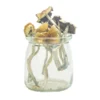
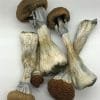
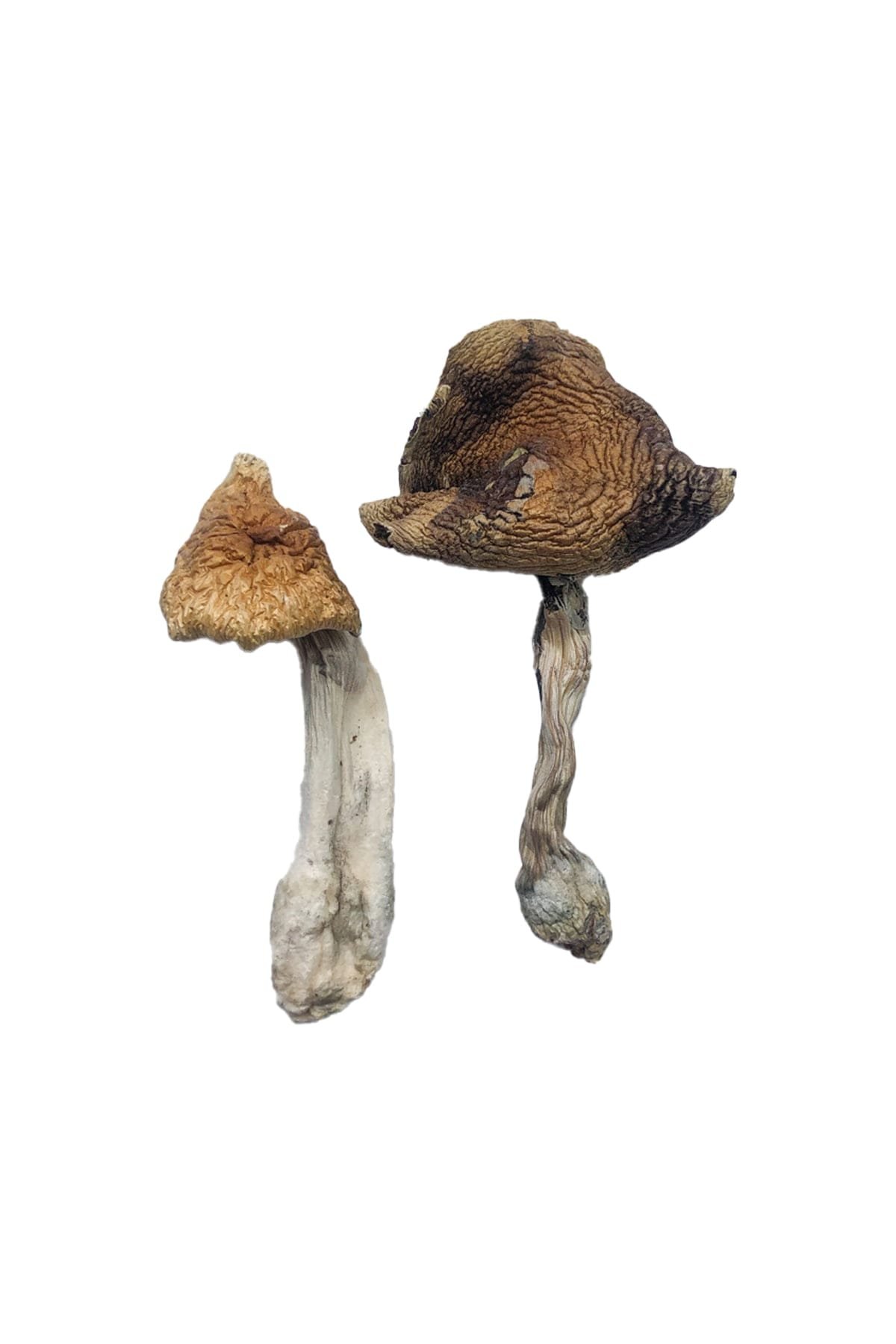
Hawaiian Magic Mushrooms strain – Tropical Psilocybe Experience for Joy & Creativity
Price range: $180.00 through $885.00
Uplift your mind and spirit with Hawaiian Magic Mushrooms, a tropical psilocybin strain known for euphoria and creative stimulation. Sustainably grown and legally distributed.
Hawaiian Magic Mushrooms: Identification & Science
Hawaiian magic mushrooms most often refers to Panaeolus cyanescens, historically called Copelandia cyanescens, a tropical, dung-associated psilocybin-containing mushroom with a black spore print and pronounced blue bruising. The name “Hawaiian” is also an informal commercial label applied to a Psilocybe cubensis lineage, which is a separate species characterized by purple-brown spores. These are not two strains of the same mushroom.
What Does “Hawaiian” Mean? Panaeolus cyanescens vs Psilocybe cubensis
“Hawaiian” is not a species name. Depending on context, it can refer to Panaeolus cyanescens occurring in or associated with Hawaii, or to an informally named Psilocybe cubensis commercial lineage. Searches for “Hawaiian mushroom strain” or “Hawaiian magic mushrooms” therefore combine two taxonomically distinct subjects under one ambiguous label.
Panaeolus cyanescens and Psilocybe cubensis “Hawaiian” are not varieties of the same organism. They belong to different genera, different families and have different spore colors, fruiting body morphology and ecological associations. The word “Hawaiian” is a geographic or commercial label, and species-level characteristics should never be inferred from that name alone. Scientific identification should always begin with the binomial name, not the trade name.
This distinction is not merely academic. The two species differ in spore morphology, alkaloid profile and macroscopic features. Accurate identification matters for microscopy, research compliance and legal clarity, since psilocybin regulations apply to the substances themselves, not to informal cultivar names.
Hawaiian Magic Mushrooms: Taxonomy and Nomenclature
Panaeolus cyanescens
Panaeolus cyanescens (Berkeley & Broome) Sacc. belongs to the family Bolbitiaceae within the order Agaricales, according to MycoBank and Index Fungorum, the primary international nomenclatural registries for fungi. Both registries accept Panaeolus cyanescens as the current name and treat Copelandia cyanescens as a synonym. The species passed through several generic placements after its original description by Berkeley and Broome in the nineteenth century, with Copelandia persisting in popular and horticultural usage for decades before being formally synonymized.
The genus Panaeolus includes numerous dung-associated species that fruit in warm, humid conditions. P. cyanescens is among the most widely distributed psilocybin-containing members of the genus, with collections documented across tropical Africa, Asia, the Pacific Islands and the Americas.
It is worth noting that fungal higher-level classification continues to change as molecular phylogenetic studies refine genus and family boundaries. The family placement noted here reflects current treatment in MycoBank and Index Fungorum, and readers consulting older literature may encounter different arrangements.
Psilocybe cubensis “Hawaiian”
Psilocybe cubensis (Earle) Singer belongs to the family Hymenogastraceae and is the most widely cultivated psilocybin-containing mushroom species in the world. “Hawaiian” in a commercial context is an informal trade name or lineage designation within this species, not a geographically distinct or taxonomically recognized entity. Designations such as Golden Teacher, Penis Envy and Hawaiian are informal strain names used within cultivation communities. Calling these “cultivars” can imply formal cultivar status under the International Code of Nomenclature for algae, fungi and plants, which has not been established for these lineages. “Commercial lineage” or “informal strain name” is more accurate.
The Real Hawaiian Mushroom vs Psilocybe cubensis: A Direct Comparison
The “real” Hawaiian mushroom, understood as the species with a genuine biological association with Hawaii, is Panaeolus cyanescens, which is naturalized in the Hawaiian Islands. The Psilocybe cubensis “Hawaiian” lineage is a commercial name with no demonstrated geographic origin in Hawaii. The two are not interchangeable, and the naming overlap is a persistent source of confusion in popular literature.
Natural Distribution and Dung-Loving Ecology
Panaeolus cyanescens is a coprophilous fungus, meaning it grows on or immediately adjacent to the dung of herbivores such as cattle and horses. It favors warm, humid environments and is documented across tropical and subtropical regions worldwide. In the United States it occurs naturally in Hawaii and parts of the Gulf Coast and is considered naturalized in several regions where cattle grazing is common.
Psilocybe cubensis shares a similar ecological niche, fruiting prolifically on cattle dung in humid subtropical climates. It is common across Gulf Coast states, Florida, Mexico, Central America and parts of South America. Neither species is endemic to Hawaii in a strict biogeographic sense, though P. cyanescens is well established there.
Hawaiian Mushroom Identification
Macroscopic characters provide the first line of identification but should always be used alongside spore deposit color and, where possible, microscopy or molecular confirmation. No single character, including blue bruising, is sufficient alone.
Panaeolus cyanescens Macroscopic Features
Pileus (cap): Typically 1.5 to 4 centimeters in diameter, convex to broadly umbonate when young, flattening with age. Color is pale gray to buff or whitish when dry, darkening in humid conditions. The surface is smooth and may crack with desiccation.
Gills: Adnate to adnexed, crowded, initially pale gray and becoming mottled gray-black as spores mature. The mottled pattern results from uneven spore maturation across the gill face, a character typical of Panaeolus.
Stipe: Slender, typically 7 to 12 centimeters tall and 2 to 4 millimeters wide, fibrous, hollow and whitish to pale gray. The base may be slightly enlarged.
Blue bruising: Tissue bruises conspicuously blue-green when damaged. This reaction results from enzymatic oxidation of psilocin-related compounds and can occur within seconds to minutes of mechanical damage. Bruising is generally more pronounced in P. cyanescens than in many Psilocybe species, but it is not a validated potency test and should never be used alone to identify a wild mushroom.
Spore deposit: Black to very dark gray-black.
Odor and taste: Mild to slightly farinaceous; not diagnostically reliable.
Psilocybe cubensis Macroscopic Features
Psilocybe cubensis fruiting bodies are generally larger and more robust than P. cyanescens. The pileus ranges from 1.5 to 8 centimeters in diameter, often with a pronounced central umbo. Young caps are cinnamon-brown, fading to pale golden or nearly white at maturity in some lineages. The stipe is thick relative to P. cyanescens and typically bears a persistent membranous annulus. Gills darken progressively to deep purple-gray as spores mature. The spore deposit is dark purple-brown, which is the single most reliable macroscopic character distinguishing it from P. cyanescens.
Identification at a Glance
| Character | Panaeolus cyanescens | Psilocybe cubensis (incl. “Hawaiian”) |
|---|---|---|
| Scientific family | Bolbitiaceae | Hymenogastraceae |
| Fruiting body size | Small, slender | Larger, more robust |
| Cap color (fresh) | Pale gray to buff | Cinnamon-brown to golden |
| Annulus present | No | Yes |
| Spore deposit color | Black | Dark purple-brown |
| Bruising | Pronounced, often rapid | Present, often slower |
| Ecology | Herbivore dung, tropical | Herbivore dung, subtropical |
| “Hawaiian” label | Species name or geographic | Informal commercial lineage |
Hawaiian Mushroom Microscopic Features and Spores
Macroscopic characters alone are insufficient for confident identification of psilocybin-containing mushrooms. Microscopy using a compound microscope at 400x to 1000x magnification, with a calibrated stage micrometer, is standard practice.
Panaeolus cyanescens Spore Morphology
Panaeolus cyanescens produces a black spore deposit. Individual spores are dark, smooth-walled and typically described in the taxonomic literature as ellipsoid to limoniform (lemon-shaped), with a distinct apical germ pore. Published spore dimensions in authoritative monographs generally fall within a range of approximately 11 to 14 micrometers in length and 7 to 9 micrometers in width, though dimensions vary among collections. Formal identification should measure multiple spores from a confirmed deposit and compare them against a primary taxonomic reference rather than relying on a single measurement.
The thick, dark spore wall gives individual spores an opaque appearance under brightfield illumination. At 1000x with oil immersion, the germ pore and limona-shaped outline are more clearly resolved.
Copelandia cyanescens Spore Print Color
Because Copelandia cyanescens is a synonym for P. cyanescens, the spore print color is the same: black to very dark gray-black. This character directly distinguishes it from Psilocybe cubensis, which produces a purple-brown deposit. Spore color is the most reliable single macroscopic character for separating these two species at the level of identification.
Psilocybe cubensis Spore Morphology
Psilocybe cubensis spores are subellipsoid to ellipsoid, smooth and purplish-brown in mass deposit. Published dimensions typically fall in the range of approximately 11.5 to 17 micrometers by 8 to 11 micrometers. A germ pore is also present, as in P. cyanescens, but spore color in deposit reliably separates the two species.
Does a Spore Syringe Change Spore Identity or Legal Status?
A spore syringe is a suspension of mushroom spores in sterile water, used primarily for inoculation in cultivation or, in a research context, for microscopy. The format does not change the identity or the legal status of the spores themselves. Panaeolus cyanescens spores in a syringe remain P. cyanescens spores, with the same morphology and the same legal considerations that apply to any form of spore possession. The relevant legal question is whether spores contain psilocybin or psilocin and whether applicable state law imposes additional restrictions. That question is addressed in the legal section below.
Molecular Identification
When morphological characters are ambiguous, DNA-based identification using ITS (internal transcribed spacer) sequencing provides reliable resolution to the species level. Sequence data for both species are deposited in publicly accessible databases such as NCBI GenBank. Molecular methods are increasingly accessible and are standard in formal taxonomic and forensic mycology contexts.
Hawaiian Magic Mushrooms: Potency and Alkaloid Chemistry
Hawaiian Mushroom Alkaloid Content
Both Panaeolus cyanescens and Psilocybe cubensis contain psilocybin, psilocin, baeocystin and norbaeocystin, all members of the tryptamine alkaloid class. Psilocybin is a prodrug hydrolyzed in vivo to psilocin, the pharmacologically active compound. Psilocin acts primarily as a partial agonist at serotonin 5-HT2A receptors, which is the principal mechanism underlying its psychedelic effects.
Analytical chemistry using HPLC or LC-MS is the only reliable method for determining alkaloid concentrations in a given sample. Published analyses of P. cyanescens have reported combined psilocybin and psilocin concentrations that can exceed values typical of many P. cubensis samples, but there is no scientifically supported universal “2x” or “3x” potency multiplier. Alkaloid concentrations vary substantially among individual specimens of the same species and require quantitative analysis to determine.
Research Limitations on Potency Claims
Cross-study comparisons of alkaloid concentration are complicated by several factors that the primary literature does not always address uniformly. These include differences in analytical technique, dry-weight determination method, storage conditions prior to analysis, developmental stage at harvest, sample selection and differing definitions of “total alkaloids.” A figure reported in one study may not be directly comparable to a figure from another study using different methods. For this reason, blanket claims that one species is a fixed multiple more potent than another cannot be verified from available published data and should not be treated as established fact.
High-confidence facts: P. cyanescens produces a black spore deposit. P. cubensis produces a purple-brown deposit. The two organisms belong to different genera. These characters are stable and well-supported in the taxonomic literature.
Variable or specimen-dependent claims: Exact alkaloid concentration, relative potency between species and bruising speed all depend on specimen, analytical method, growth conditions and environmental history. These properties should not be converted into universal species-level numbers.
Blue Bruising Explained
Blue bruising is consistent with enzymatic and oxidative reactions involving psilocin-related compounds after mushroom tissue is damaged. The specific chemistry involves oxidation of psilocin to blue-colored quinoid products. Bruising intensity is not a validated measure of alkaloid concentration, and color alone cannot establish species identity. Bruising should not be used by itself to identify a wild mushroom or estimate its potency.
Hawaiian Magic Mushroom Effects and Safety
Pharmacological Effects
Psilocin’s activity at 5-HT2A and related serotonin receptors can produce substantial alterations in perception, cognition, sensory experience and mood. The onset, duration and character of effects depend on the dose of active compounds, the individual’s physiology, prior experience, expectations and setting. Effects typically begin within 20 to 60 minutes of ingestion and can persist for 4 to 6 hours or longer depending on dose and metabolic factors.
Adverse reactions including anxiety, panic, confusion and psychological distress are documented in the clinical and case literature. Risk of serious adverse events is elevated in individuals with a personal or family history of psychotic disorders or certain cardiovascular conditions. No form of wild mushroom consumption is without risk, and misidentification of toxic species that superficially resemble psilocybin-containing mushrooms has caused serious harm.
Ongoing clinical research on psilocybin’s therapeutic potential is conducted under regulatory oversight at academic medical centers. Published research from programs such as the Johns Hopkins Center for Psychedelic and Consciousness Research and NYU Langone’s Psychedelic Medicine program provides peer-reviewed context for understanding psilocybin’s pharmacological and clinical profile.
Harm Reduction and Poison Control
The Poison Control national helpline (1-800-222-1222) is available around the clock for suspected poisoning cases in the United States. Wild mushroom identification should never rely on a single macroscopic feature, and eating an unconfirmed specimen is never advisable regardless of the collector’s experience level.
Hawaiian vs Golden Teacher
Golden Teacher is a widely recognized informal Psilocybe cubensis lineage distinguished by moderate fruiting body size, golden-yellow cap coloration and consistent substrate colonization in cultivation contexts. Like “Hawaiian,” the name Golden Teacher has no formal taxonomic standing.
Comparing Hawaiian (P. cyanescens) with Golden Teacher (P. cubensis) requires clarity about what is actually being compared. At the species level, P. cyanescens tends to produce smaller, more slender fruiting bodies with a black spore deposit, while P. cubensis produces larger, more robust fruiting bodies with a purple-brown deposit. Published alkaloid analyses suggest P. cyanescens can contain higher concentrations of psilocybin-related compounds, though as noted above, no fixed potency ratio is scientifically reliable. Both species show substantial specimen-to-specimen variation in alkaloid content, and no potency comparison derived from a single study or anecdotal report can be generalized.
Hawaiian Mushrooms and Blue Meanies: Naming Differences
“Blue Meanies” is another informal name applied inconsistently in popular and commercial contexts. It most accurately refers to Panaeolus cyanescens, where the name derives from the species’ pronounced blue bruising reaction and its reputation for high alkaloid content. However, the name is also applied in some commercial settings to a Psilocybe cubensis lineage, replicating the same taxonomic ambiguity seen with “Hawaiian.”
Anyone encountering “Blue Meanies” should determine which species is actually referenced, since P. cyanescens and P. cubensis are taxonomically, morphologically and legally distinct. Spore deposit color remains the most reliable macroscopic character for disambiguation.
Are Panaeolus cyanescens Spores Legal in the US?
Federal Law
Psilocybin and psilocin are listed as Schedule I controlled substances under the Controlled Substances Act, as codified at 21 CFR §1308.11. Possession, manufacture, distribution and importation of psilocybin and psilocin are federal offenses. Mushrooms or preparations containing psilocybin or psilocin implicate these provisions because they contain the expressly scheduled substances themselves.
Mushroom spores that do not yet contain psilocybin or psilocin occupy a different position under this framework, because they lack the scheduled compounds. In many U.S. states, spores of Panaeolus cyanescens, Psilocybe cubensis and related species are sold legally for stated purposes such as microscopy and taxonomic research. However, germinating or cultivating those spores into psilocybin-producing mycelium or fruiting bodies constitutes manufacture of a Schedule I substance under federal law regardless of the stated purpose of acquisition.
State-Level Restrictions
State laws vary considerably and do not uniformly follow the federal framework. Some states impose restrictions on spore possession that go beyond federal law, and the specific language of those statutes differs in important ways. Blanket statements that spores are “legal in 47 states” or “banned in California, Georgia and Idaho” can obscure meaningful statutory differences. Readers should consult the current text of applicable state statutes directly rather than relying on summarized claims, since this area of law has been changing. The National Conference of State Legislatures maintains regularly updated tracking of relevant state legislation and provides a useful starting point.
State-Level Reform Programs
Oregon Measure 109, administered by the Oregon Health Authority, established a licensed psilocybin services framework allowing supervised therapeutic use by adults in approved settings. Colorado Proposition 122, administered through the Colorado Natural Medicine Division, created a comparable regulatory structure. Both programs operate within defined parameters and do not constitute general legalization of psilocybin mushrooms. Anyone seeking to understand current psilocybin law in a specific jurisdiction should consult the applicable statutes and regulations directly, given how rapidly this landscape is evolving.
Frequently Asked Questions
What is the scientific name of the Hawaiian magic mushroom?
Panaeolus cyanescens, historically called Copelandia cyanescens, is the species most commonly associated with the Hawaiian magic mushroom name. However, vendors also apply “Hawaiian” to a Psilocybe cubensis lineage, which is a separate species.
Are Hawaiian magic mushrooms Panaeolus cyanescens or Psilocybe cubensis?
The name can refer to either. Panaeolus cyanescens is a recognized species found in tropical and subtropical environments, including Hawaii. Psilocybe cubensis “Hawaiian” is an informal commercial lineage name and does not represent the same species.
How can Panaeolus cyanescens be distinguished from Psilocybe cubensis?
Panaeolus cyanescens typically has a smaller, more slender fruiting body and produces a black spore deposit. Psilocybe cubensis is generally more robust, bears an annulus, and produces a dark purple-brown spore deposit. Reliable identification uses multiple morphological characters and ideally molecular confirmation.
How strong are Hawaiian magic mushrooms compared with Golden Teacher?
Published analyses suggest Panaeolus cyanescens can contain higher concentrations of psilocybin-related alkaloids than many analyzed P. cubensis samples, but there is no scientifically reliable universal potency multiplier. Golden Teacher is a Psilocybe cubensis lineage, and alkaloid concentrations vary substantially within both species depending on specimen, growth conditions and analytical method.
Why do Hawaiian magic mushrooms bruise blue?
Damage to mushroom tissue initiates enzymatic and oxidative reactions involving psilocin-related compounds, producing blue-colored oxidation products. Bruising intensity is not a validated measure of alkaloid concentration and cannot establish species identity by itself.
What color is a Panaeolus cyanescens spore print?
Panaeolus cyanescens characteristically produces a black to very dark gray-black spore deposit. Psilocybe cubensis, including lineages marketed as Hawaiian, produces a dark purple-brown deposit. Spore deposit color is the most reliable single macroscopic character for separating these two species.
What do Panaeolus cyanescens spores look like under a microscope?
Spores are smooth, dark and ellipsoid to limoniform with a distinct germ pore. Published dimensions from the taxonomic literature generally fall approximately within 11 to 14 micrometers in length and 7 to 9 micrometers in width, though measurements vary among collections. Formal identification should measure multiple spores from a confirmed deposit and compare them against an authoritative taxonomic reference.
Are Panaeolus cyanescens spores legal in the United States?
Spores that do not contain psilocybin or psilocin present a different legal question than mushrooms containing those scheduled substances. In many states, spores are sold legally for microscopy and research purposes. However, state laws vary considerably, and cultivating spores into psilocybin-producing organisms constitutes manufacture of a Schedule I substance under federal law. Current federal and applicable state statutes should be verified directly before possessing, purchasing or shipping spores.
Hawaiian Magic Mushrooms: Key Takeaways and Sources
The name “Hawaiian magic mushrooms” refers to two taxonomically distinct species depending on context. Panaeolus cyanescens is the species most accurately described by the name, characterized by small slender fruiting bodies, pronounced blue bruising, a black spore deposit and a tropical dung-associated ecology. The Psilocybe cubensis “Hawaiian” lineage shares the common name but differs in taxonomy, fruiting body morphology and spore deposit color.
Both species contain psilocybin and psilocin, which are Schedule I controlled substances under U.S. federal law. State-level legal frameworks are evolving. Accurate identification requires multiple morphological characters and ideally molecular confirmation, and should never rest on blue bruising or a common name alone. Potency claims based on fixed multipliers are not supported by the primary analytical literature, and any quantitative alkaloid comparison requires matched methodology to be meaningful.
Editorial Methodology
Taxonomy and nomenclature in this article are checked against MycoBank and Index Fungorum. Sequence and molecular information is referenced to NCBI GenBank. Pharmacology is referenced to peer-reviewed literature. Legal information is referenced to current government and statutory sources including the DEA Diversion Control Division and applicable state program websites. Readers are encouraged to verify legal information against current primary sources, as this area of law changes frequently.
| Quantity | Oz, QP, Hp, Lb |
|---|
51 reviews for Hawaiian Magic Mushrooms strain – Tropical Psilocybe Experience for Joy & Creativity
Add a review
Related products
Price range: $170.00 through $830.00
This product has multiple variants. The options may be chosen on the product page 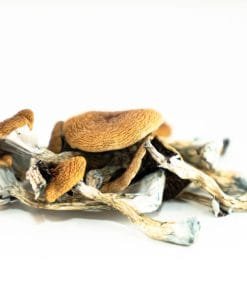
Price range: $190.00 through $890.00
This product has multiple variants. The options may be chosen on the product page 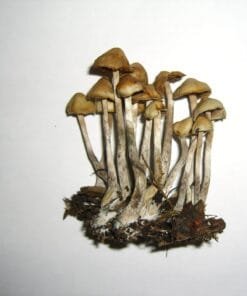
Price range: $190.00 through $890.00
This product has multiple variants. The options may be chosen on the product page 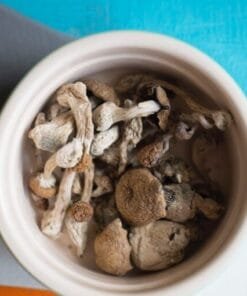
MAGIC MUSHROOMS
Price range: $190.00 through $890.00
This product has multiple variants. The options may be chosen on the product page 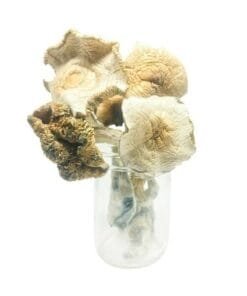
MAGIC MUSHROOMS
Price range: $180.00 through $860.00
This product has multiple variants. The options may be chosen on the product page 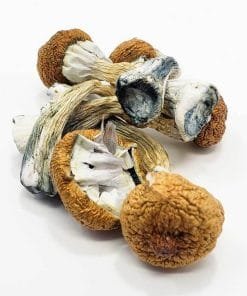
Price range: $180.00 through $920.00
This product has multiple variants. The options may be chosen on the product page 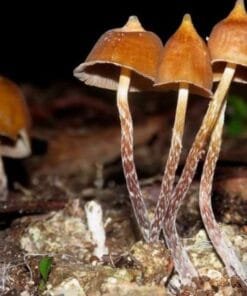
Price range: $178.00 through $865.00
This product has multiple variants. The options may be chosen on the product page 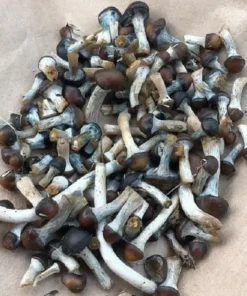
Price range: $170.00 through $830.00
This product has multiple variants. The options may be chosen on the product page
Mallory Bright (verified owner) –
Love the subtle onset and the emotional journey it took me on.
Joyce Carson (verified owner) –
A calming, introspective experience made even better by knowing the people behind it truly care.
Brandon Hall (verified owner) –
I’ve never felt so grounded and uplifted at the same time. Truly grateful for the people behind this.
Kaia Landon (verified owner) –
Incredible visuals and deep personal insights. Will definitely be returning for more.
Aitana Granger (verified owner) –
A guided, intuitive healing experience.
Heidi Nixon (verified owner) –
Truly safe, profound, and healing.
Andrew White (verified owner) –
Each moment felt sacred. I was fully immersed in a gentle sense of awe.
Matthias Reaves (verified owner) –
This helped me with long-standing depression.
Anson Roper (verified owner) –
Felt the presence of something sacred.
Paola Henson (verified owner) –
A guided, intuitive healing experience.
Alana Lawson (verified owner) –
My experience with this product was sacred, and the way it was delivered only enhanced that trust.
Miles Stephens (verified owner) –
You made me feel like a human, not just a customer. That made the journey even more meaningful.
Kaylani Schaefer (verified owner) –
Really felt the connection to everything.
Aubrielle Haney (verified owner) –
The magic is real.
Amaya Bridges (verified owner) –
Truly impressed with how easy and safe this entire process was. Felt more like working with guides than a shop.
Sean Wood (verified owner) –
When something this powerful is handled with love and care, it becomes more than a product — it becomes a moment.
Ezekiel McBride (verified owner) –
I’ve tried many—this is the best.
Skye Zimmerman (verified owner) –
Nothing about this felt sketchy. Just professionalism, transparency, and a product that changed how I see myself.
Dahlia McCann (verified owner) –
Love the subtle onset and the emotional journey it took me on.
Olivia Carter (verified owner) –
I felt a connection with the experience before I even opened the package. That’s rare and beautiful.
Jacob Roberts (verified owner) –
I wasn’t expecting such a deep emotional reset. It was like therapy, but from within.
Reagan Beck (verified owner) –
The emotional clarity I gained from this session is hard to put into words. It felt safe, guided, and surprisingly gentle.
Kyle Howard (verified owner) –
The professionalism here is unmatched — respectful tone, fast replies, and packaging that made me feel at ease.
Alivia Nash (verified owner) –
My journey was quiet, deep, and incredibly healing. The ordering experience matched that same energy.
Bruce Moss (verified owner) –
Was nervous about the delivery, but it was so discreet and quick I couldn’t believe it. Product was fresh and powerful.
Genevieve Neal (verified owner) –
I’ve tried different sources in the past, but none gave me this level of emotional depth and trust.
Kevin Hill (verified owner) –
This is more than just a shop. It’s a trustworthy path into inner work.
Russell Vaughn (verified owner) –
It’s hard to explain, but it gave me peace. I saw myself without the usual filter of anxiety.
Brooklyn Alexander (verified owner) –
These are people you can trust with a powerful tool. That matters more than anything.
Marcus Fleming (verified owner) –
This experience was personal, emotional, and beautifully clear. Thank you for handling it with such care.
Alan Cole (verified owner) –
A great experience with no unnecessary complications.
Kyle Turner (verified owner) –
Really appreciated how simple everything was.
Kyle Howard (verified owner) –
I’m usually super anxious about buying anything online, especially this kind of thing. But this team made it feel secure and smooth.
Jordan Richardson (verified owner) –
Really impressed with the attention to detail.
Terry Ford (verified owner) –
Great service and a smooth experience.
Amanda Sullivan (verified owner) –
Really satisfied with the communication.
Nathan Nelson (verified owner) –
Couldn’t be happier with how smoothly everything went.
Rebecca Myers (verified owner) –
The purchasing experience was excellent.
Nathan Nelson (verified owner) –
Everything arrived safely and securely.
Grace Walker (verified owner) –
Great experience with clear updates.
Cameron Cooper (verified owner) –
The packaging was neat and well organized.
Victoria Allen (verified owner) –
A great experience with no issues.
Gerald Hamilton (verified owner) –
Great communication and a straightforward purchasing experience.
Brianna Bryant (verified owner) –
Everything was straightforward and easy.
Paisley Evans (verified owner) –
Really pleased with my purchase. No complaints at all.
Jennifer Reynolds (verified owner) –
Everything was organized and handled well.
Sophia Brown (verified owner) –
Really appreciated how simple everything was.
Jason Hall (verified owner) –
Everything was carefully organized.
Madeline Peterson (verified owner) –
Completely satisfied with the purchasing process.
Grace Walker (verified owner) –
Everything went according to plan.
Nicholas King (verified owner) –
Great communication and a straightforward purchasing experience.