
No products in the cart.
Psilocybe Bohemica – Potent Wild Mushroom from Europe
Price range: $175.00 through $850.00
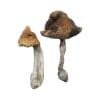
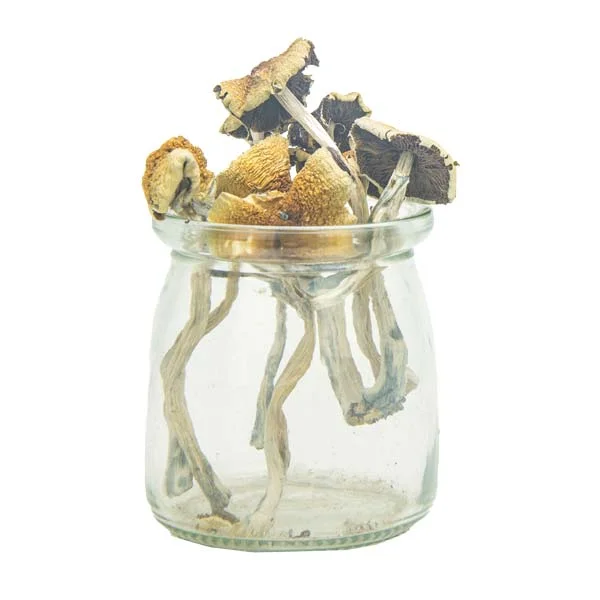
Psilocybe Bohemica is a strong wild psilocybin mushroom species from Central Europe. Known for its intense visual effects and creative stimulation.
Psilocybe bohemica: Taxonomy, Identification & Potency
Psilocybe bohemica is a Central European, wood-associated psilocybin mushroom now generally treated within the Psilocybe serbica taxonomic complex. It is characterized by a hygrophanous brownish cap, dark purplish-brown spore deposit, blue-green discoloration after injury, and distinctive microscopic features including lageniform cheilocystidia and thick-walled basidiospores with an apical germ pore. Potentially lethal Galerina species occupy identical habitats and require exclusion before any identification is considered complete.
Psilocybe bohemica at a Glance
| Character | Detail |
|---|---|
| Historical name | Psilocybe bohemica Šebek (1983) |
| Current treatment | Generally within Psilocybe serbica complex |
| Family | Hymenogastraceae |
| Ecology | Lignicolous saprotroph; woody debris in forest environments |
| Primary region | Central Europe, notably Czech Republic |
| Fruiting season | Late summer to early winter; typically September to November |
| Spore deposit | Dark purplish-brown |
| Basidiospore range | Approximately 10–14 × 6–7.5 µm (verify against primary literature) |
| Key chemistry | Psilocybin; psilocin; possibly baeocystin |
| Critical safety concern | Galerina marginata (amatoxin-containing) occupies identical habitats |
Numerical measurements and chemistry claims should be verified against authenticated type specimens and primary analytical literature before citation. See the taxonomy and potency sections for sourcing guidance.
Taxonomic Timeline: 1983 to Current Classification
| Year | Event |
|---|---|
| 1983 | Svatopluk Šebek formally describes Psilocybe bohemica from Bohemia, Czech Republic, based on morphological characters |
| Post-1983 | Morphological comparisons raise questions about the distinctness of P. bohemica relative to P. serbica and related Central European taxa |
| 2000s–2010s | Molecular phylogenetic studies, including work by Jan Borovička and collaborators, incorporate DNA sequence data into the classification of Central European psilocybin mushrooms, supporting treatment of P. bohemica within the P. serbica complex |
| Current | MycoBank and Index Fungorum list nomenclatural status; researchers should verify the currently accepted name and rank directly against these databases, as treatments continue to be refined |
Researchers citing the Borovička-era revisions should retrieve the specific paper and confirm the exact phylogenetic conclusion stated therein rather than paraphrasing secondary accounts.
Taxonomy and Nomenclatural History
Psilocybe bohemica is a historical taxonomic name for a Central European, wood-associated psilocybin mushroom now generally treated within the Psilocybe serbica complex. Its exact rank and synonymy have varied among treatments, so researchers should distinguish historical usage from the currently accepted name in MycoBank, Index Fungorum, and the most recent primary taxonomic literature.
Original Description
Psilocybe bohemica was formally described by the Czech mycologist Svatopluk Šebek in 1983. The name references Bohemia, the historical region of the Czech Republic where the type material was collected. At the time of description, morphological characters were the primary means of distinguishing fungal species, and P. bohemica was recognized on the basis of macroscopic and microscopic traits that appeared to differentiate it from related taxa.
Psilocybe serbica var. bohemica: Historical and Current Usage
The designation Psilocybe serbica var. bohemica has appeared in some taxonomic treatments as an intermediate classification between full species status and complete synonymy. Whether this varietal rank is currently accepted or superseded depends on the treatment consulted. Researchers should verify the specific rank assigned in current MycoBank and Index Fungorum records and note the date of access, as nomenclatural databases are updated as new research is published. Using a name without specifying which authority and which edition of a database was consulted reduces the reproducibility of taxonomic statements.
Psilocybe arcana: Synonym or Separate Entity?
Psilocybe arcana is another name that has appeared within or adjacent to the P. serbica complex in Central European literature. Its relationship to P. bohemica and P. serbica has been addressed in molecular and morphological revisions, but the exact synonymy or distinctness attributed to P. arcana depends on the specific paper and database record consulted. Treating P. arcana as an established synonym of P. bohemica without citing a primary source that explicitly makes that synonymy is not advisable. Index Fungorum and MycoBank provide the authoritative nomenclatural record for both names.
Reassessment and the Psilocybe serbica Complex
Subsequent morphological and molecular research has substantially revised the classification of many Central European psilocybin mushrooms. Modern treatments generally place P. bohemica within the Psilocybe serbica complex, a group of closely related, wood-associated European taxa. Researchers including Jan Borovička have contributed to clarifying the boundaries of this complex through combined morphological examination and molecular phylogenetic analysis. DNA sequencing methods targeting ribosomal and other conserved gene regions have revealed that several historically described names fall within the range of variation of a more broadly circumscribed taxon. The specific paper supporting this conclusion, its phylogenetic dataset, and the exact synonymy it establishes should be retrieved directly and cited accordingly.
Family Placement
Psilocybe and its close relatives are currently placed in the family Hymenogastraceae within the order Agaricales. This placement, supported by molecular data, represents a departure from older classifications that grouped Psilocybe with other brown-spored agarics in Strophariaceae. GBIF aggregates occurrence data and taxonomic information from global sources and can supplement nomenclatural research with georeferenced collection records.
Psilocybe bohemica Identification: Macroscopic and Microscopic Features
Scientific identification of Psilocybe bohemica combines ecology, macroscopic morphology, and microscopy. Reported characters include a hygrophanous brown cap, dark purplish-brown spores, blue-green injury discoloration, and characteristic basidiospores and cheilocystidia. No single field character confirms the species, and potentially lethal Galerina can occupy identical woody habitats. The evidence hierarchy runs from field morphology through calibrated microscopy to authenticated voucher comparison and, where available, molecular sequencing.
What Evidence Confirms Identification?
Reliable identification follows a staged process rather than reliance on any single character:
- Field morphology narrows the candidate list but cannot distinguish Psilocybe from Galerina or resolve species within the P. serbica complex.
- Spore print color is an important early filter. Dark purplish-brown excludes rusty-brown-spored Galerina but does not confirm species identity.
- Calibrated microscopy of basidiospores, cheilocystidia, and pileipellis provides the strongest morphological evidence and is required for any credible species-level determination.
- Authenticated voucher comparison against type specimens or high-quality reference material from recognized herbaria strengthens conclusions.
- Molecular sequencing of ITS and other gene regions deposited in GenBank provides the most definitive evidence currently available and is the standard for new taxonomic descriptions.
This hierarchy should not be read as a safety protocol for consumption decisions. It describes the evidence standard appropriate for taxonomic and research purposes.
Macroscopic Features
Pileus: The cap is hygrophanous, changing substantially in color with moisture content. When moist, it appears brown to ochraceous brown, often with a slightly viscid surface under wet conditions. As the cap dries, it fades to a paler buff or straw color. Cap shape progresses from convex or campanulate in young specimens to broadly umbonate or nearly plane at maturity. A slight central umbo may persist.
Lamellae: The gills are adnate to adnexed, relatively crowded, and pale grayish to brown when young, becoming darker purplish-brown as spores mature. Gill edges are typically lighter than gill faces.
Stipe: Relatively slender and roughly cylindrical, often somewhat fibrous or silky in texture. Color ranges from whitish to pale brown. Younger specimens may retain a faint fibrous veil remnant. Stipe tissue bruises blue-green when damaged.
Bluing reaction: Blue-green discoloration following tissue damage indicates the presence of oxidizable psilocybin-related compounds. This character is discussed further in the chemistry section. It does not identify the species, does not exclude toxic lookalikes, and does not indicate alkaloid concentration.
Odor: Described as faintly farinaceous in some accounts. This character has limited diagnostic value and should not be used as a primary identification feature.
Microscopic Features
Basidiospores: Subellipsoid to broadly ellipsoid, smooth-walled, thick-walled, with a distinct apical germ pore. Reported dimensions fall approximately in the range of 10–14 × 6–7.5 µm in some sources, but these values should be verified against authenticated primary literature and current species circumscription before use in a formal comparison.
Cheilocystidia: Cells along the gill edges are lageniform to fusoid-ventricose with a narrow, flexuous neck. Their morphology is an important diagnostic character distinguishing members of the P. serbica complex from superficially similar species in other genera.
Pleurocystidia: Absent or inconspicuous in most treatments of this group, a character that assists in separating Psilocybe from some lookalikes.
Pileipellis: The structure of the cap cuticle contributes to generic and species-level placement and should be examined in any complete microscopic description.
Spore deposit color: Dark purplish-brown. Obtaining a spore print is a required early step in any identification attempt and provides the primary basis for separating Psilocybe from Galerina at the macroscopic level.
Psilocybe bohemica Habitat, Distribution, and Season
Ecological Role
Psilocybe bohemica is a lignicolous saprotroph, obtaining nutrients by decomposing woody plant material. It grows on or near decomposing logs, stumps, buried wood, and woody debris in forest environments. This niche is shared by other members of the P. serbica complex and by several unrelated species including the toxic Galerina marginata.
Substrate and Forest Associations
Reports associate P. bohemica with decomposing woody material from Betula (birch), Alnus (alder), and Picea (spruce), as well as other broadleaf species. Humus-rich forest litter containing partially decomposed wood fragments also supports fruiting. The species does not appear to be restricted to a single tree genus, consistent with the generalist saprotrophic habits seen across many lignicolous Psilocybe species.
P. bohemica is one of several European psilocybin mushrooms occurring in mixed and deciduous forest environments. Other European psilocybin species, including members of the P. serbica complex more broadly, occupy similar ecological niches across Central and Eastern Europe, forming a regional guild of wood-associated tryptamine-containing fungi distinct from the subtropical and grassland species better known in global coverage.
Geographic Distribution
P. bohemica is primarily documented from Central Europe, with the Czech Republic representing the core of recorded distribution given the origin of the type material. Related taxa in the P. serbica complex extend across broader parts of Europe. Georeferenced occurrence records available through GBIF and herbarium databases provide the most reliable distribution information currently available.
Psilocybe bohemica Season
Fruiting occurs from late summer into early winter, typically September through November in Central European populations, depending on local rainfall and temperature. Like other hygrophanous, wood-associated species, fruiting is closely tied to moisture availability. Extended dry periods suppress fruiting regardless of temperature. The season may shift somewhat with elevation and local climate variation.
Psilocybe bohemica Potency and Alkaloid Content
There is no scientifically defensible universal potency value for Psilocybe bohemica. Authenticated specimens have been investigated for psilocybin-related alkaloids, but concentration varies with specimen, developmental stage, substrate, handling, drying method, and analytical approach. Reliable potency comparisons require quantitative analyses such as validated HPLC or LC-MS measurements tied to voucher specimens with documented provenance.
Psilocybe bohemica Alkaloid Content
Psilocybin is the primary bioactive alkaloid reported in P. bohemica and related members of the P. serbica complex. Psilocin and baeocystin have been reported in closely related taxa. Aeruginascin has been detected in some Psilocybe species, but its presence in P. bohemica specifically should not be asserted without a species-specific analytical citation from authenticated material.
Psilocybin is a prodrug dephosphorylated to psilocin in vivo. Psilocin acts as a partial agonist at 5-HT2A serotonin receptors and related serotonin receptor subtypes, producing the characteristic psychoactive effects associated with this class of compounds. The pharmacology of psilocin has been studied in the context of both clinical research and neuropharmacology; the National Institute on Drug Abuse provides an overview of current research status.
Any numerical alkaloid values cited for P. bohemica should specify the specimen provenance, whether measurement was taken on a dry or fresh weight basis, the analytical method used, and the primary paper from which the figure is drawn. Values found in secondary sources or popular literature without this documentation should not be reproduced as factual.
Bluing Chemistry
The blue-green discoloration appearing when Psilocybe tissue is damaged results from enzymatic reactions involving psilocybin-related compounds. Research published in Angewandte Chemie by Lenz and colleagues (2020) clarified the enzymatic mechanism, identifying a laccase-type enzyme that oxidizes psilocin to form blue quinoid products following dephosphorylation of psilocybin. Bluing confirms the presence of oxidizable indole compounds but does not identify the species and does not reliably indicate alkaloid concentration. The reaction is also subject to variation with tissue age, damage intensity, and environmental conditions.
Psilocybe bohemica Spore Print and Microscopy
Spore Print Color
The spore deposit of Psilocybe bohemica is dark purplish-brown. Obtaining a spore print by placing a cap gill-side down on white paper for several hours is a standard early step in any identification attempt. This character substantially narrows the field of candidate species and is particularly useful for separating Psilocybe from Galerina, which deposits a rusty-brown spore print. However, a purplish-brown spore deposit does not exclude all toxic species and does not confirm species identity within Psilocybe.
Basidiospore Morphology
Spores are smooth, thick-walled, and possess a distinct apical germ pore. These features are best evaluated in water mounts or appropriate mounting media at magnifications of 400x to 1000x. Spore dimensions and germ pore characteristics are important characters for distinguishing members of the P. serbica complex from lookalikes and from each other. Measurements should be taken from multiple spores and reported with mean and range values; the Q ratio (length divided by width) is a standard comparative statistic in fungal taxonomy.
Cheilocystidia and Additional Characters
Cheilocystidia morphology is among the most diagnostically useful microscopic characters in this group. In P. bohemica and related taxa, these cells are typically lageniform to fusoid-ventricose with a narrow flexuous neck. Their presence, form, and dimensions should be documented in any complete microscopic account. The absence of pleurocystidia is a further character assisting in generic placement.
Comparative examination against authenticated type specimens or high-quality references from primary literature is the most reliable approach to microscopic identification. Herbarium loans from institutions holding type material, where accessible, provide the strongest reference standard available for morphological comparison.
Psilocybe bohemica Lookalikes and Galerina Safety
Yes, Psilocybe bohemica has poisonous lookalikes. Galerina marginata and related wood-inhabiting Galerina species are the primary safety concern because some contain potentially lethal amatoxins and occupy identical substrates. Cap color, habitat, bruising response, or spore color alone cannot establish that a wild mushroom is safe; scientific identification requires multiple independent characters examined through a systematic process.
Galerina marginata
Galerina marginata and related species contain amatoxins, including alpha-amanitin, which inhibit RNA polymerase II and can cause fatal liver and kidney failure. Amatoxin poisoning has a characteristically delayed onset; symptoms may not appear until 6 to 24 hours or longer after ingestion, by which time significant organ damage may already have occurred. Fatal poisonings following confusion of Galerina with psilocybin-containing species are documented in the medical and toxicological literature.
Galerina marginata shares woody substrate habitats with P. bohemica and can fruit at similar times of year. Macroscopic features that overlap include a brownish hygrophanous cap, similar overall size and stature, and growth on decaying wood. Key distinguishing characters include spore deposit color, which is rusty-brown in Galerina versus dark purplish-brown in Psilocybe, and microscopic features of the basidiospores and cystidia. Galerina spores are ornamented (roughened or verrucose) and lack a distinct germ pore, distinguishing them microscopically from the smooth, germ-pore-bearing spores of Psilocybe.
Spore print color should be used as a filter in the identification process, not as a standalone safety determination. Mixed collections of Galerina and Psilocybe on the same substrate have been documented and represent a particular hazard.
Pholiota Species
Various Pholiota grow on wood and share a similar general appearance. Most deposit rusty-brown to cinnamon spores and exhibit distinct microscopic features including ornamented spores and different cystidial types. While Pholiota species are generally not considered deadly, some cause gastrointestinal distress.
Hypholoma Species
Hypholoma fasciculare (sulfur tuft) and related species grow on wood, often in dense clusters. Some Hypholoma deposit purplish-brown spores, which can add initial confusion at the spore print stage. Microscopy, cap color, taste, and other characters differ substantially from Psilocybe.
Cortinarius Species
Some small brownish Cortinarius can grow near or on woody debris. Spore deposits are rusty-brown, and spore ornamentation, cortinate veil remnants, and other characters differ from Psilocybe. Some Cortinarius species contain nephrotoxic orellanine, making misidentification in this genus also a serious safety matter.
Other Psilocybe Species
In regions where multiple Psilocybe species overlap in habitat and season, species-level determination within the genus requires microscopy and, where possible, molecular data. Field morphology alone is insufficient for intrageneric separation in this complex.
Psilocybe bohemica vs. Psilocybe serbica
Psilocybe bohemica and Psilocybe serbica are the two most frequently compared names in this complex. P. serbica was originally described from Serbia and represents the taxon around which the modern complex is organized. Morphological and molecular studies have indicated that P. bohemica, P. arcana, and related historical names from Central and Eastern Europe fall within the range of variation encompassed by P. serbica under a broad species concept.
Depending on the taxonomic treatment consulted, P. bohemica may be treated as a full synonym of P. serbica, as a variety or infraspecific taxon, or as a closely related but distinct entity within the complex. The appropriate current treatment should be confirmed against MycoBank and Index Fungorum with a recorded access date, and the specific primary paper supporting any synonymy claim should be cited directly.
Psilocybe bohemica vs. Psilocybe cyanescens and Psilocybe azurescens
Psilocybe bohemica and Psilocybe cyanescens are both blue-staining, wood-associated Psilocybe species, but they differ in taxonomy, geographic association, and morphology. P. cyanescens is especially associated with wood-chip mulch habitats in disturbed and urban environments, has a strongly wavy cap margin in mature specimens, and is widely distributed across the Pacific Northwest and parts of Europe. P. bohemica is a Central European historical taxon within the P. serbica complex and is not strongly associated with wood-chip substrates in disturbed settings.
P. azurescens, primarily known from the coastal Pacific Northwest of North America, is generally larger, has a somewhat different cap morphology, and occupies coastal dune grass and wood habitats rather than the mixed forest environments associated with P. bohemica. Spore dimensions and cheilocystidia morphology differ among these three species and provide reliable microscopic separation characters when measured from authenticated material.
A comparative summary follows.
| Character | P. bohemica | P. cyanescens | P. azurescens |
|---|---|---|---|
| Taxonomic status | Historical name; P. serbica complex | Accepted species | Accepted species |
| Primary region | Central Europe | Pacific NW, parts of Europe | Pacific NW coast |
| Typical substrate | Forest woody debris | Wood-chip mulch | Coastal dune wood litter |
| Cap margin | Not strongly wavy | Distinctly wavy at maturity | Broadly umbonate |
| Bluing reaction | Present | Present | Present |
| Spore deposit | Dark purplish-brown | Dark purplish-brown | Dark purplish-brown |
| Microscopy | Verify against primary literature | Distinct basidiospore range | Larger basidiospores |
All figures in this table should be verified against primary taxonomic literature and authenticated specimens before use in formal comparison.
Psilocybe bohemica Legal Status in the USA
Federal Law
Psilocybin and psilocin are Schedule I controlled substances under the United States Controlled Substances Act, administered by the Drug Enforcement Administration. Possession, manufacture, distribution, and related activities involving these compounds are federally prohibited, with limited exceptions for DEA-licensed research. Schedule I status reflects a federal determination of high abuse potential and no currently accepted medical use under federal law, though this classification is subject to ongoing scientific and regulatory debate.
Spore Legality
Psilocybe spores generally do not contain detectable psilocybin or psilocin in most analytical contexts, which has led to legal ambiguity in some jurisdictions regarding possession of spores for microscopy research. This does not create a uniform nationwide permission. Some states have enacted explicit prohibitions on spore possession. State-level regulatory changes related to psilocybin have accelerated in recent years, and the legal landscape for fungal research material differs substantially by jurisdiction. Anyone considering possessing, transferring, or using Psilocybe-related research material should consult current federal, state, and local law directly. The DEA and relevant state attorney general offices are the appropriate primary sources for legal guidance. This article does not constitute legal advice.
Research and Voucher Specimens
Scientific understanding of Psilocybe bohemica and the P. serbica complex depends on work with authenticated voucher specimens deposited in recognized herbaria. The original 1983 description by Šebek, subsequent taxonomic revisions incorporating molecular data, and contributions from Central European mycologists form the documentary foundation for the taxon.
Researchers working with this group should seek access to herbarium loans or high-quality scanned type specimens where available, consult peer-reviewed taxonomic publications directly rather than secondary summaries, and retrieve sequence data from GenBank for molecular comparison. These resources provide a substantially stronger basis for identification and comparative work than field photographs or informal descriptions.
Conclusion: What Researchers Should Know About Psilocybe bohemica
Psilocybe bohemica is a historically described Central European taxon whose modern classification places it within the Psilocybe serbica complex, though the exact synonymy and rank require verification against current nomenclatural databases and primary literature. Its identification depends on the convergence of ecological context, macroscopic characters including a hygrophanous cap and dark purplish-brown spore deposit, calibrated microscopy of basidiospores and cheilocystidia, and where possible, molecular sequence data. Alkaloid content, primarily psilocybin, has been documented in related taxa, but no universal potency value is scientifically defensible without specimen-specific analytical data. The most serious practical concern in any fieldwork involving this species complex remains the co-occurrence of amatoxin-containing Galerina species on identical substrates, making rigorous identification protocol a non-negotiable prerequisite. Psilocybe bohemica remains a meaningful reference point in European mycological literature and an important subject for ongoing taxonomic and chemical research.
Frequently Asked Questions
What is Psilocybe bohemica?
Psilocybe bohemica is a historical taxonomic name for a Central European, wood-associated psilocybin mushroom now generally treated within the Psilocybe serbica complex.
Is Psilocybe bohemica the same as Psilocybe serbica?
Modern taxonomic research generally places P. bohemica within the P. serbica complex. Exact nomenclatural rank and synonymy should be verified against current sources such as MycoBank, Index Fungorum, and primary taxonomic literature, with the database access date recorded.
What are the identification features of Psilocybe bohemica?
Reported features include a hygrophanous brownish cap, relatively slender stipe, dark purplish-brown spore deposit, blue-green discoloration after tissue damage, wood-associated ecology, and characteristic microscopic structures including lageniform cheilocystidia and thick-walled basidiospores with an apical germ pore. Field traits alone cannot establish that a specimen is safe to consume.
Where does Psilocybe bohemica grow?
P. bohemica is primarily associated with Central Europe and decomposing woody forest material. Reports include deciduous wood debris and habitats containing birch, alder, spruce, and humus-rich forest litter. The Czech Republic represents the core of recorded distribution based on the origin of the type material.
How potent is Psilocybe bohemica?
There is no scientifically defensible universal potency value for Psilocybe bohemica. Psilocybin-related alkaloids have been reported in related taxa, but concentration varies among specimens depending on developmental stage, substrate, handling, and analytical method. Reliable comparisons require validated HPLC or LC-MS measurements from authenticated voucher specimens.
Why does Psilocybe bohemica turn blue?
Tissue damage initiates enzymatic reactions involving psilocybin-related compounds. Research published by Lenz and colleagues in Angewandte Chemie (2020) identified a laccase-type enzyme that oxidizes psilocin to blue quinoid products following dephosphorylation of psilocybin. Bluing does not confirm species identity or reliably indicate alkaloid concentration.
What poisonous mushrooms resemble Psilocybe bohemica?
Galerina marginata and related wood-inhabiting Galerina are the primary toxic lookalikes because some contain potentially lethal amatoxins including alpha-amanitin. These species occupy identical woody substrates and can fruit at the same time of year. No single field character including habitat, bruising, or spore color is sufficient to establish safety. Microscopic examination and systematic comparison are required.
Are Psilocybe bohemica spores legal in the United States?
Psilocybe spores generally do not contain psilocybin or psilocin, but that does not create a uniform nationwide legal rule. Psilocybin and psilocin remain Schedule I controlled substances under federal law. State and local regulations vary and are subject to ongoing change. Current government sources and relevant state statutes should be consulted for the specific jurisdiction in question.
| QUANTITY | OZ, 1/4 POUND, 1/2 POUND, POUND |
|---|
51 reviews for Psilocybe Bohemica – Potent Wild Mushroom from Europe
Add a review
Related products
MAGIC MUSHROOMS
Price range: $178.00 through $840.00
This product has multiple variants. The options may be chosen on the product page 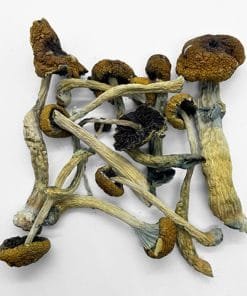
Price range: $185.00 through $920.00
This product has multiple variants. The options may be chosen on the product page 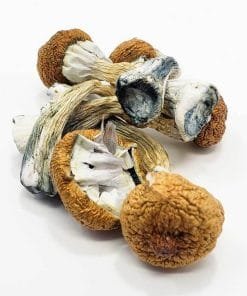
Price range: $180.00 through $920.00
This product has multiple variants. The options may be chosen on the product page 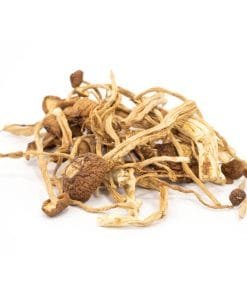
Price range: $180.00 through $910.00
This product has multiple variants. The options may be chosen on the product page 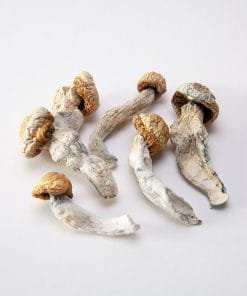
Price range: $180.00 through $910.00
This product has multiple variants. The options may be chosen on the product page 
Price range: $185.00 through $860.00
This product has multiple variants. The options may be chosen on the product page 
MAGIC MUSHROOMS
Psilocybe Azurescens – Ultra-Potent Wild Psilocybin Mushroom
Price range: $180.00 through $870.00
This product has multiple variants. The options may be chosen on the product page 
MAGIC MUSHROOMS
Price range: $178.00 through $840.00
This product has multiple variants. The options may be chosen on the product page
Ezekiel McBride (verified owner) –
Potent and clean. No nausea.
Taliyah Smoot (verified owner) –
They came in perfect condition—fresh and ready.
Elena Blake (verified owner) –
I expected a good trip, but I didn’t expect emotional healing and a full-circle experience like this.
Xavier Craig (verified owner) –
This felt like more than a psychedelic journey. It felt like support from people who understand what real healing means.
Kenneth Hale (verified owner) –
Fast, stealthy delivery and amazing quality. I could feel the professionalism behind every step.
Leia Thorne (verified owner) –
The kind of healing I didn’t know I needed.
Juliana Welch (verified owner) –
It felt like my nervous system finally relaxed, and I could breathe again.
Tanner Paul (verified owner) –
The emotional clarity I gained from this session is hard to put into words. It felt safe, guided, and surprisingly gentle.
Gilbert Sharp (verified owner) –
This isn’t just a product — it’s a safe invitation to come back home to yourself.
Jaylene Shapiro (verified owner) –
These brought a sense of oneness I’ll never forget.
Shane Hopkins (verified owner) –
A deeply emotional journey that was only possible because I knew I was in good hands.
Warren McDaniel (verified owner) –
Everything slowed down, and for once, I didn’t feel rushed or reactive.
Ellie Rowe (verified owner) –
The colors were beautiful, yes, but the emotional healing was even more powerful.
Liliana Casey (verified owner) –
When something this powerful is handled with love and care, it becomes more than a product — it becomes a moment.
Sean Wood (verified owner) –
The journey was deep and personal, but the professionalism around it made me feel completely supported.
Melanie Riley (verified owner) –
This gave me space to explore parts of myself without fear or confusion. Everything was clear, even the packaging.
Amari Blackwell (verified owner) –
I felt supported throughout my whole experience, just from how the product was presented.
Talon Robles (verified owner) –
Shipping was fast and quiet, which I appreciate so much.
Hadley Shields (verified owner) –
Discreet shipping means I can explore without worry.
Monica Benitez (verified owner) –
I trust the process, because I trust this supplier.
Giovanna Hyatt (verified owner) –
I’m more myself now than I’ve ever been.
Zola Darnell (verified owner) –
Top-shelf quality mushrooms.
Delaney Salazar (verified owner) –
I’m more myself now than I’ve ever been.
Keira Blake (verified owner) –
This gave me emotional insight, and the professionalism behind the product gave me peace of mind.
Joseph Martin (verified owner) –
The come-up was smooth and warm, like slipping into a deep meditation.
Brandon Hall (verified owner) –
Each moment felt sacred. I was fully immersed in a gentle sense of awe.
Gabriel Bell (verified owner) –
Everything was handled smoothly.
Carl Thornton (verified owner) –
This product brought so much peace and insight. I sat with myself in total stillness for hours and felt completely safe.
Peter Russell (verified owner) –
The entire experience felt well organized.
Tony Briggs (verified owner) –
Helped me realize how much I was carrying emotionally. It softened the edges of everything.
Jared Foster (verified owner) –
I felt more like a person than a customer. That meant more to me than I expected.
Wayne Pratt (verified owner) –
There’s real wisdom in how this company operates. You can feel it in the care of every step.
Alaina Daniel (verified owner) –
This journey opened my eyes and softened my heart. I’m so grateful for the professionalism that made it possible.
Bruce Sullivan (verified owner) –
Everything arrived just as expected.
Hannah Adams (verified owner) –
A professional and straightforward experience.
Ronald Hughes (verified owner) –
Really pleased with the service provided.
Walter Foster (verified owner) –
Communication was clear and helpful throughout.
Paisley Evans (verified owner) –
A professional and straightforward experience.
Chase Ortiz (verified owner) –
The ordering process was quick and convenient.
Craig Graham (verified owner) –
Great communication and an easy process.
Michael Thompson (verified owner) –
Everything was clearly explained.
Ava Davis (verified owner) –
Everything matched the description perfectly.
Chloe Hall (verified owner) –
Couldn’t ask for a smoother process.
Amanda Sullivan (verified owner) –
Everything was delivered in good condition.
Austin Roberts (verified owner) –
Everything worked out perfectly.
Brian Walker (verified owner) –
Great experience with clear updates.
Riley Young (verified owner) –
Everything was organized and handled well.
Wayne Woods (verified owner) –
Everything was handled efficiently.
Emma Williams (verified owner) –
The purchasing process couldn’t have been easier.
Jeremy Watson (verified owner) –
Completely satisfied with the purchasing process.
Lauren Alexander (verified owner) –
Excellent experience overall. Everything was straightforward.