
No products in the cart.
Psilocybe hoogshagenii – Sacred “Little Birds of the Woods” Mushroom
$178.00 – $865.00Price range: $178.00 through $865.00
Psilocybe hoogshagenii, known as Los Pajaritos, is a revered sacred mushroom used in traditional Mexican rituals. Offers deep spiritual journeys and visionary states.
Psilocybe hoogshagenii: Essential Identification, Habitat, and Taxonomy Guide
Psilocybe hoogshagenii is a psilocybin-containing mushroom formally described by Roger Heim in 1958 from Mexico. Historical descriptions emphasize a reddish-brown, hygrophanous cap with a distinctive acute papilla in the typical variety, slender stipe, blue discoloration after injury, and purple-brown spores. Reliable identification requires microscopy, specimen provenance, current taxonomy, and where appropriate, molecular evidence.
Overview
Psilocybe hoogshagenii is a psilocybin-containing species in the family Hymenogastraceae, formally described by the French mycologist Roger Heim in 1958 from specimens collected in Mexico. The species name honors Searle Hoogshagen, an American linguist and ethnographer who documented Mixe language and culture in Oaxaca and contributed to early records of indigenous ceremonial mushroom use in the region.
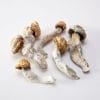
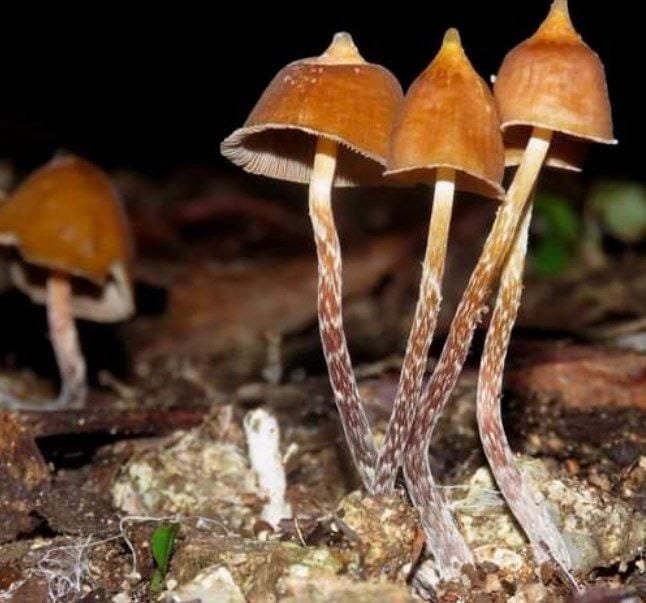
Historical descriptions associate P. hoogshagenii with a reddish-brown, hygrophanous pileus bearing a sharply pointed acute papilla, a slender stipe, blue discoloration of damaged tissue, and a dark purple-brown spore deposit. The species has been linked to humid subtropical soil environments in Mexico and to ethnomycological research conducted during the mid-twentieth century.
Taxonomic literature has associated the name Psilocybe semperviva, described by Heim and Cailleux, with Psilocybe hoogshagenii var. convexa, a varietal form distinguished from the typical papillate cap by a more rounded profile. Because fungal nomenclature evolves with new morphological and molecular evidence, the current accepted status of all names connected to this species should be verified through MycoBank or Index Fungorum before research or educational use.
This article is provided for scientific, educational, and harm-reduction purposes. Sources were reviewed through July 2025.
Psilocybe hoogshagenii Taxonomy and Nomenclature
Direct answer: Psilocybe hoogshagenii is a species of Psilocybe formally described by French mycologist Roger Heim in 1958 from Mexican material. It belongs to Hymenogastraceae within Agaricales. Its current nomenclatural status, varieties, type information, and the treatment of P. semperviva should be verified against the original publication and current fungal nomenclatural registries.
Psilocybe hoogshagenii was formally described by Roger Heim in his 1958 monograph on Mexican hallucinogenic fungi, published in the journal Revue de Mycologie. Heim, director of the Muséum National d’Histoire Naturelle in Paris and a collaborator with the ethnomycologist R. Gordon Wasson, described numerous Mexican Psilocybe species during this period based on specimens collected in collaboration with indigenous informants and field researchers. The full bibliographic citation is: Heim, R. (1958). Les champignons hallucinogènes du Mexique. Archives de l’Institut Botanique de l’Université de Liège and Revue de Mycologie (various publications 1956–1958); researchers should consult the specific issue and page numbers in the original publications through institutional library access to verify type locality, holotype or lectotype status, herbarium repository, and specimen identifier.
The species belongs to the following taxonomic hierarchy:
- Kingdom: Fungi
- Phylum: Basidiomycota
- Class: Agaricomycetes
- Order: Agaricales
- Family: Hymenogastraceae
- Genus: Psilocybe
- Species: Psilocybe hoogshagenii R. Heim
Two varietal forms appear in historical literature. The typical variety, Psilocybe hoogshagenii var. hoogshagenii, is characterized by a sharply pointed acute papilla on the cap. The varietal form Psilocybe hoogshagenii var. convexa has been associated in taxonomic literature with Psilocybe semperviva, named by Heim and Cailleux, and is distinguished by a more rounded, convex cap profile without a pronounced papilla.
Current Taxonomic Status
The accepted nomenclatural status of P. hoogshagenii, its varieties, and associated synonyms including P. semperviva should be verified against MycoBank and Index Fungorum as of the date of use, since both registries are updated as new treatments are published. Molecular phylogenetic research by Matheny and colleagues demonstrated that psilocybin-producing Psilocybe species form a distinct clade within Hymenogastraceae, separate from morphologically similar but phylogenetically distant taxa. Species boundaries established through purely morphological criteria in mid-twentieth-century literature may not correspond precisely to genetically defined lineages, and later molecular revisions should be consulted alongside the original descriptions.
Original Description and Type Specimen
The original description of Psilocybe hoogshagenii appears in Roger Heim’s 1958 research on Mexican hallucinogenic fungi. Researchers requiring authoritative morphological dimensions, type locality, collector information, collection date, holotype or lectotype status, and herbarium repository should consult Heim’s original publications directly through institutional library access rather than relying on secondary sources or online summaries, which may carry transcription errors or omit critical nomenclatural detail.
The type specimen, if preserved, would most likely be held in a major European or North American herbarium active in receiving neotropical collections during the 1950s, such as the herbarium of the Muséum National d’Histoire Naturelle in Paris. Researchers should verify current holding institution, specimen identifier, and access protocols through the herbarium directly or through aggregated herbarium databases before citing type information.
Exact morphological measurements and spore dimensions reported in secondary sources should be traced back to Heim’s original description or to authenticated modern taxonomic treatments before being cited in research. Dimensional data that appear in popular literature or informal online resources may not accurately reflect the type description.
Evidence Quality and Research Limitations
Scientific claims about Psilocybe hoogshagenii rest on a limited published record relative to more intensively studied species. Understanding the quality of available evidence is essential context for interpreting all claims in this article.
Taxonomic evidence: Moderate. Heim’s 1958 original description provides the morphological foundation, but molecular phylogenetic assessment of this specific taxon using authenticated specimens appears limited in the peer-reviewed literature.
Molecular evidence: Limited. Publicly accessible sequence-confirmed records for authenticated P. hoogshagenii specimens in databases such as GenBank appear sparse, which reduces the reliability of molecular identification using this taxon as a reference target.
Chemical evidence: Limited. Published quantitative alkaloid analyses specific to authenticated P. hoogshagenii specimens are not prominent in the peer-reviewed literature. Potency claims should be treated as provisional.
Distribution evidence: Limited to Moderate. Historical records center the species in Mexico. The strength of any distributional claim depends on whether underlying records are herbarium-vouched with specimen identifiers, sequence-confirmed, or observation-only.
Ethnomycological evidence: Contextual. Heim and Wasson’s fieldwork documented ceremonial mushroom use in Oaxaca and surrounding states broadly. Species-specific attribution to particular Indigenous communities requires verification from primary ethnographic records rather than inference from the wider research program.
These ratings reflect the evidence reviewed through July 2025. Each category would strengthen with authenticated voucher deposits, molecular sequence data, and peer-reviewed chemical analysis of confirmed specimens.
Psilocybe hoogshagenii var. hoogshagenii vs. var. convexa
Direct answer: Psilocybe hoogshagenii var. convexa is a historical varietal name associated with a more convex cap lacking the conspicuous acute papilla of the typical variety. Taxonomic literature has connected it with the name Psilocybe semperviva. The precise synonymy and current nomenclatural status of both names should be confirmed from Heim’s original publications and current fungal registries.
| Feature | var. hoogshagenii (typical) | var. convexa / P. semperviva |
|---|---|---|
| Cap shape | Convex to umbonate with acute papilla | Convex to plane, papilla absent or reduced |
| Papilla | Sharply pointed, conspicuous | Absent or rounded |
| Historical name | Psilocybe hoogshagenii R. Heim | Psilocybe semperviva Heim and Cailleux |
| Nomenclatural connection | Type variety | Associated with var. convexa in literature |
| Current status | Verify via MycoBank | Verify via MycoBank and Index Fungorum |
| Microscopy | Required | Required |
All features in this table are drawn from historical descriptions. Researchers should verify the exact synonymy, any subsequent revisions, and current accepted status from primary nomenclatural sources before citing either name.
Psilocybe hoogshagenii Identification: Physical and Microscopic Features
Direct answer: Psilocybe hoogshagenii identification relies on a combination of macroscopic morphology, microscopy, specimen provenance, ecological context, and for research-grade conclusions, molecular evidence. Historical descriptions emphasize a reddish-brown hygrophanous cap with an acute papilla in the typical variety, blue discoloration after injury, dark purple-brown spores, and association with humid subtropical soils. No single visible feature establishes species identity or safety.
Identification at a Glance
| Feature | Psilocybe hoogshagenii (typical) | Notes |
|---|---|---|
| Cap color | Reddish-brown, hygrophanous, fades to buff | Verify dimensions from Heim 1958 |
| Cap papilla | Acute, sharply pointed | Absent in var. convexa |
| Stipe | Slender, pale | White mycelial strands at base |
| Spore print | Dark purple-brown | Key macroscopic distinction |
| Bluing reaction | Present after injury | Not unique to this species |
| Substrate | Clay-rich subtropical soils, humid banks | Terrestrial, not wood-associated |
| Microscopy | Required | Spores, cystidia, pileipellis |
Cap (Pileus)
Historical descriptions characterize the cap as small and reddish-brown when moist, with hygrophanous behavior causing it to fade toward pale buff or ochre as moisture is lost. The surface is smooth and viscid when wet. The most strongly cited morphological feature of the typical variety is the acute papilla, a sharply pointed projection at the center of the cap. Cap dimensions cited in secondary sources should be verified directly from Heim’s original 1958 description for authoritative measurements.
Acute Papilla
Definition: An acute papilla is a narrow, sharply pointed projection at the center of a mushroom cap. In historical descriptions of Psilocybe hoogshagenii var. hoogshagenii, the papilla is a conspicuous cap character that distinguishes it from a broader, rounded umbo or a flat disc. It is informative but not species-specific on its own.
The acute papilla distinguishes typical P. hoogshagenii from related species such as Psilocybe zapotecorum, which is typically described without this feature, and from var. convexa, which presents a more rounded profile. The papilla must be evaluated alongside spore print, microscopy, substrate, and geographic provenance rather than treated as a standalone identification criterion.
Gills (Lamellae)
The lamellae are adnate to adnexed, moderately crowded, and progress from pale coloration in young specimens through grayish tones to dark purple-brown as spores mature. Gill edges are typically described as paler than the faces. This progression parallels other psilocybin-containing Psilocybe species and is informative when evaluated alongside spore print color and other features.
Stem (Stipe)
The stipe is described as slender relative to cap diameter, pallid to whitish, and bearing white mycelial strands at the base. A partial veil may be present in younger specimens but typically leaves only faint traces with age, leaving no persistent membranous ring. Stipe tissue typically shows blue discoloration when damaged.
Psilocybe hoogshagenii Spores and Spore Print
Direct answer: Psilocybe hoogshagenii spores are historically described as pigmented, thick-walled, and subrhomboid to subellipsoid with a distinct germ pore, producing a purple-brown deposit in mass. Exact measurements should be cited from Heim’s original description or authenticated modern treatments because dimensions reported by secondary sources can differ.
A dark purple-brown to violet-brown spore deposit is one of the more useful macroscopic features for provisionally distinguishing P. hoogshagenii from toxic lookalikes in other genera. Spore print collection requires placing a fresh cap gill-side down on paper for several hours in a draft-free environment. Perceived color can vary under different lighting, and any ambiguity should prompt additional investigation rather than a conclusion about specimen identity or safety.
Bluing Reaction
Damaged tissue in psilocybin-containing Psilocybe species typically develops blue discoloration through an enzymatic cascade. Research published in Angewandte Chemie by Lenz and colleagues in 2020 identified this as a damage-triggered process in which phosphatase activity releases psilocin from psilocybin, which is then oxidized through a copper-dependent laccase reaction to form blue oligomeric pigments. Bluing is a useful indicator but occurs in other fungi and cannot confirm species identity by itself. Its absence does not exclude a psilocybin-containing species, as reaction intensity varies with specimen condition and age.
Psilocybe hoogshagenii Microscopy
Direct answer: Psilocybe hoogshagenii microscopy examines spore dimensions, geometry, pigmentation, wall characteristics, and germ pore morphology alongside basidia, cheilocystidia, pleurocystidia, and pileipellis anatomy. All measurements should be compared with Heim’s original 1958 description or authenticated modern treatments because microscopic dimensions can overlap among closely related subtropical Psilocybe species.
Spores in historical descriptions are characterized as subrhomboid to subellipsoid with thick pigmented walls and a prominent germ pore. Specific dimensional ranges should be taken from the primary taxonomic literature rather than secondary sources. Cheilocystidia and pleurocystidia morphology, along with pileipellis structure, contribute meaningfully to species-level identification and should be evaluated alongside other evidence. High-confidence identification should not rely solely on macroscopic field observations where clinically consequential confusion is possible.
Psilocybe semperviva and Varietal Taxonomy
Direct answer: Psilocybe semperviva has been associated in historical taxonomy with Psilocybe hoogshagenii var. convexa rather than treated as an unrelated species. Because fungal synonymy can change, the current treatment should be checked against the relevant original publication, MycoBank, Index Fungorum, and modern taxonomic revisions.
The relationship between P. semperviva and P. hoogshagenii var. convexa illustrates a broader challenge in Psilocybe taxonomy, where species and varietal boundaries originally defined on morphological grounds may not correspond cleanly to genetically defined lineages. Readers working with either name in a research context should verify current accepted nomenclatural status, documented synonymy, and any revisions directly from MycoBank and Index Fungorum, and through Heim’s original publications and modern molecular revisions of the genus.
Psilocybe hoogshagenii Habitat, Substrate, and Ecology
Direct answer: Psilocybe hoogshagenii habitat is historically associated with humid subtropical soils in Mexico, including clay-rich or muddy ground and humid banks. Some accounts describe association with agricultural settings such as shade-coffee landscapes. Distribution claims are strongest when supported by authenticated herbarium vouchers rather than observation-only records.
Substrate and Microhabitat
Historical accounts describe P. hoogshagenii as a terrestrial species growing in humid subtropical environments and associated with clay-rich, muddy, or damp soils rather than woody debris. Reported microhabitats include humid banks, roadside margins, and disturbed or partially shaded areas in subtropical zones. Some accounts describe association with shade coffee agroecosystems in highland regions of Mexico, where organic-rich soils and stable humidity may support fruiting.
This terrestrial, clay-associated ecology distinguishes P. hoogshagenii from wood-associated Pacific Northwest species such as P. cyanescens and from dung-associated species such as P. cubensis, and should be considered when evaluating identification claims.
Ethnomycological Context
Direct answer: Psilocybe hoogshagenii emerged in scientific literature during mid-twentieth-century research on psychoactive mushrooms in Mexico. Species-specific claims about Mixtec, Zapotec, Mazatec, or other Indigenous uses should be tied to primary ethnographic or ethnomycological records rather than generalized from the broader research program involving multiple Psilocybe species.
Roger Heim’s collaboration with R. Gordon Wasson produced foundational documentation of ceremonial mushroom use in Oaxaca and surrounding Mexican states during the 1950s. This research involved multiple Psilocybe species used in healing and divinatory contexts across distinct Indigenous communities. Wasson’s 1957 Life magazine account and subsequent publications brought international attention to these traditions. Attribution of specific species to specific communities or ceremonies should be traced to primary ethnographic records in Heim and Wasson’s publications rather than inferred from the general research program.
Verified Psilocybe hoogshagenii Distribution Records
Direct answer: Distribution claims for Psilocybe hoogshagenii center on Mexico, with historical associations documented for states including Oaxaca, Puebla, and Veracruz. The defensibility of any distributional claim depends directly on whether underlying records are herbarium-vouched, sequence-confirmed, or observation-only.
Occurrence records submitted to platforms such as the Global Biodiversity Information Facility aggregate observations of variable verification quality. Many lack microscopy, spore print data, or molecular confirmation and should not be equated with vouched herbarium material. Researchers assessing range should weight record categories accordingly and prioritize verified institutional collections. Herbarium aggregators and direct contact with institutions holding neotropical fungal collections are the appropriate starting points for locating authenticated P. hoogshagenii vouchers.
Psilocybe hoogshagenii Season
Fruiting in humid subtropical environments is influenced by rainfall, temperature, and substrate moisture rather than the cool autumn onset typical of Pacific Northwest species. In seasonally wet climates, fruiting in terrestrial Psilocybe species is generally associated with rainy season conditions. Specific fruiting windows for P. hoogshagenii at different localities should be inferred from documented collections rather than from generalized climate descriptions.
Psilocybe hoogshagenii Potency and Alkaloid Content
Direct answer: No reliable universal Psilocybe hoogshagenii potency value has been established from a robust species-specific dataset. Precise alkaloid percentages should come from authenticated specimens analyzed with validated methods such as HPLC or LC-MS. General Psilocybe studies cannot establish the alkaloid concentration of this species specifically.
Primary Alkaloids
The principal psychoactive compounds associated with P. hoogshagenii are psilocybin (4-phosphoryloxy-N,N-dimethyltryptamine) and psilocin (4-hydroxy-N,N-dimethyltryptamine). Following ingestion, enzymatic dephosphorylation converts psilocybin to psilocin, which acts as a partial agonist at serotonin receptors, particularly the 5-HT2A receptor, mediating its primary pharmacological effects. Baeocystin and norbaeocystin, related indole alkaloids, have been documented in other Psilocybe species and may be present in P. hoogshagenii, though species-specific quantitative data are limited.
Analytical Variability
Alkaloid concentrations in psilocybin-containing mushrooms vary with developmental stage, environmental conditions, substrate, storage duration, drying method, and analytical technique. Research by Bigwood and Beug demonstrated substantial within-species variability in psilocybin concentrations under controlled collection conditions in P. cubensis; while this illustrates the general principle that alkaloid content is not fixed even within a species, it does not establish the specific variability range for P. hoogshagenii, which would require authenticated specimens of that taxon analyzed by comparable methods. Comparisons between species or populations are meaningful only when specimens are taxonomically authenticated, methodologically equivalent, and analyzed under comparable conditions.
Psilocybe hoogshagenii Lookalikes and Identification Risks
Direct answer: Several subtropical Psilocybe species and other small brown mushrooms share morphological features with P. hoogshagenii. Species-level identification requires microscopy, spore print examination, ecological context, and geographic provenance. No single field characteristic establishes mushroom identity or safety.
Psilocybe hoogshagenii vs. Psilocybe zapotecorum
Psilocybe zapotecorum is a larger, wood-associated species historically documented from Oaxaca and other Mexican states. It is typically described without a prominent acute papilla, distinguishing it from typical P. hoogshagenii, and is associated with more woody or boggy substrates rather than clay-rich soils. Both species appear in the ethnomycological literature of Oaxaca and were described during the same mid-twentieth-century period of Mexican Psilocybe research. Reliable distinction requires evaluation of cap morphology, substrate, microscopy, and geographic context, with current taxonomic treatments consulted for both species.
Psilocybe hoogshagenii vs. Psilocybe mexicana
Psilocybe mexicana is among the best-known Mexican psilocybin-containing species and was the source material from which Albert Hofmann first isolated psilocybin in chemically pure form at Sandoz Laboratories in 1958. It is particularly associated with grassy habitats at mid-elevations in Mexico and is notable for producing sclerotia, compact underground storage structures, a feature not documented in P. hoogshagenii. Typical P. hoogshagenii differs by its acute papilla in the standard variety, clay-soil substrate associations, and absence of documented sclerotium formation. Research-grade identification of either species requires microscopy and current taxonomic evidence.
Other Subtropical Brown Mushrooms
Small brown mushrooms in subtropical Mexican environments include additional Psilocybe species and members of genera such as Inocybe, Pholiotina, and Galerina, some of which contain amatoxins capable of causing fatal hepatotoxicity. The general principle applies universally: no macroscopic feature or combination of field observations is sufficient to establish that a wild mushroom is safe to consume.
Any suspected mushroom poisoning warrants immediate contact with Poison Control (U.S.: 1-800-222-1222) and emergency medical evaluation.
Microscopy and Molecular Identification
Microscopy
Light microscopy provides access to anatomical features that carry substantially greater taxonomic weight than macroscopic observation. For P. hoogshagenii, relevant features include spore dimensions and shape, germ pore morphology, wall thickness and pigmentation, cheilocystidia and pleurocystidia morphology, pileipellis architecture, and basidia configuration. All dimensional data should be compared with Heim’s original 1958 description or subsequent authenticated taxonomic treatments rather than with secondary sources. Microscopy should be performed by individuals with appropriate training, or in consultation with a regional mycological society or institutional collection with expertise in neotropical Psilocybe taxonomy.
DNA Barcoding and Molecular Analysis
ITS sequencing can contribute to species-level identification for morphologically similar fungi when compared against verified sequences in databases such as GenBank. For P. hoogshagenii, available molecular reference sequences in public databases may be limited or unverified against authenticated type material, which reduces the reliability of sequence-based identification using this taxon as a reference target. Identification confidence is strongest when morphology, microscopy, provenance, ecology, and appropriately interpreted molecular evidence agree rather than when any single method is applied in isolation. Voucher deposits linking physically preserved material to sequence data contribute to the reference database and support future taxonomic work.
Psilocybe hoogshagenii Lifecycle
Like other basidiomycete fungi, Psilocybe hoogshagenii progresses through a characteristic developmental sequence. Basidiospores released from mature fruiting bodies are dispersed by wind, water, or substrate disturbance. Under suitable conditions of moisture and temperature, a germinating spore produces primary hyphae. When hyphae of compatible mating types fuse, the resulting dikaryotic mycelium carries two distinct nuclear identities in each hyphal compartment.
The mycelium colonizes organic-rich subtropical soils, extracting nutrients through enzymatic decomposition of plant material. In seasonally wet climates, the mycelium may persist through drier periods and initiate fruiting when rainy season conditions provide suitable moisture and temperature. Primordia develop into mature fruiting bodies bearing basidia on gill surfaces, each basidium typically producing four basidiospores that are discharged and dispersed to complete the cycle. The macroscopic mushroom represents only the reproductive structure of the organism; the mycelium constitutes the persistent, ecologically active body of the fungus.
Psilocybe hoogshagenii Legal Status in the USA
Direct answer: Psilocybin and psilocin remain Schedule I controlled substances under U.S. federal law. State and local reforms do not eliminate federal restrictions. Laws affecting fungal spores and related biological material vary by jurisdiction and intended use, and researchers should verify current statutes rather than relying on vendor policies or generalized online summaries.
United States Federal Law
Psilocybin and psilocin are classified as Schedule I controlled substances under the Controlled Substances Act. This classification applies to the compounds themselves and extends to mushrooms and other biological material containing them. Possession, manufacture, distribution, and related activities are subject to federal criminal penalties regardless of state or local policy.
State-Level Developments
Several U.S. jurisdictions have enacted or are developing frameworks that modify the legal landscape for psilocybin at the state or local level, though none alter federal law or provide protection from federal enforcement.
Oregon Psilocybin Services, established through Measure 109 passed in 2020, created a regulated framework for supervised psilocybin administration at licensed facilities. Colorado Proposition 122, implemented through the Natural Medicine Health Act, established regulated access frameworks for psilocybin and related compounds in that state. Additional municipalities have adopted enforcement-deprioritization or decriminalization policies that vary substantially in scope and legal effect.
Individuals and researchers should consult current legal guidance applicable to their specific jurisdiction. State-level reform does not eliminate federal legal risk.
Safety Considerations
Accurate identification of any wild mushroom is a genuine safety matter. Small brown mushrooms in subtropical environments include toxic species in genera such as Galerina, Inocybe, and Pholiotina, some of which contain amatoxins capable of causing fatal hepatotoxicity. Amatoxin poisoning characteristically presents with delayed onset, often many hours after ingestion, which can create a false sense of safety before severe hepatotoxic effects develop.
Reliable identification of P. hoogshagenii requires convergent evidence from macroscopic features, microscopy, ecological context, geographic provenance, and ideally molecular confirmation. Identification from photographs is not adequate for safety purposes. Blue staining alone does not confirm species identity. A dark spore print alone does not exclude dangerous species. High-confidence identification should not rely solely on macroscopic field observations where clinically consequential confusion is possible.
Any suspected mushroom poisoning, or any unexpected or neurological symptom following mushroom ingestion, warrants immediate contact with Poison Control (U.S.: 1-800-222-1222) and emergency medical evaluation.
Psilocybe hoogshagenii: Key Identification and Research Takeaways
Psilocybe hoogshagenii is a psilocybin-containing species in the family Hymenogastraceae, formally described by Roger Heim in 1958 from Mexico and named for ethnographer Searle Hoogshagen. Its most distinctive historical feature is the acute papilla of the typical variety, combined with a reddish-brown hygrophanous cap, slender stipe, dark purple-brown spore deposit, blue tissue discoloration, and association with humid subtropical soils. The varietal form var. convexa, associated in the literature with Psilocybe semperviva, lacks the pronounced papilla.
Current nomenclatural status for all names connected to this species should be verified from MycoBank and Index Fungorum, as molecular phylogenetic work has substantially revised genus and family boundaries since Heim’s original descriptions. Species-specific chemical evidence is limited, and potency claims should be treated as provisional without authenticated primary analytical data. Species-specific ethnomycological attribution requires primary ethnographic evidence rather than inference from the broader Heim-Wasson research program.
Identification combining macroscopic morphology, microscopy, specimen provenance, ecological context, and molecular evidence represents the most defensible approach. Psilocybin and psilocin remain Schedule I controlled substances under U.S. federal law, and state-level legal frameworks vary substantially in scope.
For research, educational, or harm-reduction purposes, the most reliable conclusions rest on herbarium-vouched specimens, peer-reviewed evidence, sequence-confirmed records, and authoritative taxonomic and toxicological sources.
Frequently Asked Questions
What is Psilocybe hoogshagenii?
Psilocybe hoogshagenii is a psilocybin-containing species in the family Hymenogastraceae, formally described by Roger Heim in 1958 from Mexico. Historical descriptions emphasize a reddish-brown hygrophanous cap, acute papilla in the typical form, slender stipe, blue discoloration after injury, and purple-brown spores.
What is an acute papilla on Psilocybe hoogshagenii?
An acute papilla is a narrow, sharply pointed projection at the center of a mushroom cap. It is strongly associated with historical descriptions of typical P. hoogshagenii and differs from a broader, rounded umbo. The feature alone is not sufficient for species identification.
Is Psilocybe semperviva the same as Psilocybe hoogshagenii?
Historical taxonomic literature connects Psilocybe semperviva with Psilocybe hoogshagenii var. convexa. Because fungal nomenclature changes with new evidence, researchers should verify exact synonymy and current taxonomic status using MycoBank, Index Fungorum, and modern molecular revisions alongside Heim’s original publications.
How do you identify Psilocybe hoogshagenii under a microscope?
Microscopic identification considers spore dimensions, geometry, pigmentation, wall characteristics, and germ pore morphology alongside basidia, cheilocystidia, pleurocystidia, and pileipellis anatomy. Results should be compared with Heim’s original 1958 description or authenticated modern treatments and combined with provenance and ecological evidence.
Where does Psilocybe hoogshagenii grow naturally?
P. hoogshagenii is historically documented from Mexico and associated with humid subtropical soil environments. Published accounts describe clay-rich or muddy soils, humid banks, and some agricultural settings. Distribution claims are strongest when supported by authenticated herbarium specimens and peer-reviewed records.
How potent is Psilocybe hoogshagenii?
No reliable universal potency percentage has been established from a robust species-specific dataset. Quantitative claims require chemically analyzed, taxonomically authenticated specimens because alkaloid measurements vary with specimen identity, maturity, storage, degradation, and analytical methodology.
What is the difference between Psilocybe hoogshagenii and Psilocybe mexicana?
The two species have different historical morphological and ecological descriptions. Typical P. hoogshagenii is associated with a sharply papillate cap and clay-rich subtropical soils, while P. mexicana is associated with grassy habitats and sclerotium formation. Research-grade identification incorporates microscopy and current taxonomy.
Are Psilocybe hoogshagenii spores legal in the United States?
There is no single state-law rule applying throughout the United States. Psilocybin and psilocin are federally controlled substances, while state laws affecting spores and fungal material vary by jurisdiction and intended use. Researchers should verify current statutes rather than relying on vendor shipping policies.
References and Primary Sources
Original taxonomic description
Heim, R. (1958). Les champignons hallucinogènes du Mexique: Études ethnologiques, taxinomiques, biologiques, physiologiques et chimiques. Muséum National d’Histoire Naturelle, Paris. Researchers should consult the original publication through institutional library access for specific page numbers, type locality, and specimen identifiers.
Nomenclature and taxonomy
MycoBank — fungal nomenclature registry
Index Fungorum — fungal names database
Molecular phylogenetics and family placement
Matheny, P.B., et al. (2006). Major clades of Agaricales: a multilocus phylogenetic overview. Mycologia 98(6): 982–995. doi:10.3852/mycologia.98.6.982
Bluing reaction chemistry
Lenz, C., et al. (2020). Injury-triggered blueing reactions of Psilocybe “magic” mushrooms. Angewandte Chemie International Edition 59(4): 1450–1454. doi:10.1002/anie.201910175
Alkaloid variability
Bigwood, J., and Beug, M.W. (1982). Variation of psilocybin and psilocin levels with repeated flushes and age of fruiting bodies of Psilocybe cubensis. Journal of Ethnopharmacology 5(3): 287–291. doi:10.1016/0378-8741(82)90014-9
Psilocybin isolation
Hofmann, A., et al. (1958). Psilocybin und Psilocin, zwei psychotrope Wirkstoffe aus mexikanischen Rauschpilzen. Helvetica Chimica Acta 42(5): 1557–1572. doi:10.1002/hlca.19590420518
5-HT2A receptor pharmacology
National Center for Biotechnology Information — Serotonin receptors
Mushroom poisoning and toxicology
Poison Control — Mushroom poisoning
Occurrence records
Global Biodiversity Information Facility
DNA barcoding and sequence databases
NCBI GenBank
International Barcode of Life
DEA scheduling
Drug Enforcement Administration — Drug scheduling
Oregon Psilocybin Services
Oregon Health Authority — Oregon Psilocybin Services
Colorado Natural Medicine Health Act
Colorado Department of Public Health and Environment — Natural Medicine
| QUANTITY | OZ, 1/4 POUND, 1/2 POUND, POUND |
|---|
51 reviews for Psilocybe hoogshagenii – Sacred “Little Birds of the Woods” Mushroom
Add a review Cancel reply
Related products
Rated 4.82 out of 5
$180.00 – $910.00Price range: $180.00 through $910.00
MAGIC MUSHROOMS
Rated 4.82 out of 5
$175.00 – $850.00Price range: $175.00 through $850.00
Rated 4.76 out of 5
$180.00 – $890.00Price range: $180.00 through $890.00
MAGIC MUSHROOMS
Rated 4.67 out of 5
$178.00 – $840.00Price range: $178.00 through $840.00
MAGIC MUSHROOMS
Psilocybe Azurescens – Ultra-Potent Wild Psilocybin Mushroom
Rated 4.84 out of 5
$180.00 – $870.00Price range: $180.00 through $870.00
MAGIC MUSHROOMS
Rated 4.78 out of 5
$180.00 – $860.00Price range: $180.00 through $860.00
MAGIC MUSHROOMS
Rated 4.80 out of 5
$178.00 – $840.00Price range: $178.00 through $840.00
Rated 4.76 out of 5
$190.00 – $890.00Price range: $190.00 through $890.00
Jett Rangel (verified owner) –
Discreet and efficient shipping.
Marshall Leach (verified owner) –
Really felt the connection to everything.
Jillian Pope (verified owner) –
Beautiful energy from start to finish.
Ivanna Alston (verified owner) –
The spiritual clarity I received was priceless.
Angeline Lowery (verified owner) –
The best experience I’ve had in years.
Lawrence Lloyd (verified owner) –
This product helped me unpack so much mentally — and knowing it came from a reliable, discreet source made all the difference.
Blake Russell (verified owner) –
Even the packaging felt intentional — quiet, clean, and respectful. The journey itself was emotional and deeply needed.
Olivia Carter (verified owner) –
The emotional clarity I got from this experience has stayed with me.
Austin Sanchez (verified owner) –
I don’t usually leave reviews, but the professionalism here deserves credit. Plus, the trip was everything I needed and more.
Colton Hayes (verified owner) –
Beautiful experience, smooth journey, and zero stress about shipping. These folks know exactly what they’re doing.
Monica Benitez (verified owner) –
A reliable reset button for the soul.
Alana Lawson (verified owner) –
The best part was knowing I didn’t have to worry about the process. I could just focus on the journey.
Makayla Myers (verified owner) –
I can’t remember the last time I felt this seen, calm, and grounded. It started with a respectful order process.
Chase Holt (verified owner) –
I didn’t think something so small could have such a big emotional impact. I’m still in awe.
Jasmine Ramirez (verified owner) –
These are people you can trust with a powerful tool. That matters more than anything.
Christian Evans (verified owner) –
The emotional clarity I got from this experience has stayed with me.
Melanie Riley (verified owner) –
I was honestly nervous before trying this, but the experience felt like a gentle opening into something deep and beautiful — like my mind finally exhaled.
Abigail Turner (verified owner) –
It’s rare to find a team that combines healing products with customer care like this. I felt safe and valued.
Zariyah Thatcher (verified owner) –
Very trustworthy team.
Jaylene Shapiro (verified owner) –
I’m still feeling the positive effects weeks later.
Celine Bateman (verified owner) –
I trusted them, and they delivered—literally and spiritually.
Clark Vincent (verified owner) –
The best part was knowing I didn’t have to worry about the process. I could just focus on the journey.
Jason Bailey (verified owner) –
Fast, stealthy delivery and amazing quality. I could feel the professionalism behind every step.
Journee Blevins (verified owner) –
So easy to work with.
Aya Crowell (verified owner) –
It helped me love myself again.
Kenneth Hale (verified owner) –
This was life-shifting, and I’m beyond grateful for how carefully the product was handled.
Daniel Clark (verified owner) –
The calm that came over me was unlike anything I’ve felt. It was soft, slow, and incredibly healing.
Derrick Norton (verified owner) –
This experience was personal, emotional, and beautifully clear. Thank you for handling it with such care.
Stephanie Thompson (verified owner) –
It’s rare to find something that combines emotional healing, trustworthiness, and top-shelf quality in one place.
Logan Flores (verified owner) –
Helped me find a deep inner stillness. Like I met a calmer version of myself.
Shawn Ross (verified owner) –
One of the most meaningful experiences I’ve had — and it started with a website that treated it all with respect.
Rebecca Myers (verified owner) –
The packaging was secure and presentable.
Connor Rivera (verified owner) –
A professional and straightforward experience.
Arthur Diaz (verified owner) –
Really happy with the level of service.
Sophia Brown (verified owner) –
Everything was straightforward and easy.
Bobby Owens (verified owner) –
Very satisfied with the entire experience.
Jessica Graham (verified owner) –
Couldn’t be happier with how smoothly everything went.
Brianna Bryant (verified owner) –
The entire process was straightforward.
Connor Rivera (verified owner) –
Everything went smoothly. Five stars.
Hannah Adams (verified owner) –
Very pleased with how efficiently everything went.
Taylor Marshall (verified owner) –
Everything went smoothly. Five stars.
Craig Graham (verified owner) –
Great experience with no complications.
Ronald Hughes (verified owner) –
The process was easy from start to finish.
Carl Griffin (verified owner) –
The purchasing process couldn’t have been easier.
Samuel Adams (verified owner) –
No issues whatsoever. Very satisfied.
Paige Gibson (verified owner) –
Everything went better than expected.
Ashley Foster (verified owner) –
Everything was exactly as described.
Chase Ortiz (verified owner) –
Very satisfied with the entire experience.
Bradley Fisher (verified owner) –
Everything was exactly what I expected.
Matthew Wilson (verified owner) –
The purchasing process couldn’t have been easier.
Caroline Collins (verified owner) –
A very pleasant purchasing experience.