
No products in the cart.
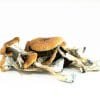
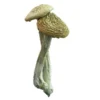
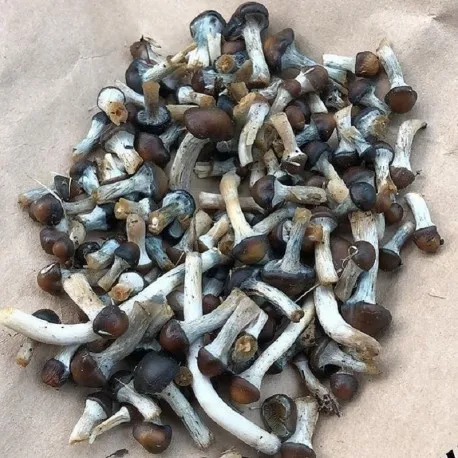
Psilocybe Baeocystis – Rare Psilocybin Mushroom for Gentle Depth
Price range: $170.00 through $830.00
Psilocybe Baeocystis, sometimes called “Bottle Cap,” is a rare and balanced psychedelic mushroom offering moderate potency, ideal for emotional healing, gentle visuals, and introspective calm.
Psilocybe baeocystis: Potency, ID & Baeocystin Guide
What Is Psilocybe baeocystis?
Psilocybe baeocystis is a psilocybin-producing mushroom in the family Hymenogastraceae, best documented in the Pacific Northwest of North America. Known as the Knobby Top, it is associated with decomposing woody organic matter and is historically important because the phosphorylated tryptamine baeocystin was first isolated from this species.
The species grows in Oregon, Washington, and British Columbia, fruiting on woody debris and in landscaped environments. Taxonomic literature characterizes it by a hygrophanous umbonate cap, dark purplish-brown spore deposit, and blue discoloration of damaged tissue.
The species was formally described by Rolf Singer and Alexander H. Smith. Its nomenclatural record is maintained in MycoBank and Index Fungorum, which are the authoritative references for accepted fungal names and bibliographic details. Common names include the Knobby Top mushroom, for the characteristic central umbo, and the Olive Cap mushroom, for the greenish-brown tones the cap displays under certain moisture conditions.
Psilocybe baeocystis at a Glance
| Feature | Detail |
|---|---|
| Family | Hymenogastraceae |
| Order | Agaricales |
| Described by | Singer and A. H. Smith |
| Ecology | Lignicolous saprobe; decomposes woody organic matter |
| Primary range | Pacific Northwest: Oregon, Washington, British Columbia |
| Cap | Hygrophanous, olive-brown to buff, conspicuously umbonate |
| Spore deposit | Dark purplish-brown |
| Blue bruising | Present; results from enzyme-mediated oxidation cascade involving psilocin and related compounds |
| Major alkaloids | Psilocybin, psilocin, baeocystin, norbaeocystin |
| Historical significance | Baeocystin first isolated from this species |
| Chief lookalike risk | Galerina marginata (contains amatoxins; potentially fatal) |
| Federal legal category (USA) | Contains Schedule I controlled substances under the Controlled Substances Act |
Taxonomy and Classification
Psilocybe baeocystis occupies the following position in fungal classification:
- Kingdom: Fungi
- Phylum: Basidiomycota
- Class: Agaricomycetes
- Order: Agaricales
- Family: Hymenogastraceae
- Genus: Psilocybe
- Species: Psilocybe baeocystis Singer and A. H. Smith
Molecular phylogenetic work has supported the placement of psilocybin-producing Psilocybe species within Hymenogastraceae, distinguishing them from non-psychoactive Psilocybe species that were reclassified into other genera. Verified taxonomic records should be traced to MycoBank or Index Fungorum rather than to secondary web sources, which sometimes carry outdated synonyms or incorrect bibliographic dates.
Fungal DNA barcoding using ITS sequences is a standard tool for species-level confirmation in this genus. Sequence data can be compared against GenBank and the UNITE fungal ITS database. Molecular sequencing can provide strong confirmatory evidence when the specimen, sequence quality, and reference identification are reliable. Results can be affected by sample contamination, mislabeled database records, and unresolved species boundaries, so sequencing is most informative when interpreted alongside morphological and microscopic data rather than in isolation.
Psilocybe baeocystis Identification
Accurate identification of P. baeocystis requires evaluating multiple morphological characteristics together. No single feature, including blue bruising, cap color, or spore-deposit color, is sufficient to determine that an unknown wild mushroom is safe.
Cap (Pileus)
The cap is hygrophanous, changing color visibly as moisture fluctuates. When wet or fresh it typically appears olive-brown to dark chestnut-brown, often translucent near the margin, where gill outlines may be visible. As the specimen dries, it fades to pale buff or yellowish. Cap diameter is generally reported between approximately 1.5 and 5 centimeters, making P. baeocystis relatively small compared to some Pacific Northwest relatives.
A conspicuous central umbo, the knoblike projection that gives rise to the common name Knobby Top, is a consistent and characteristic feature. The cap surface is smooth and can be slightly viscid when moist, sometimes displaying a thin gelatinous pellicle that may be peeled away in wet conditions. The combination of hygrophanous coloration, small to medium size, and pronounced umbo helps distinguish P. baeocystis from many superficially similar species, though microscopic and molecular verification remains necessary for confident identification.
Psilocybe baeocystis Cap Identification: Key Visual Summary
The combination most consistent with P. baeocystis is a small to medium hygrophanous cap, olive-brown when wet and fading to buff when dry, with a well-defined central umbo and a smooth to slightly viscid surface. This combination, evaluated together with substrate, geographic location, spore-deposit color, and stipe morphology, narrows the identification considerably. Expert verification and, where available, molecular confirmation remain the most reliable approaches.
Gills (Lamellae)
The lamellae are adnate to sinuate. They begin pale grayish and darken progressively with spore maturity to purplish-brown. Gill edges are typically paler than the faces, and spacing is moderately crowded.
Stipe
The stipe is slender, typically 5 to 7 centimeters tall and 2 to 3 millimeters in diameter, though dimensions vary with growing conditions. It is whitish to pale gray, fibrous in texture, and may show bluish discoloration where handled. White mycelial threads at the base are a consistent feature. A partial veil may leave a faint fibrous zone on the upper stipe, though this often disappears with age.
Blue Bruising Reaction
Damaged or cut tissue discolors blue to blue-green. Research has established that this reaction results from an enzyme-mediated cascade in which fungal laccases and related enzymes oxidize psilocin and structurally related compounds, producing blue oligomeric pigments. A 2019 study published in the journal Angewandte Chemie identified this enzymatic mechanism in detail, tracing the blue products to psilocin oxidation intermediates rather than a simple single-step reaction. The reaction is consistent with the presence of tryptamine alkaloids but is not diagnostic on its own: bruising intensity varies with specimen age and handling, and the absence of obvious bruising in a field specimen does not rule out the presence of alkaloids or, more importantly, amatoxins in a toxic lookalike.
Psilocybe baeocystis Spore Print
The mature spore deposit is dark purplish-brown. A clean print is obtained by placing a mature cap, gills down, on paper or glass for several hours. The color must be assessed under consistent lighting and interpreted alongside other morphological characters. A purplish-brown deposit is shared with other Psilocybe species and, when prints are muddy or obtained from immature specimens, can be difficult to distinguish from the rusty-brown deposits of Galerina.
Psilocybe baeocystis Microscopy
Microscopic examination provides the most reliable morphological identification data short of molecular analysis. Key features described in taxonomic literature include:
- Spores: Subellipsoid to oblong, thick-walled, with a broad germ pore; precise dimensions should be verified against authenticated voucher specimens and the primary species description
- Basidia: Four-spored, club-shaped
- Cheilocystidia: Present on gill edges; lageniform to fusoid, with variable wall thickness
- Pleurocystidia: Reported as sparse or absent in some descriptions
Microscopy combined with a documented spore print and physical voucher specimen, where practical, provides substantially stronger identification evidence than macroscopic observation alone. Chemical spot tests are unreliable for species-level identification of Psilocybe and should not be treated as confirmatory evidence.
Species Comparison: Psilocybe baeocystis vs. Related and Lookalike Species
| Feature | P. baeocystis | P. cyanescens | P. cubensis | Galerina marginata |
|---|---|---|---|---|
| Family | Hymenogastraceae | Hymenogastraceae | Hymenogastraceae | Hymenogastraceae |
| Ecology | Wood-decaying, lignicolous | Wood-decaying, lignicolous | Dung-associated, warm climates | Wood-decaying, lignicolous |
| Cap shape | Small, conspicuously umbonate | Wavy, undulating margin | Broadly convex to flat | Convex, small to medium |
| Cap color when wet | Olive-brown to chestnut | Caramel-brown | Golden-brown | Tawny-brown |
| Spore deposit | Dark purplish-brown | Dark purplish-brown | Dark purplish-brown | Rusty-brown |
| Blue bruising | Yes | Pronounced | Yes | Absent |
| Primary alkaloids | Psilocybin, psilocin, baeocystin, norbaeocystin | Psilocybin, psilocin, baeocystin | Psilocybin, psilocin, baeocystin | None; contains amatoxins |
| Chief risk | Misidentification; Galerina overlap | Misidentification; Wood Lovers Paralysis reports | Lower wild-foraging risk | Fatal amatoxin poisoning |
| Primary range | Pacific Northwest | Pacific Northwest; widely naturalized | Tropical and subtropical globally | Worldwide on wood |
Family placement for all four species follows current classifications in MycoBank and Index Fungorum, where Galerina is placed within Hymenogastraceae in modern molecular-based treatments. Readers should verify current accepted placements against these primary nomenclatural records, as higher-level fungal classification continues to be revised.
This table is intended for comparative orientation. Spore-deposit color is a particularly useful character for separating Psilocybe from Galerina but requires a clean print from a mature specimen, interpreted alongside other features.
Psilocybe baeocystis Habitat and Season
Natural Range and Ecology
P. baeocystis is a lignicolous saprobe, fruiting on decomposing woody organic matter. Its best-documented range covers the Pacific Northwest, with Oregon, Washington, and British Columbia representing the primary distribution. Published distribution claims are most reliable when supported by authenticated herbarium voucher specimens with documented locality data; regional distribution maps based primarily on photographic reports or community observation platforms should be treated as provisional.
The species has been documented in both natural woodland edges and modified landscapes, including parks, gardens, and suburban areas where wood chip mulch or other decomposing woody material is present. This association with landscaped environments brings it into proximity with the general public, which is a relevant safety consideration given the presence of dangerous lookalikes in similar habitats.
Psilocybe baeocystis Season
Fruiting is most commonly reported in autumn, generally from September through December, with timing influenced by local temperature and moisture conditions. The Pacific Northwest’s cool, wet autumns provide favorable conditions. This seasonal window overlaps with Galerina marginata and other potentially dangerous wood-decaying fungi, so the fruiting period alone provides no identification information.
Substrate and Microhabitat
The primary substrate is decomposing woody debris, including buried wood, decaying stumps, and wood chip mulch. P. baeocystis is not a dung-associated species, which distinguishes it ecologically from warm-climate species such as P. cubensis. Its substrate preferences closely overlap with P. cyanescens and, critically, with Galerina marginata, reinforcing the need to assess multiple identification features together.
Psilocybe baeocystis Alkaloid Profile and Potency
How Potent Is Psilocybe baeocystis?
Psilocybe baeocystis contains psilocybin, psilocin, baeocystin, and norbaeocystin, but no single concentration figure represents the species. Published measurements vary among specimens and analytical methods. Comparisons with P. cubensis or other Psilocybe species are meaningful only when authenticated samples are analyzed using comparable laboratory methods.
Published alkaloid analyses use techniques such as high-performance liquid chromatography (HPLC) and liquid chromatography-tandem mass spectrometry (LC-MS/MS), with results expressed on a dry-weight basis against verified analytical reference standards. Variation in instrumentation, chromatographic quantification protocols, extraction methods, and reference standard quality contributes meaningfully to differences between published studies. Any single potency figure should be treated as a specimen-specific data point reflecting specific analytical conditions rather than a definitive species characteristic.
What the Evidence Does and Does Not Establish About Potency
| Claim | Evidence Status |
|---|---|
| P. baeocystis contains psilocybin, psilocin, and related alkaloids | Established |
| Alkaloid concentrations vary substantially between specimens | Established |
| P. baeocystis consistently produces higher or lower concentrations than other Psilocybe species | Not established; insufficient standardized comparative data |
| Any single published concentration figure represents a species average | Not supported; reflects specific specimens under specific analytical conditions |
Is Psilocybe baeocystis One of the Strongest Wild Psilocybin Mushroom Species?
No standardized evidence establishes P. baeocystis as the strongest wild psilocybin mushroom or ranks it definitively among the most potent. Alkaloid concentrations vary substantially among individual specimens, and studies use different sampling conditions and analytical methods. Claims ranking entire species by a single historical concentration figure give a misleading impression of biological variability. P. baeocystis is best described as a psilocybin-containing wood-loving Psilocybe species whose alkaloid profile has been characterized in historical analyses but whose potency relative to other species has not been established through standardized comparative research.
Psilocybe baeocystis vs. Cubensis
P. cubensis is the most widely cultivated psilocybin mushroom globally, associated with herbivore dung in warm climates. P. baeocystis is a temperate, wood-associated species of the Pacific Northwest with substantially different ecology, substrate preference, and geographic range. Alkaloid concentrations in both species vary considerably across specimens and analytical studies, making direct potency comparisons dependent on methodological equivalence that existing literature rarely provides.
Psilocybe baeocystis Dried vs. Fresh
Fresh Psilocybe fruiting bodies contain substantially more water than dry weight, so drying concentrates alkaloid content per unit of measured mass. Psilocin is chemically less stable than psilocybin and degrades more readily when exposed to heat, light, or oxygen. Poorly controlled drying or extended storage under adverse conditions can reduce measurable alkaloid content. Reported dry-weight concentrations therefore reflect both the biological alkaloid content at harvest and the processing and storage conditions applied before analysis, contributing to variability between published figures.
Baeocystin: The Compound First Isolated from Psilocybe baeocystis
What Is Baeocystin?
Baeocystin is 4-phosphoryloxy-N-methyltryptamine, a naturally occurring indole alkaloid structurally related to psilocybin. It was historically isolated from Psilocybe baeocystis, which gave the compound its name. Although its chemistry is established, its independent contribution to the effects of whole mushrooms in humans remains incompletely characterized.
Baeocystin differs from psilocybin by the absence of one methyl group on the terminal amine. Like psilocybin, it is phosphorylated at the 4-position of the indole ring, placing it in the same structural family of tryptamine alkaloids. Researchers A. Y. Leung and A. G. Paul first isolated and characterized the compound from P. baeocystis specimens in research published in the 1960s.
Norbaeocystin, a further demethylated analog, has also been detected in P. baeocystis and related species. Its pharmacological significance is similarly unresolved. The principal psychoactive compounds in P. baeocystis remain psilocybin and psilocin, both of which act primarily at 5-HT2A serotonin receptors in the central nervous system. Psilocybin is converted to psilocin by enzymatic dephosphorylation following ingestion, and psilocin produces the primary pharmacological effects.
Baeocystin: What Is Established vs. Unknown
| Proposition | Evidence Status |
|---|---|
| Baeocystin occurs naturally in Psilocybe species | Established |
| It was first isolated from P. baeocystis by Leung and Paul | Established |
| Its molecular structure is closely related to psilocybin | Established |
| It is dephosphorylated in vivo to nor-psilocin | Plausible by analogy; not confirmed in controlled human research |
| It independently produces psychedelic effects at naturally occurring concentrations in humans | Insufficient evidence; not established |
| It makes P. baeocystis subjectively different from other psilocybin mushrooms | Unestablished |
| It causes kidney toxicity | Unestablished |
This table represents the most citable synthesis of available baeocystin evidence and is intended to prevent the conflation of structural characterization with pharmacological or toxicological conclusions.
Acute Renal Toxicity: What the Evidence Shows
Some historical toxicity reports have associated P. baeocystis with adverse effects beyond the expected psychedelic response, including accounts suggesting kidney-related symptoms. Current evidence does not establish a characteristic kidney-toxic syndrome caused specifically by Psilocybe baeocystis. Historical adverse-event reports have limitations involving species identification and causality. It is therefore more accurate to describe P. baeocystis-specific nephrotoxicity as unestablished rather than either confirmed or definitively disproven.
These reports carry important limitations. Species identification in toxicological case reports from earlier decades was frequently based on macroscopic features, patient or witness accounts, and photographic evidence rather than microscopic verification, authenticated voucher specimens, or molecular sequencing. Causality is difficult to establish when identification is uncertain, when multiple substances may have been ingested concurrently, and when no controlled mechanistic studies exist.
| Claim | Evidence Status |
|---|---|
| P. baeocystis has been associated with adverse effect reports | Reported in historical literature |
| A characteristic nephrotoxic syndrome attributable to P. baeocystis has been established | Not established |
| Psilocybin or psilocin causes direct kidney toxicity | Not established through controlled research |
| Historical adverse effect reports can be attributed solely to P. baeocystis | Uncertain; identification and causality limitations apply |
Anyone who has consumed a wild mushroom and develops any unexpected symptom, including urinary, renal, or neurological signs, should contact Poison Control at 1-800-222-1222 in the United States or seek emergency medical evaluation immediately.
Lookalikes and Identification Risks
The Most Important Psilocybe baeocystis Identification Risk
The most significant identification hazard is confusion with toxic wood-decaying mushrooms, particularly Galerina species. No single characteristic is sufficient to establish that an unknown wild mushroom is safe. Identification should integrate multiple morphological features and, where feasible, microscopic and molecular evidence.
Galerina marginata
Galerina marginata is a wood-decaying mushroom that can inhabit the same substrates and fruiting environments as P. baeocystis. It contains amatoxins, specifically alpha-amanitin, which inhibit RNA polymerase II and cause potentially fatal liver and kidney damage. Amatoxin poisoning has a delayed clinical onset that can mislead patients and clinicians for 24 hours or more after ingestion, complicating recognition and treatment. The American Association of Poison Control Centers receives reports of serious mushroom exposures annually, and amatoxin-containing species are among the most dangerous encountered in North America.
G. marginata typically produces a rusty-brown spore deposit rather than purplish-brown and does not produce blue bruising. A partial veil often leaves a ring on the stipe, though this degrades with age. These features are meaningfully distinguishing but require careful, reliable observation and cannot be assessed from photographs alone.
Inocybe Species
Some Inocybe species share a small, umbonate, brownish cap morphology with P. baeocystis and can inhabit similar woodland and landscaped environments. Many Inocybe species contain muscarine, which causes cholinergic toxicity characterized by sweating, salivation, lacrimation, and bradycardia. Inocybe species typically produce a dull brown to tobacco-brown spore deposit and do not produce blue bruising.
Other Lookalikes
Additional species that may cause confusion in the Pacific Northwest include:
- Hypholoma species: Wood-decaying, with purplish-brown spores in some species; cap morphology and ecology differ, and most lack blue bruising
- Pholiota species: Generally distinguished by a more scaly cap surface and rusty-brown spore deposits
- Cortinarius species: Some share brownish cap coloration; many are toxic; cobweb-like cortina veil remnants are a key distinguishing feature, though these degrade with age and weather
Psilocybe baeocystis Spores and Microscopy
How P. baeocystis Records Are Verified
Reliable identification and distribution records for P. baeocystis depend on several overlapping lines of evidence. Physical voucher specimens deposited in recognized herbaria provide a permanent, verifiable reference that can be re-examined as methods improve. Microscopic examination of spore dimensions, germ pore morphology, and cystidial characters adds morphological precision that macroscopic observation alone cannot provide. Molecular sequencing of ITS regions, compared against sequence repositories including GenBank and UNITE, provides sequence-based provenance when sample and reference quality are adequate. For alkaloid studies, chromatographic quantification against authenticated analytical reference standards, with documented limits of detection, is necessary to produce reliable concentration data. Records lacking one or more of these elements should be treated as provisional.
Spore Print Collection
A clean spore print is obtained by placing a mature cap, gills down, on a surface for several hours in undisturbed conditions. The resulting deposit should be assessed under consistent lighting. For P. baeocystis, the expected color is dark purplish-brown. This result must be combined with other morphological and microscopic findings and cannot serve as a stand-alone identification tool.
Microscopy Applications
Microscopy allows direct measurement of spore dimensions, wall thickness, and germ pore morphology, as well as evaluation of cellular structures including basidia, cheilocystidia, and any pleurocystidia present. Spore morphology is particularly useful for separating P. baeocystis from closely related Psilocybe species and from dangerous lookalike genera such as Galerina, whose spores differ in shape and surface ornamentation. Microscopic data should be interpreted against authenticated reference descriptions from primary taxonomic literature.
Spore Legality Considerations
Psilocybe spores do not contain psilocybin or psilocin. However, their legal status in the United States is not uniform across jurisdictions. Some states have enacted statutes addressing psilocybin-containing fungi regardless of alkaloid content at the spore stage. Producing psilocybin-containing material from spores can implicate federal controlled-substance law. Anyone considering spore acquisition for microscopy or research should review current applicable state and federal statutes rather than relying on generalizations.
Psilocybe baeocystis Legal Status in the United States
Note: U.S. psilocybin law is changing at the state and local level. This section reflects the legal landscape as of September 2026. Readers should verify current law for their specific jurisdiction through primary government sources.
Federal Law
Psilocybin and psilocin are classified as Schedule I controlled substances under the federal Controlled Substances Act, administered by the Drug Enforcement Administration. Schedule I classification means these substances are considered to have no currently accepted medical use under federal law, and possession, distribution, and manufacture are federal criminal offenses. As a psilocybin and psilocin-containing organism, P. baeocystis falls within this legal framework regardless of its natural origin.
State and Local Variation
Oregon’s Measure 109, passed in November 2020, established a regulated psilocybin services program for supervised therapeutic use within licensed facilities. That program has undergone implementation changes and legislative adjustments since its passage; readers should consult the Oregon Health Authority’s psilocybin services page for current program status as of September 2026.
Colorado’s Proposition 122, passed in November 2022, created a framework for regulated natural medicine services and decriminalized personal adult possession of certain psychedelic substances. Several cities, including Denver, Oakland, and Santa Cruz, have enacted local decriminalization measures of varying scope. None of these state or local measures eliminates federal legal risk, and their specific provisions differ considerably.
Current statutory text and qualified legal counsel are the appropriate resources for jurisdiction-specific questions. Policy tracking is available through the National Conference of State Legislatures and relevant state agency websites.
Research Quality and Source Methodology
| Claim Type | Primary Sources |
|---|---|
| Taxonomy and nomenclature | MycoBank and Index Fungorum protologue records; peer-reviewed mycological literature |
| Chemical and alkaloid data | Peer-reviewed analytical chemistry studies using HPLC or LC-MS/MS with authenticated reference standards |
| Baeocystin isolation | Primary research by Leung and Paul published in the 1960s |
| Blue bruising mechanism | Published biochemical literature on enzyme-mediated psilocin oxidation, including mechanistic work published in Angewandte Chemie in 2019 |
| Toxicity and adverse effect reports | Medical toxicology literature; Poison Control resources |
| Legal claims | DEA scheduling records; Oregon Health Authority; National Conference of State Legislatures; primary statutory text, current as of September 2026 |
Chemical values reported in this article reflect published specimens analyzed under specific conditions and are not assumed to characterize every fruiting body of the species.
Frequently Asked Questions
What is Psilocybe baeocystis?
Psilocybe baeocystis is a psilocybin-producing mushroom in the family Hymenogastraceae, best documented in the Pacific Northwest of North America. Known as the Knobby Top, it is associated with woody organic matter and is historically important because the phosphorylated tryptamine baeocystin was first isolated from this species.
How potent is Psilocybe baeocystis?
Psilocybe baeocystis contains psilocybin, psilocin, baeocystin, and norbaeocystin, but no single concentration figure represents the species. Published measurements vary among specimens and analytical methods. Comparisons with P. cubensis or other Psilocybe species are meaningful only when authenticated samples are analyzed using comparable laboratory methods.
What is baeocystin and why is it associated with Psilocybe baeocystis?
Baeocystin is 4-phosphoryloxy-N-methyltryptamine, a naturally occurring indole alkaloid structurally related to psilocybin. It was historically isolated from P. baeocystis by researchers A. Y. Leung and A. G. Paul in the 1960s, which is why the compound bears the species name. Although its chemistry is established, its independent pharmacological contribution in humans remains incompletely characterized.
Where does Psilocybe baeocystis grow?
P. baeocystis is best documented in western North America, especially Oregon, Washington, and British Columbia. It is a saprobic fungus associated with decomposing woody organic matter and has been reported from both natural and landscaped environments. Authenticated herbarium records provide stronger distribution evidence than unverified photographic observations.
What color is a Psilocybe baeocystis spore print?
Taxonomic descriptions characterize the mature spore deposit as dark purplish-brown. Spore-deposit color is useful taxonomic evidence but cannot independently establish the identity or safety of an unknown wild mushroom; it must be evaluated alongside other morphological and microscopic features.
What is the difference between Psilocybe cyanescens and Psilocybe baeocystis?
Both are wood-associated Pacific Northwest Psilocybe species with hygrophanous brown caps and dark purplish-brown spore deposits. P. cyanescens is particularly associated with a strongly wavy mature cap margin, while P. baeocystis is traditionally characterized by a conspicuous central umbo and a smaller overall size. Microscopic features and molecular sequencing provide the most reliable means of separating them with confidence.
Does Psilocybe baeocystis cause kidney failure?
Current evidence does not establish a characteristic kidney-toxic syndrome caused specifically by Psilocybe baeocystis. Historical adverse-event reports have significant limitations involving species identification and causality. It is more accurate to describe P. baeocystis-specific nephrotoxicity as unestablished rather than confirmed or definitively disproven. Unexpected symptoms after mushroom exposure require prompt medical evaluation.
Are Psilocybe baeocystis spores legal in the United States?
Psilocybe spores generally lack psilocybin and psilocin, but their legal status is not uniform across U.S. jurisdictions. State statutes, intended use, and subsequent cultivation can all affect the legal analysis. Producing psilocybin-containing material from spores can implicate federal controlled-substance law. Current jurisdiction-specific statutes and legal counsel are the appropriate resources.
Safety and Responsible Handling
Mushroom poisoning from misidentified wild species is a genuine public health risk. The American Association of Poison Control Centers advises that anyone who has consumed an unidentified wild mushroom and develops symptoms should contact Poison Control immediately at 1-800-222-1222 in the United States or proceed to an emergency room. Amatoxin poisoning from Galerina species has a delayed onset that can mislead patients into believing recovery is underway before severe organ damage develops. Prompt medical evaluation is essential.
Psilocybin-containing mushrooms carry pharmacological risks including acute psychological distress and disorientation in addition to the identification hazards described above. Researchers working with psilocybin in approved settings should follow applicable institutional review board protocols, DEA Schedule I researcher registration requirements, and relevant state regulatory frameworks.
| QUANTITY | OZ, 1/4 POUND, 1/2 POUND, POUND |
|---|
51 reviews for Psilocybe Baeocystis – Rare Psilocybin Mushroom for Gentle Depth
Add a review
Related products
MAGIC MUSHROOMS
Price range: $175.00 through $850.00
This product has multiple variants. The options may be chosen on the product page 
MAGIC MUSHROOMS
Price range: $185.00 through $930.00
This product has multiple variants. The options may be chosen on the product page 
Price range: $180.00 through $890.00
This product has multiple variants. The options may be chosen on the product page 
Price range: $190.00 through $890.00
This product has multiple variants. The options may be chosen on the product page 
MAGIC MUSHROOMS
Psilocybe Azurescens – Ultra-Potent Wild Psilocybin Mushroom
Price range: $180.00 through $870.00
This product has multiple variants. The options may be chosen on the product page 
Price range: $180.00 through $910.00
This product has multiple variants. The options may be chosen on the product page 
MAGIC MUSHROOMS
Price range: $190.00 through $890.00
This product has multiple variants. The options may be chosen on the product page 
Price range: $180.00 through $920.00
This product has multiple variants. The options may be chosen on the product page
Kori Velez (verified owner) –
The trip felt like an emotional detox.
Jacob Roberts (verified owner) –
I appreciate how low-key and respectful the process was. It made the emotional journey so much easier to approach.
Finnegan Craft (verified owner) –
It felt like the mushrooms knew what I needed.
Liv Whitmore (verified owner) –
No weirdness, just clarity.
Sydney Peterson (verified owner) –
This product helped me unpack so much mentally — and knowing it came from a reliable, discreet source made all the difference.
Talon Robles (verified owner) –
Perfect for beginners. The journey was gentle but deep.
Isla Morrison (verified owner) –
I’ve never felt so grounded and uplifted at the same time. Truly grateful for the people behind this.
Kayla Allen (verified owner) –
My journey was quiet, deep, and incredibly healing. The ordering experience matched that same energy.
Meilani Horner (verified owner) –
I got exactly what I was seeking.
Tanner Paul (verified owner) –
I’ve bought from other sites, but none felt as professional and secure as this one. Real people, real care.
Arianna Newton (verified owner) –
When something this powerful is handled with love and care, it becomes more than a product — it becomes a moment.
Callan Thatcher (verified owner) –
Always fresh, always consistent.
Jason Bailey (verified owner) –
This was handled like a wellness experience, not just a transaction. I appreciate that more than I can say.
Caleb Chavez (verified owner) –
The subtle power of this journey was unlike anything I’ve experienced. And knowing it came from a team that values discretion made it even better.
Leonard Cobb (verified owner) –
I don’t usually leave reviews, but the professionalism here deserves credit. Plus, the trip was everything I needed and more.
Rachel Lewis (verified owner) –
A deeply emotional journey that was only possible because I knew I was in good hands.
Miles Stephens (verified owner) –
It’s rare to find a product that makes you feel something this deep and safe at the same time.
Ivory Cote (verified owner) –
I felt divine love pouring through me.
Adeline Burke (verified owner) –
I wasn’t just buying something — I was giving myself space to grow, and this site made that feel completely natural.
Adam Murphy (verified owner) –
A spiritual tune-up. My body felt lighter, and my mind was free of clutter.
Elliot Saunders (verified owner) –
I’m more myself now than I’ve ever been.
Quinton Gentry (verified owner) –
The packaging was professional, the product was fresh, and the journey was profound.
Reuben Atkins (verified owner) –
Subtle but profound.
Langston Moyer (verified owner) –
It helped me love myself again.
Brooklyn Alexander (verified owner) –
It’s hard to put into words how much this changed me, but I know it wouldn’t have happened without the care behind the scenes.
Daniel Clark (verified owner) –
I’ve waited years for something like this — safe, sacred, and available when I was ready.
Vivian Perry (verified owner) –
Everything was handled smoothly.
Juliana Welch (verified owner) –
More than just a product — it’s a tool for real self-awareness.
Daniel Miller (verified owner) –
Really pleased with the service provided.
Clark Vincent (verified owner) –
Nothing about this felt sketchy. Just professionalism, transparency, and a product that changed how I see myself.
Chloe Nelson (verified owner) –
Ordering felt clean and easy. The emotional release I had during the session was gentle, powerful, and safe.
Emery Horton (verified owner) –
I feel more grounded, more creative, and more alive since using this.
George Powell (verified owner) –
Everything arrived safely and securely.
Blake Russell (verified owner) –
It felt more like a sacred exchange than a transaction — the kind of experience you don’t forget.
Arthur Diaz (verified owner) –
Everything was simple and well explained.
Charles Perry (verified owner) –
Really impressed with the attention to detail.
Donald Patterson (verified owner) –
Everything went perfectly from beginning to end.
Scarlett Lewis (verified owner) –
The entire process was simple and hassle-free.
Sophia Brown (verified owner) –
Excellent communication throughout.
Terry Ford (verified owner) –
Very satisfied with the overall experience.
Vanessa McDonald (verified owner) –
Great service and a smooth experience.
Jordan Richardson (verified owner) –
Really appreciated the clear communication.
Brooke Harrison (verified owner) –
The service was professional and reliable.
Caroline Collins (verified owner) –
Really satisfied with how everything was handled.
Raymond Simmons (verified owner) –
The process was convenient and straightforward.
Layla Nelson (verified owner) –
Very satisfied with how everything turned out.
Gabrielle Cruz (verified owner) –
A great experience with no unnecessary complications.
Edward Long (verified owner) –
Couldn’t ask for a smoother process.
Raymond Simmons (verified owner) –
Everything was simple and convenient.
Claire Phillips (verified owner) –
A smooth experience from start to finish.
Brian Walker (verified owner) –
Everything arrived just as expected.