No products in the cart.
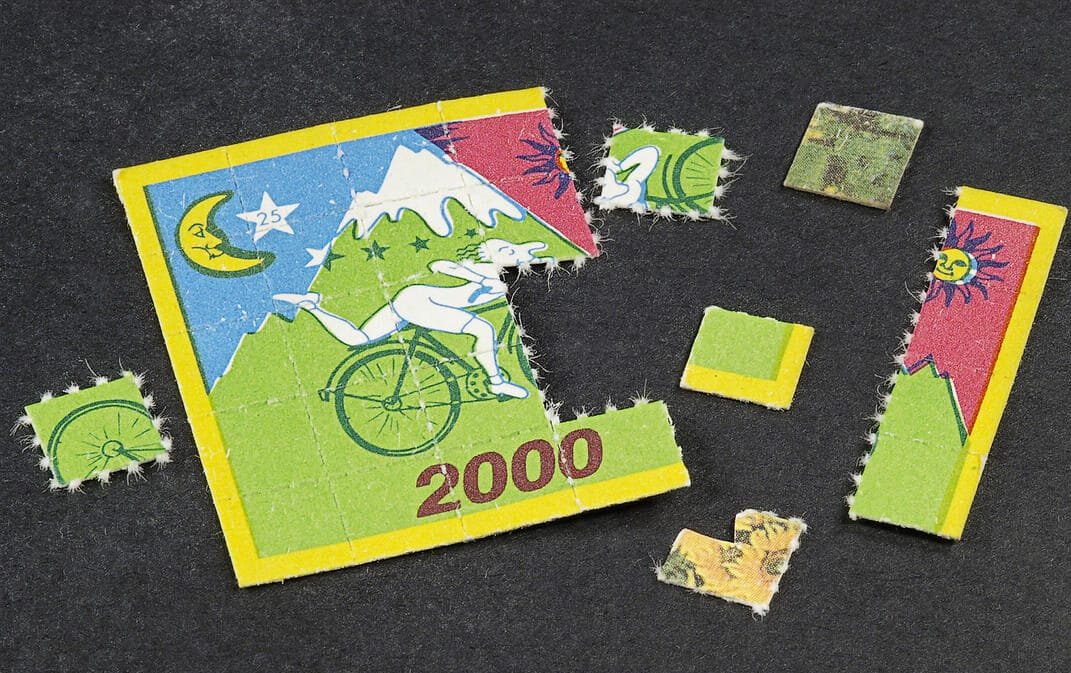
Albert Hofmann Acid – LSD-25 Blotter Tribute Series
Price range: $230.00 through $1,300.00
Buy Albert Hofmann Acid, A potent LSD-25 blotter inspired by Albert Hofmann’s legendary discovery. Pure, tested, and legally sourced for research and spiritual exploration.
Buy Albert Hofmann Acid – Legacy of Discovery in a Blotter
Albert Hofmann Acid: The History, Discovery, and Science of LSD
Albert Hofmann was a Swiss chemist who first synthesized LSD-25 at Sandoz Laboratories in Basel in 1938 while studying medicinal derivatives of ergot. In April 1943 he recognized the compound’s psychoactive effects, and on April 19 he deliberately ingested 250 micrograms and rode home by bicycle. The date is now called Bicycle Day. This article explains the chemistry behind the discovery, separates documented events from later retellings, and describes how Hofmann’s work connects to current research on classic psychedelics.
Who Discovered LSD?
Albert Hofmann, a Swiss chemist at Sandoz Laboratories, first synthesized LSD-25 in Basel on November 16, 1938. He discovered its powerful psychoactive effects in April 1943. The distinction matters because LSD was chemically synthesized in 1938, while its psychedelic properties were recognized five years later.
Hofmann was born in Baden, Switzerland, in 1906 and studied chemistry at the University of Zurich. He joined Sandoz in 1929 and worked in its pharmaceutical research division, which focused on natural products. He died in 2008 at the age of 102. A biographical entry from Encyclopaedia Britannica summarizes his career and the discovery.
Ergot and the Chemistry Behind LSD
Ergot is a fungal growth that infects cereal grains, most notably rye. The best known species is Claviceps purpurea. Ergot produces a family of alkaloids built on lysergic acid, and these compounds have long been known both as agents of poisoning and as sources of useful drugs. Sandoz pursued the second possibility under Arthur Stoll, who founded the company’s pharmaceutical department and isolated the ergot alkaloid ergotamine in 1918.
Hofmann joined this program in the late 1920s. His task was to examine lysergic acid derivatives for pharmaceutical potential. Lysergic acid is a chemical building block obtained from ergot alkaloids. LSD itself does not occur in ergot in any meaningful form. It is a semisynthetic compound made in the laboratory from lysergic acid and diethylamine. The name lysergic acid diethylamide describes that structure, and the abbreviation LSD comes from the German Lysergsäure-diethylamid. PubChem lists the compound’s structure and properties.
Albert Hofmann Acid: Why LSD-25 Was Synthesized in 1938
Hofmann synthesized LSD-25 on purpose, as part of a planned series of lysergic acid amides. The number 25 refers to its position in that series. He prepared the compound on November 16, 1938, in the hope of finding a circulatory and respiratory stimulant, a type of drug known as an analeptic.
Hofmann was not trying to create a psychedelic. Laboratory animals given the compound showed restlessness but no result that interested the pharmacologists, and Sandoz set the compound aside. Hofmann later wrote that he returned to it five years afterward because of an unexplained intuition that it deserved a second look. He described the synthesis and the events that followed in his 1979 article “How LSD Originated” and in his book LSD: My Problem Child.
How Was Acid Discovered? The 1938 to 1943 Sequence
LSD was not accidentally synthesized. Albert Hofmann deliberately created LSD-25 in 1938 while researching lysergic acid derivatives at Sandoz. After unexpectedly experiencing altered perception while working with the compound on April 16, 1943, he deliberately ingested 250 micrograms on April 19 to investigate its effects.
The sequence has four steps.
- 1938. Hofmann synthesizes LSD-25 and the compound is shelved after initial animal tests.
- Spring 1943. He prepares a new batch of LSD-25 for further testing.
- April 16, 1943. He experiences an unexpected altered state while working with the compound.
- April 19, 1943. He conducts a deliberate self-experiment to test whether LSD was responsible.
1938 vs. 1943: When Was LSD Actually Discovered?
Both dates describe different milestones. Albert Hofmann synthesized LSD-25 on November 16, 1938. Its psychedelic properties were discovered in April 1943. For historical precision, 1938 is the date of first synthesis and 1943 is the date its extraordinary psychoactive effects were recognized.
Sources that give only one date are not necessarily wrong, but they answer different questions. A chemistry reference will usually cite 1938 because that is when the molecule was first made. A pharmacology or cultural history will usually cite 1943 because that is when its effects on the mind became known.
What Hofmann Actually Wrote About April 16 and April 19, 1943
Hofmann’s own account is the primary source for these events, and it is more restrained than many retellings. He reported that on Friday, April 16, 1943, he was interrupted in his laboratory work by restlessness and dizziness. He went home and lay down in a dreamlike state in which he saw an uninterrupted stream of vivid, kaleidoscopic images. The condition faded after about two hours.
Hofmann concluded that he must have absorbed a small amount of the substance he was handling. He later wrote that he assumed a trace had entered through the skin of his fingertips. This was an inference rather than an established fact, because no one measured his exposure. Later retellings often present the fingertip explanation as certain, but the route of exposure was never conclusively confirmed.
Albert Hofmann’s First LSD Experience
On Monday, April 19, Hofmann tested the hypothesis by deliberately taking 250 micrograms of LSD tartrate dissolved in water. He considered this a very small amount, based on the potency of other ergot alkaloids. The effects developed rapidly and became intense. He asked his laboratory assistant to accompany him home, and because of wartime restrictions on motor vehicle use, they traveled by bicycle.
During the ride and afterward, Hofmann reported anxiety, distorted perception, and a fear that he had been poisoned. A physician who examined him found normal vital signs apart from dilated pupils. The most severe effects subsided, and Hofmann later described a period of calm and altered perception that gave way to a quiet night of sleep.
What Happened on Bicycle Day?
Bicycle Day commemorates April 19, 1943, when Albert Hofmann deliberately took 250 micrograms of LSD-25 at Sandoz Laboratories. As increasingly intense effects developed, he left work and traveled home by bicycle with a laboratory assistant. The experiment became the first documented deliberate LSD experience.
Why Albert Hofmann’s 250 mcg Experiment Mattered
The experiment showed that a few hundred millionths of a gram could profoundly alter perception and mood. At the time, almost no known drug was active at such a low dose by weight. This potency made LSD an unusual subject for pharmacologists and psychiatrists. It also made accidental overexposure a real concern in laboratory handling. Hofmann’s dose was higher than he intended in practice, because he had expected a threshold quantity rather than a strong effect.
Why Is LSD Called Acid?
LSD is commonly called acid because its full chemical name is lysergic acid diethylamide. Acid became a shortened slang term for LSD. It does not mean the substance acts like a corrosive chemical, and LSD does not produce psychedelic effects through acidity.
Delysid and Early Psychiatric Research
After Hofmann reported his findings, Sandoz began systematic investigation of LSD. In 1947 the company introduced it under the trade name Delysid and supplied it to physicians and researchers for experimental use. Sandoz positioned the drug as a tool for psychiatric research and as a possible aid in psychotherapy, and it was also used to study mental states resembling psychosis.
This second use gave rise to the term psychotomimetic, which described substances thought to imitate psychotic illness. By the mid 1950s some researchers were questioning that framework. The psychiatrist Humphry Osmond proposed the word psychedelic, meaning mind manifesting, in correspondence with the writer Aldous Huxley. The term reflected a different view of the drug, as an agent that revealed aspects of the mind rather than one that simulated disease.
What Was Delysid?
Delysid was the trade name Sandoz used for LSD. Beginning in 1947, the company supplied it to physicians and researchers for experimental psychiatric and psychotherapeutic work. Distribution ended in the 1960s as legal restrictions and public controversy grew.
Through the 1950s and early 1960s, thousands of clinical papers described work with LSD. The drug also spread outside medicine, helped by public figures such as Timothy Leary, and by the mid 1960s concern over unsupervised use led to restrictions. In the United States, LSD was placed in Schedule I under the Controlled Substances Act of 1970. The 1971 UN Convention on Psychotropic Substances later placed LSD under international control, and Sandoz ended its distribution of the drug in the mid 1960s.
Did Albert Hofmann Discover Psilocybin?
Hofmann did not discover psychedelic mushrooms, which people in Mesoamerica have used for centuries. In 1958, however, he and his colleagues at Sandoz isolated and identified psilocybin and psilocin as the active compounds in Psilocybe mushrooms. They then synthesized both substances.
The work followed the ethnomycologist R. Gordon Wasson’s reports on mushroom ceremonies in Mexico and the supply of specimens to Sandoz. Hofmann and his colleagues published the findings in 1958. Psilocybin is chemically unrelated to the ergot alkaloids, but like LSD it acts mainly through the serotonin system.
Common Myths About Albert Hofmann and LSD
LSD was accidentally invented. Hofmann synthesized it deliberately. Only its psychoactive effects were found unexpectedly.
Hofmann definitely absorbed LSD through his fingertips. He proposed this explanation himself, but it was an assumption. The route of exposure on April 16, 1943 was never confirmed.
LSD occurs naturally in ergot. Ergot contains related lysergic acid alkaloids, but LSD is a semisynthetic laboratory compound.
Hofmann discovered psychedelic mushrooms. He isolated and synthesized their active compounds, but mushroom use long predates his work.
LSD was first made in 1943. The compound dates to 1938. Only its effects were recognized in 1943.
What the Albert Hofmann Acid Discovery Changed About Psychedelic Science
The discovery gave researchers a highly potent tool for studying the serotonin system and the neurobiology of perception. LSD is generally understood to produce its characteristic effects by acting at serotonin receptors, especially the 5-HT2A receptor. A review by Nichols in Pharmacological Reviews describes this mechanism for classic psychedelics. LSD also binds to other serotonin receptors, including 5-HT1A, and to dopamine receptors such as D2, which may contribute to its overall profile.
Brain imaging has added to this picture. A 2016 study in the Proceedings of the National Academy of Sciences reported that LSD altered patterns of brain connectivity and increased communication between regions that normally operate more independently. Such findings help explain why LSD has been used to study consciousness, though they do not by themselves establish any therapeutic benefit.
What Modern Science Has Confirmed and What Remains Uncertain
Several points are well established. LSD is potent at microgram doses. It acts at serotonin receptors, with 5-HT2A activation central to its psychedelic effects. It alters perception, mood, and thought in dose dependent ways, and these effects can include anxiety and distress. The National Institute on Drug Abuse provides an overview of its effects and risks.
Other questions remain open. Research on psychedelic psychotherapy has revived since the 2000s, and institutions such as the Johns Hopkins Center for Psychedelic and Consciousness Research study classic psychedelics in controlled settings. Most of this work involves psilocybin, and clinical research on LSD is at an earlier stage. Claims about therapeutic benefit, including claims about repeated very low doses commonly called microdosing, are still under investigation. LSD has not been approved for medical use in the United States. Historical studies from the 1950s and 1960s also often lacked the controls and methods expected today, which limits what can be concluded from them.
Albert Hofmann LSD Timeline
- 1906. Albert Hofmann is born in Baden, Switzerland.
- 1929. He joins Sandoz in Basel after completing his doctorate at the University of Zurich.
- November 16, 1938. Hofmann first synthesizes LSD-25.
- April 16, 1943. He experiences unexpected effects while working with the compound.
- April 19, 1943. He deliberately ingests 250 micrograms, an event later called Bicycle Day.
- 1947. Sandoz introduces LSD as Delysid for research use.
- 1958. Hofmann and colleagues isolate psilocybin and psilocin from Psilocybe mushrooms.
- Mid 1960s. Sandoz ends distribution as restrictions increase.
- 1970 and 1971. The United States and the international community place LSD under formal control.
- 1979. Hofmann publishes LSD: My Problem Child, in German, as LSD, mein Sorgenkind.
- 2008. Hofmann dies at the age of 102.
Frequently Asked Questions
Who discovered LSD?
Swiss chemist Albert Hofmann is credited with discovering LSD. He synthesized LSD-25 at Sandoz Laboratories in 1938 and identified its psychoactive properties in April 1943.
How did Albert Hofmann discover LSD by accident?
Hofmann made LSD-25 on purpose, but its psychoactive effects came to light unexpectedly. On April 16, 1943, while working with a new batch of the compound, he experienced restlessness and dreamlike imagery. He suspected he had absorbed a small amount accidentally. Three days later he deliberately tested a measured dose.
What is Bicycle Day?
Bicycle Day refers to April 19, 1943, when Hofmann deliberately ingested 250 micrograms of LSD-25. As the effects intensified, he rode home by bicycle accompanied by a laboratory assistant. The date is regarded as the first intentional LSD experience.
When did Albert Hofmann first synthesize LSD?
Hofmann first synthesized LSD-25 on November 16, 1938, at Sandoz Laboratories in Basel, Switzerland. Its psychoactive properties went unrecognized until 1943.
What was Albert Hofmann trying to create when he synthesized LSD?
Hofmann was studying derivatives of lysergic acid as part of Sandoz’s ergot research, with the aim of finding useful pharmaceuticals. LSD-25 was initially tested as a possible circulatory and respiratory stimulant. He was not trying to create a psychedelic drug.
What is the connection between ergot fungus and LSD?
Ergot fungi such as Claviceps purpurea produce alkaloids built on lysergic acid. Hofmann’s work with these compounds provided the chemical basis for LSD-25. LSD is a semisynthetic compound made in the laboratory from lysergic acid and is not extracted directly from ergot.
What was Delysid?
Delysid was the trade name Sandoz used for LSD. Beginning in 1947, the company supplied it to physicians and researchers for experimental psychiatric and psychotherapeutic work. Distribution ended in the 1960s as legal restrictions and public controversy grew.
Did Albert Hofmann discover psilocybin?
Hofmann did not discover psychedelic mushrooms, which people have used for centuries. In 1958, however, he and his colleagues at Sandoz isolated and identified psilocybin and psilocin as the active compounds in Psilocybe mushrooms. They then synthesized both substances.
Conclusion
The Albert Hofmann acid story is often told as a single accident, but the record shows a sequence of deliberate steps. Hofmann synthesized LSD-25 in 1938 as part of routine pharmaceutical research, returned to it in 1943, and tested its effects through a planned self-experiment. His later isolation of psilocybin and psilocin extended the same line of work to a second class of compounds. LSD is now studied mainly for what it reveals about serotonin receptors and brain function. Whether it or related drugs will have a clinical role remains a subject of ongoing research.
Sources and Further Reading
- Hofmann, A. LSD: My Problem Child. McGraw-Hill, 1980. Hofmann’s own account of the synthesis and the 1943 events.
- Hofmann, A. “How LSD Originated.” Journal of Psychedelic Drugs, 1979.
- Hofmann, A., Heim, R., Brack, A., and Kobel, H. “Psilocybin und Psilocin, zwei psychotrope Wirkstoffe aus mexikanischen Rauschpilzen.” Experientia, 1958.
- Encyclopaedia Britannica, Albert Hofmann
- PubChem, lysergide
- Nichols, D. E. Psychedelics. Pharmacological Reviews
- Carhart-Harris and colleagues, Neural correlates of the LSD experience. PNAS
- National Institute on Drug Abuse, LSD
- United Nations Office on Drugs and Crime, Convention on Psychotropic Substances
- Johns Hopkins Center for Psychedelic and Consciousness Research
53 reviews for Albert Hofmann Acid – LSD-25 Blotter Tribute Series
Add a review
Related products

Price range: $230.00 through $1,300.00
This product has multiple variants. The options may be chosen on the product page 
Price range: $240.00 through $2,600.00
This product has multiple variants. The options may be chosen on the product page 

Jase Barrera (verified owner) –
This was more than a trip—it was a journey inward.
Boone Wylie (verified owner) –
I laughed, I cried, I healed.
Clayton Valentine (verified owner) –
It was like watching the stars from the inside.
Elle Valdez (verified owner) –
Discreet packaging, fast arrival, and a product that helped me finally exhale.
Marisol Kinney (verified owner) –
This gave me mental freedom I didn’t know I needed.
Gavin Salazar (verified owner) –
A thousand insights in a single breath.
Tanner Paul (verified owner) –
This was life-shifting, and I’m beyond grateful for how carefully the product was handled.
Andrew White (verified owner) –
There was a warmth and clarity I’ve never felt before. It gave me space to process emotions I had buried for years.
Porter Ashby (verified owner) –
I was able to look at myself with kindness and curiosity.
Ivy Boston (verified owner) –
Great for philosophical thinking and ego-softening.
Leah Bryant (verified owner) –
This allowed me to observe my thoughts without judgment. It changed how I speak to myself now.
Cason Whittaker (verified owner) –
I laughed, I cried, I healed.
Noa Beltran (verified owner) –
It made me a better listener, even to myself.
Miller Vickers (verified owner) –
Felt like I met parts of my consciousness I didn’t know existed.
Miles Stephens (verified owner) –
Every little part of the process was dialed in. I felt like I mattered.
Brielle Trammell (verified owner) –
My mind became a symphony of insight.
Rodney Little (verified owner) –
No distractions, no confusion — just a clean, easy journey into myself.
Phoebe Melton (verified owner) –
Still integrating the insight, and I feel so clear.
Naomi Lester (verified owner) –
Changed my relationship with reality.
Maurice Lowe (verified owner) –
The experience wasn’t just visual — it was deeply emotional and grounding.
Grant George (verified owner) –
I didn’t just receive a product. I received permission to go deeper, safely and professionally.
Sean Wood (verified owner) –
I’ve never had such a seamless experience ordering something so powerful. The team clearly knows the value of what they’re offering.
Leah Bryant (verified owner) –
I’ve bought from other sites, but none felt as professional and secure as this one. Real people, real care.
Estelle Baldwin (verified owner) –
I saw sound, heard colors, and felt thoughts.
Savannah Torres (verified owner) –
I used this in a quiet space with my journal, and by the end, I felt like I had released months of tension.
Brentley Ellery (verified owner) –
A thousand insights in a single breath.
Ridge Durham (verified owner) –
Felt like a dream I never wanted to end.
Brandon Hall (verified owner) –
Discreet doesn’t even begin to describe it — everything was flawless. And the emotional release I had during the session? Unmatched.
Isabella Bell (verified owner) –
Incredible introspective depth. I could finally hear my intuition clearly.
Zariah Bernard (verified owner) –
No chaos, no confusion—just expansive peace.
Kyro Benedict (verified owner) –
Every texture came alive.
Katherine Powell (verified owner) –
The journey itself was transformative, and it helped so much knowing the source was trustworthy and experienced.
Liana Rosales (verified owner) –
Not just a trip—a return to truth.
Fiona Riggs (verified owner) –
This helped me come to terms with past pain in a loving way.
Joseph Martin (verified owner) –
I used this in a quiet space with my journal, and by the end, I felt like I had released months of tension.
Maisie Krueger (verified owner) –
Like being shown the behind-the-scenes of reality.
Casey Hoffman (verified owner) –
The clarity I gained helped me release guilt, pain, and a lot of fear. The product was handled beautifully.
Raymond Simmons (verified owner) –
Really impressed with the attention to detail.
Phoebe Hines (verified owner) –
This created a perfect space to breathe, think, and just exist — no pressure, no chaos.
Jamari Keene (verified owner) –
A kaleidoscope of clarity and wonder—perfectly dosed.
Clark Vincent (verified owner) –
The calm that came over me was unlike anything I’ve felt. It was soft, slow, and incredibly healing.
Makayla Myers (verified owner) –
You can tell the people behind this take their role seriously. That gave me peace from the moment I hit ‘buy’.
Trevor Cruz (verified owner) –
Everything was handled smoothly.
Vivian Zimmerman (verified owner) –
Each moment felt sacred. I was fully immersed in a gentle sense of awe.
Kyle Turner (verified owner) –
The packaging was neat and well organized.
Shawn Gibson (verified owner) –
The process was smooth and professional.
Taylor Marshall (verified owner) –
Very pleased with the quality of service.
Gabrielle Cruz (verified owner) –
Everything arrived in great condition.
Zoey Green (verified owner) –
Everything arrived exactly as described. Very happy with the overall experience.
Philip West (verified owner) –
Everything was simple and convenient.
Natalie Carter (verified owner) –
Couldn’t ask for a smoother process.
Terry Ford (verified owner) –
Really satisfied with the entire experience.
Brian Walker (verified owner) –
Everything was clearly explained.