No products in the cart.
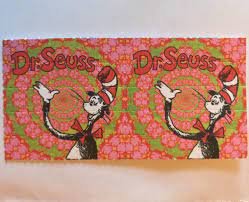
Dr. Seuss Acid – 125µg Whimsical LSD Blotter Tab
Price range: $230.00 through $1,300.00
Journey into surreal inner landscapes with Dr. Seuss Acid – a 125µg LSD tab designed to spark creativity, emotional release, and childlike wonder.
Buy Dr. Seuss Acid online: DS 3.0 Purity, History & Testing
Dr. Seuss acid is an underground name associated with products represented as LSD-25, particularly the DS 3.0 label. It is not a recognized pharmaceutical formulation or analytical grade. The name, blotter artwork, and seller reputation cannot establish chemical identity, dose, or purity. Reagent tests provide preliminary screening, and laboratory analysis offers substantially stronger verification.
Summary
Dr. Seuss acid refers to an underground LSD identity best known through the DS 3.0 name. Online claims of roughly 98 to 99 percent purity are not a standardized DS 3.0 specification and require sample-specific laboratory evidence. Blotter artwork cannot authenticate LSD, because designs can be reproduced or printed on undosed paper sold as collectible art. Ehrlich and Hofmann reagents offer presumptive screening for related chemistry but cannot determine dose, purity, or safety. Instrumental analysis provides stronger identification and quantification. Undipped blotter art is distinct from LSD-containing paper and has collectible value.
What Is Dr. Seuss Acid?
Dr. Seuss acid is an informal name applied to blotter and crystal products that circulate in illicit markets and are claimed to contain lysergic acid diethylamide, also called LSD-25. Because these products are unregulated, a label or brand name says nothing verifiable about what a sample contains.
LSD is a semisynthetic compound in the lysergamide family, which is built on an ergoline structure that includes an indole group. The PubChem record for LSD lists its molecular formula and chemical properties. According to the National Institute on Drug Abuse, LSD is a potent hallucinogen whose effects can occur at very small amounts. In the United States, it is a Schedule I controlled substance, as listed on the DEA drug scheduling page.
What Does DS 3.0 LSD Mean?
DS 3.0 is the label most often connected with the Dr. Seuss name. The numbering implies versions, and people sometimes compare DS3 with DS2 acid. No public documentation, regulatory body, or analytical standard defines what separates one numbered version from another. Statements about differences in effect or quality are therefore anecdotal unless tied to a specific, tested sample.
Dr. Seuss Acid Purity Claims vs. Chemical Evidence
DS 3.0 is frequently claimed online to contain approximately 98 to 99 percent pure LSD crystal, but no public standard guarantees that purity across products carrying the name. A meaningful purity claim requires quantitative laboratory analysis of a specific sample. Reagent tests cannot show whether LSD crystal is 98 percent pure, 99 percent pure, or any other value.
Evidence Standards for DS 3.0 Purity Claims
A credible purity claim should be documented with several elements.
- Sample provenance, meaning a clear record of what material was tested and how it was obtained.
- Laboratory method, such as high performance liquid chromatography or liquid chromatography with mass spectrometry.
- A quantitative result rather than a qualitative description.
- The date of analysis, since LSD can degrade over time.
- An independently identifiable laboratory whose report can be verified.
Forum summaries and seller descriptions generally meet none of these criteria. A result for one sample also does not describe other batches sold under the same name.
LSD Crystal Purity Levels vs. Tab Potency
Crystal purity and tab potency measure different things. Purity describes the proportion of a bulk material that is the target compound, and it can be determined only by quantitative analysis. Potency on blotter concerns the amount of active LSD deposited on an individual tab, usually expressed in micrograms. A high purity starting material does not establish the final dose, because the amount applied to each square depends on how the paper was prepared.
Several informal terms appear in discussions of pure LSD crystal types.
- Needlepoint is an informal underground term commonly used to imply highly purified LSD crystal. It is not a regulated analytical grade, and the label itself provides no evidence of purity.
- White Fluff and silver LSD are likewise informal descriptors without a standardized definition.
- Iso-LSD is an epimer of LSD that can form as a byproduct or through degradation and is considered substantially less active. Appearance alone cannot distinguish it from LSD.
For this reason, Dr. Seuss LSD potency cannot be inferred from the name. Only quantitative testing can show how much LSD a sample contains.
Dr. Seuss Blotter Art and Psychedelic Blotter History
Blotter art consists of images printed on perforated paper squares. The documented history of LSD begins with its synthesis by Albert Hofmann at Sandoz Laboratories in Switzerland in 1938, followed by his discovery of its effects in 1943. Perforated blotter paper became a common format for distributing LSD later in the twentieth century, and the printed designs developed into a distinct form of psychedelic art. Collectors prize sheets for their imagery, and the Institute of Illegal Images, associated with San Francisco collector Mark McCloud, is among the best known collections.
Much popular discussion of blotter history mixes documented events with folklore, including stories about specific designs, producers, and dates. Claims about the origin of a particular design are best treated as unverified unless supported by contemporary records or scholarship.
The same caution applies to the name itself. Dr. Seuss blotter art and Dr. Seuss tabs LSD are often recognized by their imagery, but the origin of the name and the identity of any producers are not publicly documented. Designs can be copied, reused, or printed on undosed paper, so visual identification is not a reliable way to authenticate LSD. Printed artwork can also be unrelated to whatever substance, if any, is on the paper.
Is Collecting Undipped Blotter Art Legal?
Undipped blotter art is paper that has never been treated with LSD, and it is chemically distinct from LSD-containing paper. Collecting genuinely undosed artwork is a different matter from possessing a controlled substance. Legal outcomes can depend on a sheet’s actual contents, intent, marketing, and applicable federal and state law, including the Controlled Substances Act, whose schedules appear in Title 21 of the U.S. Code. Vintage material of uncertain origin may require professional analysis or legal advice. Storage with archival materials also helps preserve paper artwork over time. This section is informational and is not legal advice.
Dr. Seuss vs GammaGoblin Acid vs Aztec LSD
Dr. Seuss, GammaGoblin, and Aztec are underground identities associated with purported LSD products. They do not represent different molecules or regulated purity grades. No scientifically valid brand-wide purity ranking exists for Dr. Seuss, GammaGoblin, or Aztec LSD. Comparing them requires quantitative results from specific samples tested with comparable methods, ideally from the same batch. Reputation within a community and subjective effects are not substitutes for chemical data.
Harm Reduction Psychedelic Testing
Harm reduction is a public health approach that aims to reduce risks for people who may use drugs. For psychedelics, this includes understanding what testing can and cannot establish and recognizing the possibility of substitution. Testing cannot make an illicit substance safe, but it can provide useful information. Methods range from simple color tests to instrumental analysis.
Limitations of Reagent Testing
Reagent tests are presumptive. They produce a color change that suggests the presence of a class of compounds. They cannot measure dose, quantify purity, or detect every substance in a mixture. A positive result does not exclude additional compounds, and a negative result does not prove a sample is harmless. Results should always be read against a reliable reference chart, because colors vary by reagent formulation.
Ehrlich Reagent LSD Test: What It Can Tell You
Ehrlich reagent contains p-dimethylaminobenzaldehyde in acid and reacts with indole structures. LSD is generally associated with a violet to purple reaction, though the exact result depends on the formulation and reference chart. Other indole compounds, including some tryptamines, can produce similar colors. An Ehrlich reaction therefore provides presumptive evidence that an indole reactive compound is present. It cannot prove that a sample contains only LSD-25, determine the dose, measure crystal purity, or guarantee safety.
A lack of reaction is also informative. Some substances sold as LSD, such as NBOMe compounds like 25I-NBOMe, and certain DOx compounds do not contain an indole and may not react with Ehrlich reagent. This is one reason reagent testing is used in harm reduction programs.
Hofmann Reagent LSD Test: What It Can Tell You
Hofmann reagent is another presumptive color test used for lysergamide and indole chemistry. Ehrlich and Hofmann tests provide partly complementary information, and using several reagents can improve screening. Neither test can establish exact dose or chemical purity. Organizations such as DanceSafe and Bunk Police publish reagent instructions and reference charts.
Laboratory Analysis vs. Reagent Testing
Instrumental methods provide much stronger evidence than color tests. High performance liquid chromatography, known as HPLC, separates the components of a sample so that each can be measured. Liquid chromatography with mass spectrometry, or LC-MS, adds structural identification. Together, these techniques from analytical chemistry can confirm identity and support quantitative analysis. Even then, results apply only to the portion of the sample that was tested. Laboratory drug checking services, where available, provide the most reliable chemical information for people who want to know what a sample contains.
Other points worth keeping in mind include the following.
- Branding, blotter art, and crystal appearance cannot confirm what a product contains.
- Very small differences in quantity matter for a compound active at microgram levels.
- LSD remains illegal in the United States, and legal risk exists independent of any testing result.
What Is Verified vs. Claimed About DS 3.0?
The distinction between established information and underground claims is central to evaluating this topic.
Established by scientific and government sources
- LSD is a lysergamide with a defined chemical structure and is active at very small doses.
- LSD is a Schedule I controlled substance in the United States.
- Reagent tests are presumptive and cannot measure dose or purity.
- Instrumental analysis can identify and quantify compounds in a sample.
Not independently verified
- The identity or lineage of any producer behind the Dr. Seuss name.
- A fixed purity of 98 to 99 percent for DS 3.0 products.
- Consistent differences between DS 2.0 and DS 3.0.
- The reputation of the name as superior to other underground identities.
Unless sample-specific laboratory documentation is available, these claims are best described as reported rather than confirmed.
Frequently Asked Questions
What is Dr. Seuss acid?
Dr. Seuss acid is an underground name associated with products represented as LSD-25, particularly the DS 3.0 label. It is not a recognized pharmaceutical formulation or analytical grade. The name, blotter artwork, and seller reputation cannot establish chemical identity, dose, or purity. Those claims require chemical testing.
How pure is DS 3.0 LSD?
DS 3.0 is frequently claimed online to contain approximately 98 to 99 percent pure LSD crystal, but no public standard guarantees that purity across products carrying the name. A meaningful purity claim requires quantitative laboratory analysis of a specific sample. Reagent tests cannot determine whether LSD crystal is 98 percent pure, 99 percent pure, or any other value.
Does higher LSD crystal purity mean stronger tabs?
Not necessarily. Crystal purity and tab potency measure different things. Purity describes how much of a bulk material is the target compound, while blotter potency describes how much active LSD is present on an individual tab. A high purity starting material does not establish the final microgram dose.
Can Dr. Seuss blotter art identify authentic LSD?
No. Blotter artwork is packaging rather than chemical evidence. A design can be copied, reproduced on undosed collectible paper, or applied to paper containing another substance. Artwork can document psychedelic visual culture, but chemical screening or laboratory analysis is required to obtain evidence about a blotter’s contents.
What can an Ehrlich reagent LSD test prove?
An Ehrlich reaction can provide presumptive evidence that an indole reactive compound is present, and LSD is generally associated with a violet to purple color. It cannot by itself prove that a sample contains only LSD-25, determine the dose in micrograms, measure crystal purity, or guarantee safety. Laboratory drug checking provides substantially stronger identification and quantitative information.
What is the difference between Ehrlich and Hofmann reagent tests?
Both are presumptive color tests that provide partly complementary information about indole and lysergamide chemistry. Using multiple reagents can improve screening information, but neither test can establish exact dose or chemical purity.
Dr. Seuss vs GammaGoblin vs Aztec LSD, which is purer?
There is no scientifically valid brand-wide purity ranking for Dr. Seuss, GammaGoblin, or Aztec LSD. These are underground identities, not standardized chemical grades. Comparing their purity requires quantitative laboratory results from specific samples tested with comparable analytical methods. Brand reputation and subjective effects are insufficient evidence.
Is undipped blotter art legal to collect in the United States?
Genuinely undosed blotter artwork is chemically distinct from LSD-containing paper. However, legal circumstances can depend on actual contents, intent, marketing, and federal or state law. Uncertain vintage material may require professional analysis or legal guidance.
Conclusion: Understanding Dr. Seuss Acid
Dr. Seuss acid is best understood as an underground LSD identity rather than a scientific purity grade. DS 3.0 has a strong reputation in psychedelic culture, but artwork, branding, crystal terminology, and subjective effects cannot verify composition or potency. Reagent testing offers preliminary screening, while quantitative laboratory analysis provides the strongest evidence for identity, dose, and purity.
Sources and Editorial Methodology
Chemical, pharmacological, and legal statements in this article are based on government and scientific sources, including PubChem, the National Institute on Drug Abuse, the Drug Enforcement Administration, and the U.S. Code. Legal information is general and does not constitute legal advice. Claims about underground products, including purity figures and producer histories, are not accepted as fact without analytical documentation and are described as reported or unverified throughout. Corrections to factual errors are welcome and will be reviewed against primary sources.
53 reviews for Dr. Seuss Acid – 125µg Whimsical LSD Blotter Tab
Add a review
Related products
Price range: $230.00 through $1,300.00
This product has multiple variants. The options may be chosen on the product page 
Price range: $230.00 through $1,300.00
This product has multiple variants. The options may be chosen on the product page 
Price range: $240.00 through $2,600.00
This product has multiple variants. The options may be chosen on the product page 
Lucian Shepard (verified owner) –
Incredible for meditation and spiritual awakening.
Patrick Sanders (verified owner) –
I felt like I was in safe hands from the moment I placed my order — the delivery was quick, low-key, and the experience was profoundly healing.
Miles Grimes (verified owner) –
This gave me a new relationship with reality.
Aubrey Foster (verified owner) –
From the first click to the last reflection after my session, I felt supported. Customer service responded fast and with care.
Gilbert Sharp (verified owner) –
I felt like I was in safe hands from the moment I placed my order — the delivery was quick, low-key, and the experience was profoundly healing.
Wesley Brady (verified owner) –
I finally understand what people mean when they say “life-changing.” This was that, and more.
Kyle Howard (verified owner) –
It helped me confront something difficult with softness and self-love.
Macy McClain (verified owner) –
The veil lifted—and it was beautiful.
Kyro Benedict (verified owner) –
Each second felt like a universe of depth.
Bianca Barber (verified owner) –
I’ve bought from other sites, but none felt as professional and secure as this one. Real people, real care.
Finnick Hollis (verified owner) –
Enhanced my connection with nature and life itself.
Juliet Sheridan (verified owner) –
Like seeing your life in ultra-HD.
Gemma McKnight (verified owner) –
I’ve never felt so free and aware.
Phoebe Hines (verified owner) –
The clarity I gained helped me release guilt, pain, and a lot of fear. The product was handled beautifully.
Quentin Ball (verified owner) –
Everything about this felt sacred, from the respectful tone of the site to the stillness of the trip itself.
Jada Thornton (verified owner) –
This gave me mental freedom I didn’t know I needed.
Jade Lambert (verified owner) –
My journey was quiet, deep, and incredibly healing. The ordering experience matched that same energy.
Colby Hinton (verified owner) –
Every texture came alive.
Brecken Cordova (verified owner) –
Delivery was fast and totally discreet.
Julia Parker (verified owner) –
There was laughter, there were tears, and in the end, there was release.
Randy Wolfe (verified owner) –
A peaceful and profound journey. Every thought felt more meaningful, and I could finally hear myself think without the usual noise.
Juliana Welch (verified owner) –
So grateful I found this place. The combination of emotional support and excellent logistics is rare.
Jamari Keene (verified owner) –
Opened my mind like never before.
Naomi Warren (verified owner) –
This is more than just a shop. It’s a trustworthy path into inner work.
Spencer Wells (verified owner) –
Incredible introspective depth. I could finally hear my intuition clearly.
Judah Ellington (verified owner) –
So grateful for such a clean and trusted source.
Cullen Ayers (verified owner) –
Everything was energy—and it was all good.
Kaiser Sloan (verified owner) –
Felt like stepping outside the boundaries of language.
Xavier Craig (verified owner) –
Everything about this product invites presence, and everything about the service invites trust.
John Davis (verified owner) –
For the first time in months, I didn’t feel disconnected. I felt real again.
Ridge Durham (verified owner) –
I understood my emotions more deeply than ever.
Gemma McKnight (verified owner) –
It showed me beauty in simplicity.
Leah Bryant (verified owner) –
Helped me find a deep inner stillness. Like I met a calmer version of myself.
Elle Valdez (verified owner) –
It felt good knowing I was ordering from people who clearly care. Discreet delivery, fresh product, and excellent communication throughout.
Jada Thornton (verified owner) –
The universe winked at me.
Clayton Valentine (verified owner) –
Incredible visuals and zero paranoia—amazing quality.
Jessica Graham (verified owner) –
Really satisfied with how everything was handled.
Aliyah Decker (verified owner) –
Safe, beautiful, expansive.
Cayson Reece (verified owner) –
Colors pulsed with emotion.
Craig Graham (verified owner) –
Couldn’t ask for a smoother process.
Eric Allen (verified owner) –
A smooth experience from start to finish.
Abigail Martin (verified owner) –
Everything arrived in great condition.
Hendrix Bass (verified owner) –
The tabs were discreet and professionally packaged.
Nathan Phillips (verified owner) –
Everything about this was thoughtful. It made me want to take the experience seriously — and I’m so glad I did.
Mira Phelps (verified owner) –
There was a warmth and clarity I’ve never felt before. It gave me space to process emotions I had buried for years.
Claribel Waller (verified owner) –
This gave me a new lens to see life through.
Alex Peterson (verified owner) –
Everything arrived safely and securely.
Jessica Graham (verified owner) –
Great experience with no complications.
Roger Hayes (verified owner) –
Great communication and a straightforward purchasing experience.
Mia Anderson (verified owner) –
Very pleased with the overall service.
Isaac Reed (verified owner) –
Everything arrived in excellent condition.
Logan Evans (verified owner) –
Everything arrived in great condition.
Jade Flores (verified owner) –
Had a very pleasant purchasing experience.