No products in the cart.
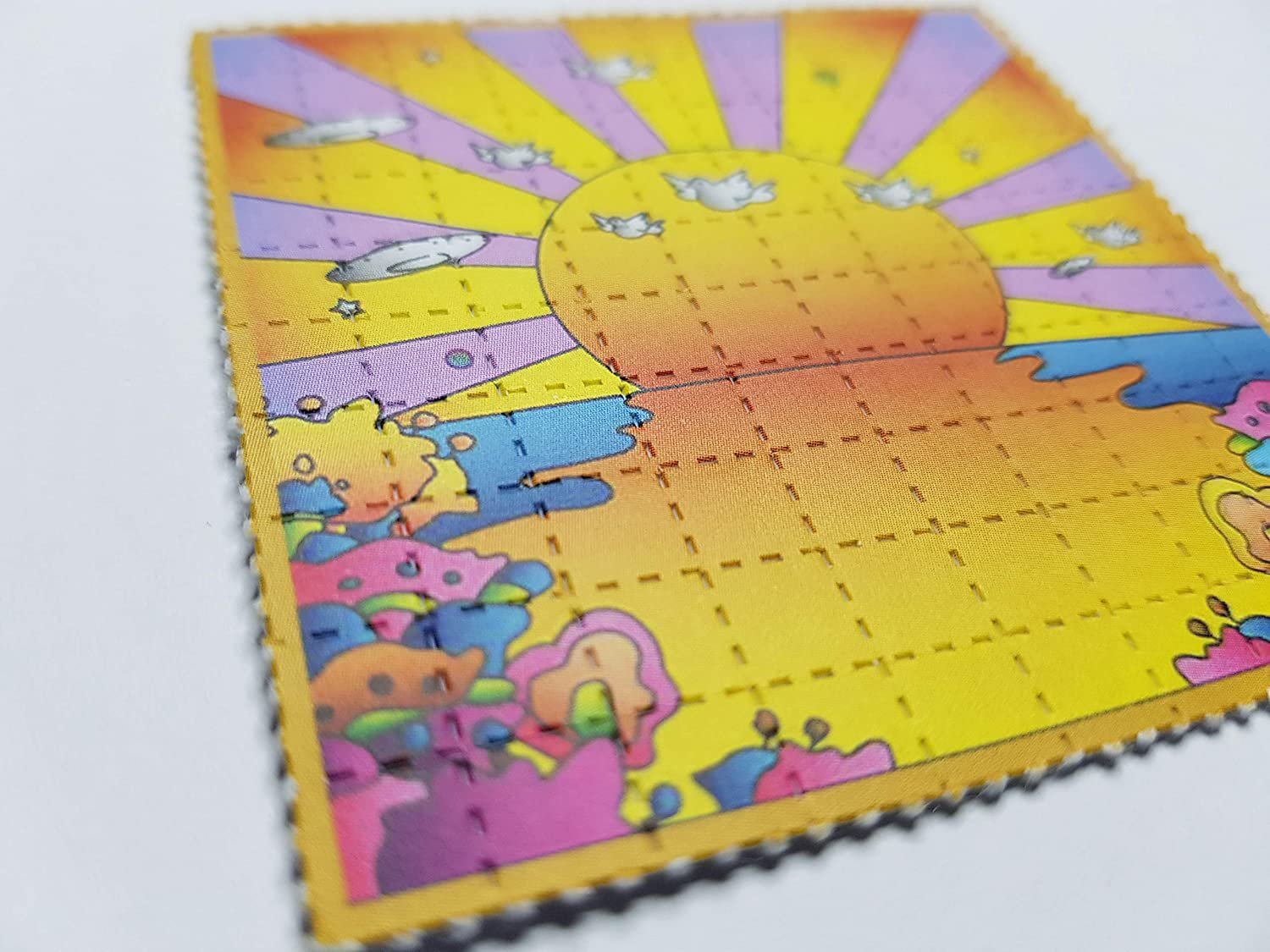
California Sunshine Acid – 150µg Classic Lysergic Tab
Price range: $230.00 through $1,300.00
Step into sunshine with this 150µg LSD-25 tab inspired by the 70s West Coast psychedelic wave. Potent, clean, and legally sourced for research or personal insight.
Buy California Sunshine Acid online: History, LSD & Orange Sunshine
California Sunshine acid is a historical term commonly associated with Orange Sunshine, an LSD product made by chemists Nick Sand and Tim Scully and distributed through networks linked to the Brotherhood of Eternal Love around 1969. Orange Sunshine is the better-documented name. It appeared as small orange tablets known as orange barrels, which historical accounts commonly describe as containing roughly 250 to 300 micrograms of LSD. That figure is an estimate and not a verified specification for every tablet.
Key Facts
| Item | Summary |
|---|---|
| Common names | Orange Sunshine, California Sunshine, orange barrels |
| Era | Late 1960s, with circulation commonly dated to around 1969 |
| Producers | Nick Sand and Tim Scully |
| Distribution | Networks linked to the Brotherhood of Eternal Love |
| Chemical identity | Historically associated with LSD-25, or lysergic acid diethylamide |
| Physical format | Small orange tablets |
| Reported dose | Roughly 250 to 300 micrograms, widely repeated but not batch verified |
| Main region | Southern California, especially the Laguna Beach area |
| Main uncertainties | Exact dosage, purity, batch composition, and the extent of the ALD-52 claim |
What Was California Sunshine Acid?
California Sunshine acid is best understood as a retrospective label for Orange Sunshine, the LSD that became one of the most recognizable products of the late 1960s psychedelic counterculture. Acid is a long-standing slang term for LSD. Sunshine was a street name, a brand identity, and a shorthand for a reputation, not a chemical category.
LSD itself is a semisynthetic compound derived from lysergic acid, a component of ergot alkaloids produced by fungi that infect grain. The chemist Albert Hofmann first synthesized it at Sandoz Laboratories in Basel in 1938 and discovered its psychoactive effects in 1943. The National Institute on Drug Abuse and the Drug Enforcement Administration provide current background on the compound, and PubChem lists its chemical properties. These sources describe LSD as a compound, but they do not document Orange Sunshine. Historical claims about the product depend on books, interviews, court proceedings, and later reporting.
California Sunshine Acid vs. Orange Sunshine LSD
The two names are often used interchangeably, but they are not equally well documented. Orange Sunshine is the name tied to Sand, Scully, and the Brotherhood of Eternal Love in historical accounts. California Sunshine acid appears more often in retrospective and popular usage, and documented evidence that it was a separate original brand is limited.
The distinction matters for three reasons. A historical street name cannot prove who produced a particular tablet, what it contained, or when it was made. Sunshine was also a common branding idea in the era, and the word alone does not establish a connection to a specific laboratory. Finally, orange tablets sold in later decades were often unrelated to the original product. For historical purposes, California Sunshine acid is best treated as a loosely applied synonym, and Orange Sunshine as the more precise term.
Who Made Orange Sunshine LSD?
Orange Sunshine is historically attributed to the underground chemists Nick Sand and Tim Scully. Some accounts place the start of production slightly before 1969, although the product became widely known around that year. Both men worked in clandestine LSD production during a period of rapidly tightening drug laws, and both were later arrested and prosecuted.
Owsley Stanley, often called Bear, is a related but separate figure. Stanley produced large quantities of LSD in San Francisco and Berkeley in the mid-1960s and was also known for his work as a sound engineer for the Grateful Dead. Scully worked with Stanley earlier in the decade and learned much of his laboratory practice in that setting. That connection explains why the names appear together, but Stanley is not generally credited as a manufacturer of Orange Sunshine. Treating him as one is a common error in popular retellings.
Timeline of Orange Sunshine and the Brotherhood of Eternal Love
A short chronology helps separate firmly documented events from later folklore.
- 1938 and 1943. Albert Hofmann synthesizes LSD at Sandoz and later discovers its psychoactive effects. His first deliberate dose is reported as 250 micrograms.
- Mid-1960s. Sandoz ends its distribution of LSD, and California makes the drug illegal in 1966. Underground production expands, and the Brotherhood of Eternal Love forms in Southern California.
- 1967. The Summer of Love brings public attention to San Francisco and the Haight-Ashbury district. Owsley Stanley is arrested in December.
- Around 1968 to 1969. Sand and Scully produce Orange Sunshine, which circulates widely through Brotherhood-linked networks.
- 1970. LSD is placed in Schedule I under the federal Controlled Substances Act, as described by the Drug Enforcement Administration.
- Early 1970s. Law enforcement actions target the Brotherhood, and Sand and Scully are arrested.
- 1976 to 1977. Operation Julie, a separate British investigation, dismantles another clandestine LSD network.
California Sunshine Acid Dosage and Purity
The most repeated claim about Orange Sunshine is that each tablet contained roughly 250 to 300 micrograms of LSD, with 300 micrograms often cited. For comparison, accounts of Hofmann’s 1943 self-experiment describe an intended small test that proved far stronger than expected at 250 micrograms. The pharmacology literature treats LSD as active at very small quantities, which is why doses are measured in micrograms.
Dose and purity are different concepts and should be kept apart.
- Dose is the amount of LSD in a single tablet or unit, usually expressed in micrograms.
- Purity is the proportion of a preparation that is the intended compound, with the remainder consisting of byproducts, residues, or fillers.
- Reputation is the informal belief, common in accounts of the era, that Orange Sunshine was unusually clean and potent.
Statements about high-purity LSD in the 1960s are therefore claims about reputation unless they rest on laboratory analysis. Clandestine batches lacked pharmaceutical standardization, so tablets from the same run could vary. Readers should treat the 250 to 300 microgram range as a historical estimate and not a guaranteed dose for every tablet. The table below summarizes what different kinds of sources can and cannot show.
| Source type | What it can show | Main limitation |
|---|---|---|
| Court records | Charges, testimony, and stated laboratory findings | May address only seized samples |
| Chemist interviews and memoirs | Production methods and intended dose | Recollection and self-interest |
| Journalism and books | Context and cultural impact | Often repeats earlier estimates |
| Modern analytical chemistry | Composition of surviving or reconstructed samples | Rarely linked to original batches |
ALD-52 vs. LSD-25 and the Orange Sunshine Question
ALD-52, also called 1-acetyl-LSD, is a lysergamide closely related to LSD-25. It differs by an acetyl group attached to the indole nitrogen. Sandoz studied the compound in the mid-twentieth century, and it is generally thought to behave much like LSD, likely because it converts to LSD in the body.
ALD-52 enters the Orange Sunshine story through a legal-defense argument. The reasoning, as secondary accounts describe it, was that if tablets contained ALD-52 and not LSD, a prosecution built on LSD charges might fail. That argument gave rise to an enduring claim that Orange Sunshine was really ALD-52.
The historical record supports a more limited conclusion, and three points are worth separating.
- What was claimed. Some participants and advocates raised the ALD-52 possibility in a legal context.
- What the claim does not show. The existence of a defense argument does not establish what every tablet contained.
- What would settle the question. Chemical analysis tied to specific batches, which is largely unavailable for the original product.
Orange Sunshine remains historically associated with LSD-25 production. Claims that it was entirely or mostly ALD-52 should be treated as unproven, and so should claims that every dose was identical.
Orange Barrels and the Myth of LSD Strains
Orange barrels were small tablets, and their color and shape helped make Orange Sunshine easy to recognize. Even so, LSD has no strains in the botanical sense. Cannabis and many other plants have genetic varieties that produce different chemical profiles. LSD is a defined molecule, and a given quantity of pure LSD-25 is chemically the same regardless of the name attached to it.
Names such as Orange Sunshine, California Sunshine, and White Lightning described appearance, provenance, or reputation. Differences in effect between products more plausibly came from dose, impurities, setting, and the expectations of the user. For this reason, the color or shape of a tablet cannot authenticate a product sold under the same name today.
Brotherhood of Eternal Love and Laguna Beach
The Brotherhood of Eternal Love was a Southern California group that began in the mid-1960s and combined a spiritual interest in psychedelics with illicit drug distribution. Its members were associated with the Anaheim area before becoming closely identified with Laguna Beach, where they operated a shop called Mystic Arts World. The psychologist Timothy Leary was also associated with the group in the later 1960s.
The Brotherhood is credited with distributing Orange Sunshine on a very large scale, and later became known for cannabis and hashish smuggling. Its activities drew sustained attention from state and federal authorities, and law enforcement actions in the early 1970s led to many arrests. Accounts of the group vary in tone. Some emphasize its idealism, while others stress its role as a drug trafficking organization. A balanced reading recognizes both.
Orange Sunshine in the 1960s Psychedelic Counterculture
Orange Sunshine became a symbol of the late 1960s psychedelic movement in California, an era also shaped by the Summer of Love and by public debate over LSD research and prohibition. Popular accounts often link the product with Woodstock in 1969. Claims that specific tablets were present at particular events are largely anecdotal and should be read as part of the folklore.
Operation Julie is related to this history only in a broad sense. It was a British investigation in the mid-1970s into a different LSD manufacturing network and involved different people, a different country, and a different product. The two stories show how clandestine LSD production drew increasing law enforcement attention in the United States and the United Kingdom, but neither should be used to explain the other.
Sources and Historical Uncertainty
Much of what circulates about Orange Sunshine comes from retrospective memory. Several categories of evidence exist, and each has limits.
- Court records document charges and testimony but reflect legal strategy.
- Interviews and memoirs by participants offer detail on production and distribution but are shaped by recollection and personal interest.
- Journalism and books provide context but frequently repeat earlier claims, including the 300 microgram figure.
- Laboratory evidence is the strongest form of proof but is rarely available for original batches.
Readers evaluating a specific claim should ask which category of evidence supports it. A figure repeated in many places is not necessarily independently verified. Collections such as the Erowid LSD library can help orient readers, but they do not replace primary documents.
Modern Drug Checking and Harm Reduction
Historical interest in Orange Sunshine should not be confused with confidence in products sold today. Reagent tests offer limited information. Ehrlich and Hofmann reagents can give preliminary results consistent with LSD or related lysergamides, but they cannot establish provenance, dose, or purity. Laboratory drug checking with analytical instrumentation provides far stronger identification. This matters because other compounds, including NBOMe compounds, have been sold as LSD. Harm reduction organizations advise that no home test can confirm the strength of a dose.
Frequently Asked Questions
What was California Sunshine acid?
California Sunshine acid is a historical street name commonly associated with Orange Sunshine, the LSD produced by Nick Sand and Tim Scully around 1969. Orange Sunshine is the better-documented name, and the product was distributed through networks linked to the Brotherhood of Eternal Love.
Who manufactured California Sunshine acid?
The Orange Sunshine associated with the California Sunshine name was produced by the underground chemists Nick Sand and Tim Scully. Distribution was closely tied to the Brotherhood of Eternal Love, a Southern California group connected with Laguna Beach and the psychedelic counterculture of the era.
Was California Sunshine acid real LSD?
Orange Sunshine is historically associated with LSD-25, or lysergic acid diethylamide. The word Sunshine did not denote a separate LSD strain. Claims involving the related compound ALD-52 come mainly from the legal controversy surrounding the tablets and do not establish that every tablet differed from LSD-25.
Was Orange Sunshine actually ALD-52?
ALD-52, also called 1-acetyl-LSD, became part of a legal-defense argument related to Orange Sunshine. The existence of that argument does not show that every dose contained ALD-52. Batch-specific analysis and court records should take precedence over later folklore.
How strong was original Orange Sunshine LSD?
Historical accounts commonly place Orange Sunshine tablets at roughly 250 to 300 micrograms, and 300 micrograms is frequently cited. Clandestine batches lacked modern standardization, so this figure is a historical estimate and not a guaranteed dose for every tablet.
What did Orange Sunshine acid look like?
Orange Sunshine was distributed as small orange tablets, often called orange barrels. The distinctive appearance contributed to its countercultural identity. Color and shape cannot authenticate a modern product sold under the same name.
Was California Sunshine a unique LSD strain?
No. LSD is a defined chemical compound and not a botanical product with genetic strains. California Sunshine and Orange Sunshine functioned as street names, brands, or claims of provenance. They did not describe distinct pharmacological varieties.
Can reagent tests identify modern Orange Sunshine LSD?
Ehrlich and Hofmann reagents can give preliminary results consistent with LSD or related lysergamides. They cannot establish historical provenance, exact dosage, or purity. Laboratory drug checking with analytical instrumentation provides much stronger chemical identification.
Conclusion
California Sunshine acid is best understood as a later and looser label for Orange Sunshine, the LSD associated with Nick Sand, Tim Scully, and the Brotherhood of Eternal Love around 1969. The product earned a lasting place in the history of the California psychedelic counterculture through its distinctive orange tablets and its reputation for strength. Its documented history is narrower than its legend. The 250 to 300 microgram figure is an estimate, the purity claims rest largely on reputation, and the ALD-52 story reflects a legal argument and not a verified finding about every tablet. A careful account separates what sources establish from what retelling has added.
33 reviews for California Sunshine Acid – 150µg Classic Lysergic Tab
Add a review
Related products
Price range: $240.00 through $2,600.00
This product has multiple variants. The options may be chosen on the product page 
Price range: $230.00 through $1,300.00
This product has multiple variants. The options may be chosen on the product page 
Price range: $230.00 through $1,300.00
This product has multiple variants. The options may be chosen on the product page 
Price range: $230.00 through $1,300.00
This product has multiple variants. The options may be chosen on the product page
Kensley Olsen (verified owner) –
So vibrant, so alive—everything pulsed with magic.
Savanna Noel (verified owner) –
Each moment was full of insight and beauty.
Clarissa Maddox (verified owner) –
Each second felt like a universe of depth.
Siena Conley (verified owner) –
No ego, no fear—just flow.
Judson Kline (verified owner) –
I felt connected to everything, everywhere.
Liana Rosales (verified owner) –
Euphoria mixed with deep understanding.
Anders Cross (verified owner) –
So vibrant, so alive—everything pulsed with magic.
Knox Humphrey (verified owner) –
Absolutely potent—start with a small dose if you’re new.
Renzo Cullen (verified owner) –
It felt like time slowed down and became sacred.
Bryant Vaughn (verified owner) –
It was like watching the stars from the inside.
Rhea Morrow (verified owner) –
This product is the real deal—professional and powerful.
Demi Lockhart (verified owner) –
I understood people better after this experience.
Milani West (verified owner) –
The veil lifted—and it was beautiful.
Foster Daley (verified owner) –
The sky danced for me.
Marisol Kinney (verified owner) –
Completely immersive. Felt like I became the art I was looking at.
Cason Whittaker (verified owner) –
Everything was energy—and it was all good.
Elora Davison (verified owner) –
This is what creativity feels like.
Dash Holloway (verified owner) –
Absolutely no fear or anxiety—just deep curiosity.
Giselle Barron (verified owner) –
So grateful for such a clean and trusted source.
Corey McDonald (verified owner) –
Very satisfied with how everything turned out.
Jolie Mays (verified owner) –
I was able to look at myself with kindness and curiosity.
Cairo Templeton (verified owner) –
Took me into myself and brought me back better.
Eric Allen (verified owner) –
Everything was simple and well explained.
Kimberly Owens (verified owner) –
No issues whatsoever. Very satisfied.
Gary Flores (verified owner) –
Everything arrived in excellent condition.
Ryker Darnell (verified owner) –
A sacred tool for transformation.
Mason Edwards (verified owner) –
Great experience with clear updates.
Christina Woods (verified owner) –
Everything was organized and easy to follow.
Sean Ward (verified owner) –
Really pleased with the service provided.
Ella Thompson (verified owner) –
Everything was carefully organized.
Paige Gibson (verified owner) –
The process was smooth and professional.
Chase Ortiz (verified owner) –
Great attention to detail throughout the process.
Madeline Peterson (verified owner) –
Very pleased with the overall service.