No products in the cart.
Uncategorized
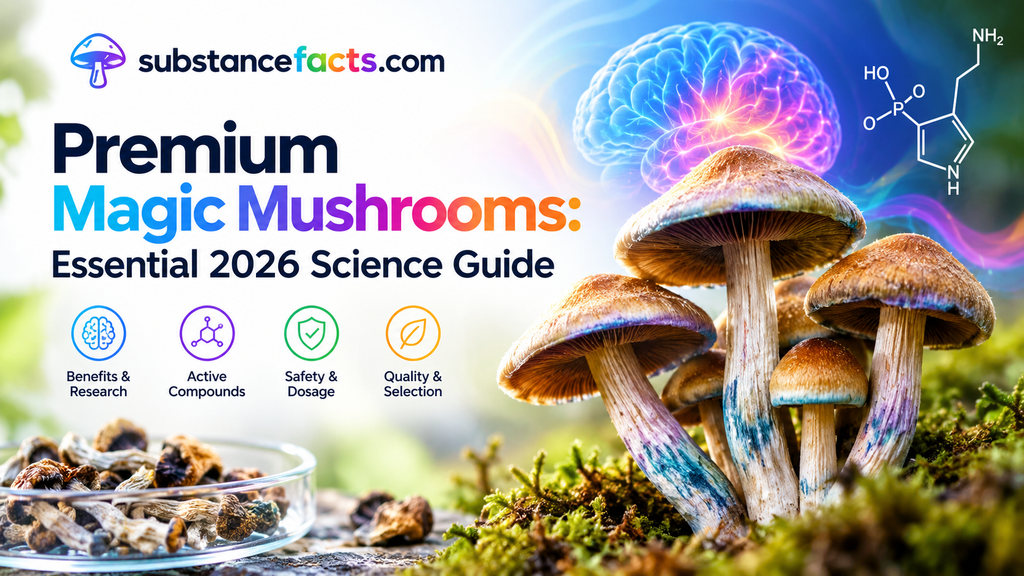
Premium Magic Mushrooms: Essential 2026 Science Guide
28
Sep
Sep
“Premium magic mushrooms” is a marketing phrase, not a scientific grade, regulatory classification, or taxonomic category. Meaningful quality indicators include verified species identity, batch-specific psilocybin and psilocin measurements, appropriate contaminant screening, and documented provenance. Strain names such as Golden Teacher, Penis Envy, Albino Penis Envy, or Enigma cannot independently establish potency, purity, safety, or predictable effects.
Quick answer: Premium magic mushrooms are not a scientific or regulatory category. Quality is better evaluated using verified species identity, batch-specific psilocybin and psilocin measurements, appropriate contaminant screening, and documented provenance. Names such as Golden Teacher, Penis Envy, APE, and Enigma cannot by themselves establish potency, purity, safety, or predictable effects.
Editorial note: This article is educational and does not constitute medical, legal, or therapeutic advice. Psilocybin remains a Schedule I controlled substance under federal law in the United States. Readers should consult qualified legal and medical professionals regarding applicable laws and health considerations in their jurisdiction.
Pricing and legal methodology: Legal frameworks described in this article were verified against primary government sources as of mid-2025. Psilocybin regulations change rapidly at state and municipal levels. Readers should confirm current legal status with qualified legal counsel and official government sources before acting on any information presented here. Last verified: June 2025.
What Are Premium Magic Mushrooms?
The phrase “premium magic mushrooms” circulates widely in online communities and informal markets, but it has no established meaning in mycology, pharmacology, food science, or regulatory policy. No federal agency, scientific body, or clinical authority has defined a grading system for psilocybin-containing mushrooms comparable to pharmaceutical quality standards, USDA agricultural grades, or FDA food safety classifications.
In practice, the label is applied commercially to mushrooms marketed on the basis of strain name, visual appearance, reported potency, or cultivator reputation. None of these factors alone constitutes a reliable, independently verifiable quality standard.
Definition: Premium magic mushrooms. The phrase has no standardized scientific, FDA, DEA, or taxonomic definition. A defensible quality assessment relies on verified species identity, batch-specific chemical analysis, appropriate contaminant testing, and documented provenance rather than strain name, visual appearance, or anecdotal effects.
From a scientific standpoint, evaluating psilocybin mushroom quality would require at minimum:
- Verified taxonomic identification of the species
- Batch-specific quantitative measurement of psilocybin, psilocin, and ideally other alkaloids
- Appropriate screening for microbial contamination, heavy metals, and other relevant contaminants
- Documentation of provenance, cultivation conditions, and sample integrity
Without this information, claims about premium quality, superior potency, or enhanced effects remain marketing assertions rather than verifiable scientific descriptions.
What “Premium” Can and Cannot Mean
The table below illustrates the gap between quality claims frequently encountered in informal markets and what would actually be needed to substantiate them scientifically.
| Quality Claim | What Would Substantiate It |
|---|---|
| Species identity | Validated taxonomic identification |
| High potency | Batch-specific quantitative assay (e.g., HPLC) |
| Tested for contaminants | Named laboratory panel with disclosed results |
| Therapeutic | Evidence from appropriate peer-reviewed clinical research |
| Legal | Current statute or regulator guidance for the relevant jurisdiction |
| “Premium strain” | No standardized meaning; not substantiated by strain name alone |
Psilocybe Cubensis Taxonomy and Species Overview
Psilocybe cubensis is the most widely cultivated psilocybin-containing fungal species and the origin of most strain names commonly discussed in online communities. It belongs to the family Hymenogastraceae within the order Agaricales. The genus Psilocybe comprises several hundred described species, of which a subset produce psilocybin and related tryptamines.
Other notable psilocybin-containing species include Psilocybe azurescens, found naturally in the Pacific Northwest and documented with relatively high psilocybin concentrations in published analyses, and Psilocybe semilanceata, commonly called the liberty cap, which is widely distributed across temperate grasslands in Europe and North America. Taxonomic identification of wild specimens requires expert mycological assessment. Misidentification of wild mushrooms carries serious safety risks, as multiple toxic species can closely resemble psilocybin-containing ones, and visual similarity alone is not a reliable basis for identification.
The MycoBank database, maintained by the International Mycological Association, provides nomenclatural records for fungal taxa. For verified species-level information, primary mycological literature and herbarium records are more reliable than informal community sources.
How Premium Magic Mushrooms Compare by Strain and Potency
Within Psilocybe cubensis, the term “strain” is used loosely in cultivation communities to describe phenotypic variants with distinctive visual characteristics or community reputations for particular potency levels. These designations are not taxonomically recognized subspecies or formally described varieties. The same strain name may be applied to materially different material across different cultivators and growing conditions.
Direct answer: Can a mushroom strain name predict potency? No. Names such as Golden Teacher, Penis Envy, APE, and Enigma describe community-recognized material but do not guarantee a specific psilocybin concentration. Genetics, specimen variation, handling, storage, degradation, and laboratory methodology can all influence measured results.
Are High-Potency Psilocybin Strains Scientifically Meaningful?
The concept of a reliably high-potency strain assumes that alkaloid concentrations are stable across specimens and cultivation conditions. Published analyses and community testing projects have consistently shown the opposite: psilocybin concentrations vary substantially between individual specimens carrying the same strain name, between batches from the same cultivator, and across different storage and handling conditions. A strain name can indicate community expectations about a phenotype but cannot substitute for batch-specific chemical measurement of the actual sample.
Golden Teacher
Golden Teacher is one of the most widely recognized Psilocybe cubensis strain names. It is commonly described in harm reduction and cultivation literature as producing moderate effects relative to other named variants, and it is frequently cited as accessible for individuals unfamiliar with psilocybin mushrooms. The name refers to a phenotype characterized by golden-capped fruiting bodies with a distinctive appearance. No peer-reviewed study has independently characterized the alkaloid profile of material sold under this name as a distinct biological entity separate from other Psilocybe cubensis material.
Penis Envy Strain Potency
Penis Envy is a Psilocybe cubensis phenotype with a community reputation for above-average alkaloid concentrations relative to other commonly cultivated variants. It is characterized by a distinctive morphology, including a dense, thick stem and comparatively small cap. Community testing efforts and some published analytical reports have identified higher psilocybin concentrations in certain Penis Envy specimens compared to other Psilocybe cubensis samples, but concentrations vary meaningfully between individual specimens and batches. The strain name does not guarantee a specific alkaloid profile.
Albino Penis Envy (APE) Mushrooms
Albino Penis Envy, commonly abbreviated APE, is a phenotypic variant of Penis Envy characterized by pale or white coloration. Community reports associate APE with high alkaloid concentrations consistent with other Penis Envy variants. The same caveats about batch variability and the absence of peer-reviewed strain-specific characterization apply. Published data on this specific phenotype outside of community testing contexts is limited.
Enigma
Enigma is a name associated with a Psilocybe cubensis mutation producing an unusual blob-like or contorted growth form rather than conventional fruiting bodies. Because it does not produce viable spores, it is propagated through tissue culture. Some community potency testing has reported high alkaloid concentrations in Enigma material, though these reflect individual test results rather than systematic scientific characterization. The growth form and propagation requirements make this variant less widely cultivated than spore-producing phenotypes.
Psilocybin Alkaloid Profile
Psilocybin-containing mushrooms produce a family of related tryptamine alkaloids. The primary compounds include psilocybin, psilocin, baeocystin, norbaeocystin, and aeruginascin, though concentrations vary considerably by species, specimen, growth conditions, age at harvest, and post-harvest handling. Alkaloid content is not fixed by species or strain name.
Psilocybin vs. Psilocin Difference
Direct answer: Psilocybin vs. psilocin. Psilocybin is converted in the body to psilocin, which produces psychedelic effects primarily through serotonin receptors including the 5-HT2A subtype. Psilocin and psilocybin are chemically distinct, and their concentrations can vary considerably between mushroom samples and between species.
Psilocybin (4-phosphoryloxy-N,N-dimethyltryptamine) is a prodrug that is converted in the body to psilocin (4-hydroxy-N,N-dimethyltryptamine) through dephosphorylation by intestinal alkaline phosphatase and other enzymes. Psilocin is the pharmacologically active compound and acts as a partial agonist at serotonin receptors, with documented affinity for the 5-HT2A receptor subtype. Activation of 5-HT2A receptors in cortical regions is considered central to the psychedelic effects of psilocin, based on research published by institutions including the Johns Hopkins Center for Psychedelic and Consciousness Research and the Imperial College London Centre for Psychedelic Research.
Clinical psilocybin research uses pharmaceutical-grade synthetic psilocybin rather than mushroom material. This distinction matters: findings from controlled clinical studies do not translate directly to the variable alkaloid profiles found in cultivated or foraged specimens.
Baeocystin and norbaeocystin are structurally related tryptamines present in variable amounts across Psilocybe species. Their independent pharmacological contributions in humans are not well characterized in the current peer-reviewed literature. Aeruginascin has been identified in some specimens and is structurally related to bufotenidine, but its role in the overall pharmacology of Psilocybe mushrooms requires further research before conclusions can be drawn.
Does Blue Bruising Indicate Potency?
Blue bruising in some Psilocybe mushrooms is associated with chemical reactions involving psilocin-related compounds when tissue is damaged and exposed to air, but bruising intensity is not a quantitative potency test and should not be used as a standalone identification method or potency indicator. Reliable potency measurement requires appropriate chemical analysis of the actual sample. Visual assessment, including bruising color, cannot substitute for laboratory testing.
Psilocybin Mushroom Dosage Guide: Why Weight Is an Unreliable Measure
The phrase “psilocybin mushroom dosage guide” implies that weight-based dosing of dried mushroom material is a meaningful and consistent framework. In practice, it is not, and understanding why reveals something important about mushroom chemistry.
Psilocybin concentrations in Psilocybe cubensis specimens vary substantially between individuals, batches, and even different parts of the same fruiting body. A published analysis might find two to three times more psilocybin in one specimen than in another of nominally the same strain. This means that a fixed weight of mushroom material does not correspond to a predictable pharmacological dose.
Clinical psilocybin research addresses this problem by using precisely measured, standardized synthetic psilocybin administered under controlled conditions with trained facilitators and medical monitoring. Studies published in journals including JAMA Psychiatry, Nature Medicine, and the New England Journal of Medicine use this approach specifically because mushroom-weight dosing cannot provide the consistency required for valid clinical research or for safe medical administration.
The practical implication is that any weight-based mushroom dosing framework, regardless of how it is labeled or framed, operates under substantial pharmacological uncertainty. This is not a minor caveat. It is a fundamental characteristic of using botanical material with variable chemistry.
For educational context, harm reduction organizations emphasize that this variability, combined with individual differences in body weight, metabolism, psychological state, prior experience, and concurrent substances, makes any general dosing claim inherently imprecise. The Zendo Project, affiliated with the Multidisciplinary Association for Psychedelic Studies (MAPS), provides psychedelic support services and harm reduction guidance in appropriate contexts.
Dried vs. Fresh Magic Mushrooms
Fresh psilocybin mushrooms contain substantially higher water content than dried specimens, typically estimated at approximately 85 to 95 percent water by weight depending on species and post-harvest handling. This means a given weight of fresh mushrooms contains considerably less dry alkaloid-containing material than an equivalent weight of dried mushrooms. The imprecision of mushroom-weight dosing is therefore compounded further when fresh and dried material are compared without accounting for water content.
Drying is generally described in mycological preservation literature as extending shelf life and reducing the risk of bacterial contamination from residual moisture.
How to Store Magic Mushrooms Long Term
Psilocybin and psilocin degrade over time. Degradation is accelerated by exposure to light, heat, oxygen, and moisture, consistent with the known chemical properties of these compounds. Research on alkaloid stability in botanical specimens generally identifies low temperature, darkness, low humidity, and reduced oxygen exposure as conditions that slow chemical degradation.
This information is presented in an educational context relevant to understanding sample stability, alkaloid degradation, and the limitations of comparing samples collected or stored under different conditions. It reflects principles of botanical and pharmaceutical preservation chemistry and does not constitute guidance on the possession, cultivation, or storage of controlled substances.
Psilocybin Mushroom Potency Testing
How HPLC Mushroom Testing Works
High-performance liquid chromatography (HPLC) is a validated analytical technique capable of separating, identifying, and quantifying individual compounds in a complex mixture. When properly validated with appropriate reference standards and quality controls, HPLC can provide compound-specific measurements of psilocybin, psilocin, and related alkaloids in mushroom material. This technique is used in peer-reviewed research and forensic laboratory analysis and is substantially more informative than visual assessment or consumer-grade screening tools.
How to Read a Laboratory Test Result
Understanding what constitutes a credible analytical result is relevant for evaluating published research, regulatory testing programs, and the claims made by commercial testing services. A credible analytical report should include at minimum:
- The analytical method used (e.g., HPLC-UV, LC-MS/MS)
- The specific compounds measured (analytes)
- Results expressed in standardized units (e.g., mg/g dry weight)
- The sample basis (whether results are expressed on a dry weight or as-received basis)
- Detection and quantification limits
- The laboratory’s identity and any relevant accreditation
- A unique batch or sample identifier
- The date of analysis
- A statement of measurement uncertainty or analytical precision
Without these elements, a test result cannot be independently evaluated, compared to other published data, or used as a reliable basis for any scientific or safety-related claim.
Magic Mushroom Potency Test Kits
Consumer colorimetric test kits use chemical reagents to produce a color change in the presence of certain compound classes. These kits can indicate the possible presence of some tryptamine-class compounds but do not provide quantitative measurements equivalent to validated laboratory analysis. They are better understood as preliminary screening indicators rather than definitive analytical instruments.
Community-based potency testing projects using mass spectrometry or HPLC to analyze user-submitted samples provide useful population-level data about variability across named phenotypes, but individual batch results cannot be reliably generalized to all material sold under the same strain name.
Microdosing Magic Mushrooms
Microdosing refers to the regular consumption of sub-perceptual amounts of a psychedelic substance, with the stated aim of producing cognitive, emotional, or functional benefits without inducing perceptible psychedelic effects. Research on psychedelic microdosing remains in early stages and the evidence is mixed.
A 2022 study published in eLife using a self-blinded citizen science design found that participants who microdosed reported improvements in psychological well-being, but the authors noted that expectation effects were difficult to rule out given the study design. More recent placebo-controlled trials have not consistently supported the magnitude of benefits reported in observational and self-report literature.
The National Institute on Drug Abuse (NIDA) and ClinicalTrials.gov list ongoing registered research into psilocybin and related compounds. Current evidence does not support treating widely circulated microdosing schedules as established medical therapies. These protocols are not FDA-approved treatment regimens, and the variability in mushroom alkaloid content described throughout this article applies equally to microdose quantities.
Therapeutic Psilocybin Mushrooms and Clinical Research
Psilocybin has been studied in clinical trials for conditions including treatment-resistant depression, major depressive disorder, alcohol use disorder, tobacco cessation, and end-of-life psychological distress. The clinical research uses pharmaceutical-grade synthetic psilocybin administered in controlled settings with trained facilitators and medical monitoring, not mushroom material. This distinction is significant and is frequently misrepresented in popular coverage of psychedelic research.
In 2018, the FDA granted psilocybin Breakthrough Therapy Designation for treatment-resistant depression, and a second designation followed for major depressive disorder. Breakthrough Therapy Designation is a development program intended to expedite the review process for promising drugs. It does not constitute drug approval, and psilocybin does not currently have FDA approval for any clinical indication.
Research published in peer-reviewed journals including Nature Medicine, JAMA Psychiatry, and the New England Journal of Medicine has reported promising findings for some applications alongside important limitations including small sample sizes, heterogeneous study designs, and challenges maintaining blinding. These findings from supervised clinical settings involving standardized pharmaceutical compounds should not be equated with unsupervised use of variable-potency botanical material.
Magic Mushroom Harm Reduction
Harm reduction for psilocybin mushrooms emphasizes minimizing risk and does not imply endorsement of use. The following principles reflect harm reduction literature and clinical research on psychedelic safety, not personal recommendations.
Species verification. Confirming species identity before any use is a fundamental safety consideration. Multiple toxic mushroom species can be confused with psilocybin-containing ones by non-experts. Mycological expertise is the appropriate standard for wild mushroom identification, not informal online tools or photographic comparison.
Drug interactions. Published case reports and pharmacovigilance analyses have raised particular concerns about serious adverse events, including seizures, associated with combinations of psychedelic substances and lithium. People taking psychiatric medications, including SSRIs, MAOIs, or lithium, should consult a qualified clinician rather than relying on general interaction lists.
Medical contraindications. Personal or family history of psychosis, schizophrenia, or certain other psychiatric conditions is consistently cited as a risk factor warranting medical caution in both clinical exclusion criteria and harm reduction guidance.
Set and setting. Mental state, physical environment, social context, and the presence of a trusted and sober person are consistently emphasized in harm reduction and clinical literature as important determinants of safety.
Emergency resources. In the event of a medical emergency, the Poison Control national helpline is available at 1-800-222-1222. For immediate emergencies, call 911.
The DanceSafe harm reduction organization provides non-judgmental drug education and testing resources. The Zendo Project, affiliated with MAPS, offers psychedelic support services in appropriate contexts.
Psilocybin Mushroom Legal Status by State
Direct answer: Are magic mushrooms legal? Psilocybin remains federally controlled in the United States. Oregon and Colorado have distinct state-regulated service frameworks, while some local governments have enacted decriminalization policies. Decriminalization, state-regulated access, and federal legality are different legal concepts with different practical and legal consequences.
Psilocybin is classified as a Schedule I controlled substance under the Controlled Substances Act, administered by the Drug Enforcement Administration (DEA). Schedule I classification reflects a federal determination of no currently accepted medical use and high abuse potential. Federal scheduling applies throughout the United States regardless of state or local policies.
Decriminalized vs. Legal vs. Regulated
These three terms describe distinct legal conditions that are frequently conflated in popular media.
Decriminalization generally reduces or eliminates local criminal penalties for possession or use below specified thresholds and reduces law enforcement prioritization. It does not authorize commercial sales, create a regulatory framework for lawful access, or change state or federal law.
Regulated access creates a specific framework for defined lawful activities under state law, including licensing requirements, facility standards, and supervision requirements. Regulated access exists within a state-law context and does not alter federal scheduling.
Federal legality would require removal or rescheduling of psilocybin under the Controlled Substances Act. This has not occurred as of the date of this article.
Oregon Psilocybin Service Centers
Oregon voters approved Measure 109 in 2020, establishing a regulated framework for psilocybin services. The Oregon Health Authority administers Oregon Psilocybin Services, which licenses service centers, facilitators, and manufacturers. Under this framework, adults 21 and older may receive psilocybin at licensed service centers under the supervision of a licensed facilitator. The program does not permit purchase for home use, and it operates as a wellness service framework rather than a medical treatment system. Last verified against Oregon Health Authority sources: June 2025.
Colorado Natural Medicine Health Act
Colorado voters approved Proposition 122, the Natural Medicine Health Act, in November 2022. The resulting regulatory framework covers psilocybin and psilocin derived from mushrooms, as well as several other specified natural psychedelic compounds. The Colorado Department of Revenue oversees the Natural Medicine Division, which regulates licensed healing centers for supervised natural medicine services alongside a separate personal use framework for qualifying adults. Licensed healing centers began operating in 2024. Last verified against Colorado Department of Revenue sources: June 2025.
Municipal Decriminalization
Several U.S. cities, including Denver, Colorado; Oakland and Santa Cruz, California; and others, have adopted local decriminalization measures affecting psilocybin or psilocybin mushrooms. These policies generally reduce local enforcement priority and may eliminate or reduce local criminal penalties. They do not legalize commercial sales, alter state law, or change federal scheduling. Legal status at the municipal, state, and federal levels can differ significantly, and individuals should consult qualified legal counsel for advice specific to their jurisdiction.
Functional Mushrooms vs. Psilocybin Mushrooms
Functional mushrooms is a term applied to non-psilocybin mushroom species consumed for purported health benefits. Commonly studied examples include lion’s mane (Hericium erinaceus), reishi (Ganoderma lucidum), chaga, and cordyceps. These species do not contain psilocybin or psilocin and do not produce psychedelic effects.
Lion’s mane has attracted research interest for potential effects on nerve growth factor production and cognitive function. Reishi has been studied in the context of immune modulation. The quality and consistency of evidence supporting health claims for functional mushrooms varies considerably. The National Center for Complementary and Integrative Health (NCCIH) provides a regularly updated review of mushroom-related health claims and the evidence supporting them.
Functional mushroom species are not subject to federal scheduling under the Controlled Substances Act. However, health claims made for dietary supplement products containing these species are regulated by the FDA under the Federal Food, Drug, and Cosmetic Act, and therapeutic claims must meet applicable regulatory standards.
Evidence Grading Framework
Interpreting claims about psilocybin mushrooms requires understanding the strength of underlying evidence. The following hierarchy applies to the types of claims encountered in this subject area.
| Evidence Type | Relative Strength for Specific Claims |
|---|---|
| Randomized controlled trials; validated chemical analyses; enacted statutes and regulations | Strongest |
| Observational studies; peer-reviewed case series; government agency guidance | Contextual |
| Case reports; pharmacovigilance data | Limited generalizability |
| Consumer self-reports; single competition test results; strain folklore | Weakest for generalization |
This framework applies to interpreting potency claims, therapeutic benefit claims, legal status claims, and safety claims equally. A randomized controlled trial on synthetic psilocybin under clinical conditions does not establish the same claims about variable-potency botanical material in uncontrolled settings.
Frequently Asked Questions
What are premium magic mushrooms?
Premium magic mushrooms is a marketing term rather than a scientific, FDA, or taxonomic classification. Meaningful quality indicators include verified species identity, batch-specific alkaloid measurements, appropriate contaminant testing, sample integrity, and documented provenance.
What is the most potent Psilocybe cubensis strain?
No Psilocybe cubensis strain has been scientifically established as universally most potent. Penis Envy, Albino Penis Envy, and Enigma-associated specimens have produced high results in some analyses, but alkaloid concentrations vary between specimens and batches. A strain name cannot substitute for batch-specific chemical testing.
What is the difference between Golden Teacher and Penis Envy?
Golden Teacher and Penis Envy are names associated with Psilocybe cubensis phenotypes rather than separate species. Penis Envy has a community reputation for higher potency, while Golden Teacher is commonly described as more moderate. Neither name guarantees a specific alkaloid concentration or predictable experience.
What is the difference between psilocybin and psilocin?
Psilocybin is a naturally occurring tryptamine that the body converts to psilocin through enzymatic dephosphorylation. Psilocin is the pharmacologically active compound primarily responsible for psychedelic effects, acting through serotonin receptors including the 5-HT2A subtype.
Does blue bruising mean a magic mushroom is potent?
No. Blue bruising in Psilocybe mushrooms is associated with chemical reactions involving psilocin-related compounds, but it is not a quantitative potency test and should not be used as a standalone identification or quality indicator. Reliable potency measurement requires validated chemical analysis of the actual sample.
Are magic mushroom potency test kits accurate?
Consumer colorimetric test kits are not equivalent to validated quantitative laboratory analysis. Techniques such as HPLC can provide more precise, compound-specific measurements when properly validated. Consumer test kits are better understood as preliminary screening tools with significant analytical limitations.
Are psilocybin mushrooms legal in the United States?
Psilocybin remains a federally controlled Schedule I substance. Oregon and Colorado have distinct state-regulated service frameworks. Some municipalities have adopted decriminalization policies. Decriminalization, state-regulated access, and federal legality are different legal concepts with different practical consequences.
Is microdosing magic mushrooms scientifically proven?
Research on psychedelic microdosing remains in early stages and results are mixed. Current evidence does not support treating widely circulated microdosing schedules as established medical therapies. These protocols are not FDA-approved treatment regimens.
