
No products in the cart.

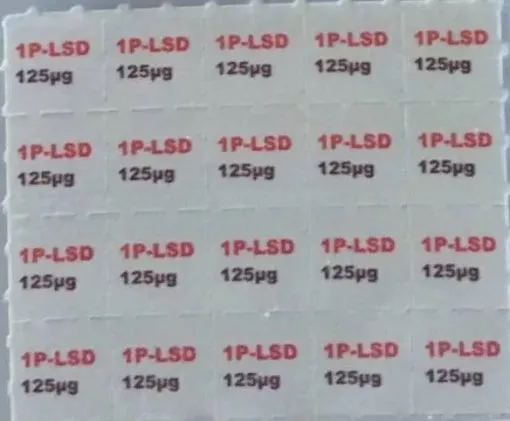
1P-LSD Blotter 125μg
Price range: $125.00 through $380.00
LSD (lysergic acid diethylamide) is one of the most well-known psychedelics, alongside psilocybin, the active compound in magic mushrooms.
1P-LSD is one of dozens of LSD analogs with very similar effects. Research suggests it may act as a prodrug, meaning the body converts it into LSD after consumption.
How Is 1P-LSD Taken?
1P-LSD is commonly distributed on blotter paper and taken orally or sublingually. Holding it under the tongue may result in a faster onset because it can be absorbed through tissues in the mouth and enter the bloodstream.
1P-LSD (125mcg) Blotter For Sale
- 1P-LSD
- BLOTTER
- 125μg
Buy 1P-LSD Online: Explore Effects, Pharmacology, Safety & Legal Status
What Is 1P-LSD?
1P-LSD, or 1-propionyl-lysergic acid diethylamide, is an N1-substituted lysergamide closely related to LSD-25. Experimental evidence supports its metabolic conversion to LSD, which is why it is characterized as an LSD prodrug rather than as an independently acting psychedelic. In the United States, its legal status is complex because federal analogue law may apply even when a substance is not individually scheduled.
Quick Scientific Summary
1P-LSD has a molecular formula of C23H29N3O2 and a molecular mass of approximately 379.50 g/mol. Human research reports that LSD appears after 1P-LSD is administered, so its pharmacological effects are expected to overlap substantially with those of LSD. Research specifically examining 1P-LSD remains limited. In the United States, a substance that is not scheduled by name is not necessarily legal. The Federal Analogue Act may apply when its statutory requirements are met, particularly when a substance is intended for human consumption.
1P-LSD Chemistry and Molecular Structure
LSD belongs to the lysergamides, a group of compounds built on the ergoline ring system. Lysergamides are derived from lysergic acid, and LSD is its N,N-diethylamide. 1-Propionyl-lysergic acid diethylamide, registered under CAS 2349358-81-0 and commonly abbreviated 1P-LSD, differs from LSD by a single propionyl group attached to the nitrogen at position 1 of the indole ring. This N1 substitution adds C3H4O to the LSD structure and raises the molecular mass from about 323.43 g/mol to about 379.50 g/mol. Basic data for the parent compound are available in the PubChem record for LSD.
The first analytical and behavioral characterization of 1P-LSD appeared in a 2016 study by Brandt and colleagues in Drug Testing and Analysis. The compound had appeared on the novel psychoactive substance market shortly before.
Is 1P-LSD a Prodrug for LSD?
Available experimental evidence supports the prodrug model. 1P-LSD undergoes N-deacylation, which removes its propionyl substituent and produces LSD. A prodrug is a compound that is converted into a pharmacologically active substance by metabolic processes, and the N1 propionyl group of 1P-LSD is an acyl group that can be removed by hydrolysis.
Preclinical work supports this pathway. A 2020 study in Neuropharmacology examined 1-acyl derivatives of LSD, including 1P-LSD, and found evidence that they are converted to LSD in vivo. Human research has also reported LSD in blood after 1P-LSD administration, which indicates that deacylation occurs in people. The conversion itself is better supported than claims about its rate or its consistency across individuals.
1P-LSD Metabolic Pathway
Current evidence supports N-deacylation as the key metabolic step linking 1P-LSD to LSD. Removal of the N1 propionyl group produces LSD, which then undergoes its own metabolism, including formation of metabolites used in forensic toxicology. Evidence supports the conversion itself more strongly than it supports assigning the reaction to a single specific human enzyme. Statements that name one enzyme family as solely responsible should therefore be treated as unproven.
1P-LSD Pharmacology and 5-HT2A Activity
LSD acts mainly as a partial agonist at serotonin 5-HT2A receptors, and activation of this receptor is considered central to the effects of classic serotonergic psychedelics. LSD also binds to other serotonin receptor subtypes and to dopamine and adrenergic receptors. A detailed overview appears in Nichols’ review in Pharmacological Reviews.
Substitution at the N1 position generally reduces receptor affinity compared with LSD. For this reason, 1P-LSD is considered to act largely through conversion to LSD rather than through direct receptor activation. In rodents, the head-twitch response is a behavioral proxy for 5-HT2A activation. Studies using it have found 1P-LSD to be active but less potent than LSD, which is consistent with a prodrug mechanism.
Because 1P-LSD yields LSD in the body, its pharmacodynamic profile should closely resemble that of LSD. Differences in absorption, conversion rate, and the presence of the intact parent compound could still influence onset, intensity, and individual variability. Controlled human data on these differences are limited.
1P-LSD vs LSD-25
The main difference is that 1P-LSD has a propionyl group attached to the indole N1 position, whereas LSD-25 does not. Human evidence indicates that 1P-LSD is metabolically deacylated to LSD. The compounds therefore produce closely related pharmacology, but they differ in molecular mass, metabolism, and direct receptor activity.
LSD-25 is the pharmacologically active compound itself, while 1P-LSD appears to depend on metabolic conversion for most of its activity. User reports suggest effects broadly similar to LSD at comparable doses, but these accounts are anecdotal and do not replace controlled measurement.
Comparison of 1P-LSD, LSD-25, 1V-LSD, and AL-LAD
| Compound | Structural modification | Approximate molecular mass | Prodrug evidence | Published evidence base | U.S. federal status |
|---|---|---|---|---|---|
| LSD-25 | None, parent compound | 323.43 g/mol | Not applicable | Extensive human and preclinical research | Schedule I |
| 1P-LSD | N1 propionyl group | 379.50 g/mol | Preclinical and human evidence of conversion to LSD | Analytical, rodent, and limited human data | Verify against current schedules and analogue law |
| 1V-LSD | N1 valeroyl group | 407.55 g/mol | Presumed on structural grounds | Limited published data | Verify against current schedules and analogue law |
| AL-LAD | Allyl group in place of the N6 methyl group | 349.47 g/mol | Not an N1-acylated prodrug | Limited preclinical and analytical data | Verify against current schedules and analogue law |
1V-LSD carries a valeroyl group at the N1 position and is considered a probable LSD prodrug, although published human data are more limited than for 1P-LSD. AL-LAD is modified at a different position. Its allyl group replaces the methyl group at N6, so it is generally considered to act directly as a distinct lysergamide. Masses for 1V-LSD and AL-LAD were calculated from their molecular formulas. Comparisons among these substances rely largely on anecdotal reports rather than controlled studies.
1P-LSD Potency Compared With LSD
An exact human potency ratio between 1P-LSD and LSD has not been established. Rodent head-twitch studies indicate that 1P-LSD is less potent than LSD in mice, and user reports describe broadly similar effects at comparable doses.
Mass comparisons are complicated by the difference in molecular weight. If conversion were complete, which has not been shown, a given mass of 1P-LSD would contain about 85 percent as many moles as the same mass of LSD, since 323.43 divided by 379.50 is approximately 0.85. Incomplete or variable conversion would reduce the amount of LSD produced. This calculation is theoretical and should not be used for dosing.
1P-LSD Duration and Half-Life
Reported durations for 1P-LSD are similar to those of LSD, commonly around 8 to 12 hours. Controlled human data establishing its precise time course are limited. Subjective duration should not be confused with elimination half-life or with the period during which a substance can be detected in the laboratory. In a pharmacokinetic study of LSD in healthy volunteers, the mean terminal half-life of LSD was approximately 3.6 hours, much shorter than the duration of subjective effects. A separate half-life for 1P-LSD has not been firmly established.
Side Effects, Safety, and Drug Interactions
Because 1P-LSD produces LSD in the body, the risks associated with LSD are expected to apply. A pharmacological review of LSD by Passie and colleagues describes physiological effects that include pupil dilation and increases in heart rate and blood pressure. The National Institute on Drug Abuse also describes altered perception and mood and, in some cases, acute anxiety or panic. Other recognized risks include disorientation, distressing psychological experiences, and persistent perceptual changes in a small number of users. People with a personal or family history of psychotic disorders are generally considered to be at higher risk.
There is insufficient evidence to conclude that 1P-LSD is safer than LSD. Its smaller evidence base adds uncertainty about toxicology and longer-term effects. Products sold as 1P-LSD are also not subject to regulatory quality control, so the identity and purity of a given sample cannot be assumed.
Serotonergic medications may alter the response to LSD. Evidence on selective serotonin reuptake inhibitors (SSRIs) is mixed. Monoamine oxidase inhibitors (MAOIs) and lithium have been linked to unpredictable or adverse reactions in case reports. Anyone taking prescription medication should consult a clinician or pharmacist before combining it with any psychedelic substance.
1P-LSD Microdosing: What the Evidence Shows
Microdosing refers to the repeated use of very low doses of a psychedelic. No controlled research has established the safety or benefit of microdosing 1P-LSD specifically. Studies of LSD microdosing have produced mixed results, and expectancy effects are a major methodological concern. A self-blinding, placebo-controlled study in eLife found that improvements in well-being were similar in participants taking microdoses and those taking placebo. Evidence for LSD cannot simply be assumed to apply to 1P-LSD.
1P-LSD Drug Testing
Routine workplace panels generally do not target 1P-LSD or LSD, and standard immunoassay screens do not include them. Specialized forensic toxicology methods such as liquid chromatography with tandem mass spectrometry (LC-MS/MS) can identify LSD, 1P-LSD, or relevant metabolites when those analytes are included in a validated method. LC-MS/MS is widely used because LSD is active at very low concentrations. Detection depends on specimen type, analytical sensitivity, cutoff concentration, and time since use. Interpreting results also requires distinguishing LSD formed from 1P-LSD from LSD that was taken directly, which may not be possible from LSD concentrations alone.
1P-LSD Ehrlich Reagent and Analytical Identification
Ehrlich reagent contains p-dimethylaminobenzaldehyde and reacts with many indole compounds to produce a purple color. Substitution at the N1 position alters the indole system involved in this reaction, and delayed color development has been reported with N1-substituted lysergamides such as 1P-LSD. Hofmann and Marquis reagents are also used for presumptive screening.
Reagent tests are presumptive only. Reaction time and color are not specific enough to confirm identity, purity, or safety, and different compounds can produce similar responses. Definitive identification requires laboratory analysis such as gas chromatography–mass spectrometry (GC-MS) or LC-MS/MS.
1P-LSD Legal Status in the USA
1P-LSD should not be described simply as legal or illegal based only on whether it is individually scheduled. Federal analogue law may apply when the statutory definition and human-consumption requirements are satisfied, while state controlled-substance laws can impose separate restrictions.
The federal Controlled Substances Act places LSD in Schedule I. Current schedules are published by the Drug Enforcement Administration and in 21 CFR 1308.11. Individual listings change over time, so anyone assessing a particular compound should consult the current schedules.
A substance that is not scheduled by name can still fall under the Federal Analogue Act. Under 21 U.S.C. § 802(32), a controlled substance analogue is generally defined as a substance with a chemical structure substantially similar to that of a Schedule I or II substance and with a similar or greater effect on the central nervous system, or one represented or intended to have such an effect. Under 21 U.S.C. § 813, an analogue is treated as a Schedule I substance when it is intended for human consumption.
In McFadden v. United States, decided in 2015, the Supreme Court held that prosecutors must show the defendant knew the substance was controlled, even if the defendant did not know its identity, or knew the specific features that made it a controlled substance analogue. State laws may differ from federal law. This article provides general information and is not legal advice.
What Is Known vs Still Uncertain About 1P-LSD
Evidence is relatively strong that 1P-LSD is structurally characterized, undergoes metabolic conversion to LSD, and can be identified by modern mass spectrometric methods. Evidence is substantially weaker for an exact human potency ratio, a unique 1P-LSD elimination half-life, the safety of chronic microdosing, and consistent subjective differences from LSD. The identity of the enzymes responsible for deacylation in humans is also unresolved.
Frequently Asked Questions
What is 1P-LSD?
1P-LSD is 1-propionyl-lysergic acid diethylamide, an N1-substituted lysergamide structurally related to LSD. Human research indicates that it is converted into LSD after administration, supporting its classification as an LSD prodrug.
Does 1P-LSD convert into LSD in the human body?
Yes. Controlled human research has detected LSD following administration of 1P-LSD. This provides evidence that metabolic deacylation converts 1P-LSD into LSD in vivo.
What is the difference between 1P-LSD and LSD-25?
1P-LSD contains a propionyl substituent at the indole N1 position, while LSD-25 does not. 1P-LSD has a molecular mass of approximately 379.50 g/mol, compared with 323.43 g/mol for LSD, and can be metabolically converted into LSD.
Is 1P-LSD legal in the United States?
Its status cannot be determined solely by whether it is individually scheduled. The federal controlled substance analogue provisions, including 21 U.S.C. §§ 802(32) and 813, may apply when statutory requirements are met. State laws can impose separate restrictions.
How long do the effects of 1P-LSD last?
Reports commonly describe an LSD-like duration of approximately 8 to 12 hours, but controlled human data establishing the time course of 1P-LSD are limited. Subjective duration should also not be confused with elimination half-life or laboratory detection windows.
Does 1P-LSD show up on a drug test?
Routine workplace panels generally do not target 1P-LSD or LSD. Specialized methods such as LC-MS/MS can identify LSD, 1P-LSD, or relevant metabolites when those analytes are included in a validated method. Detection depends on the specimen, analytical sensitivity, cutoff, and collection time.
Why can 1P-LSD produce a delayed Ehrlich reagent reaction?
N1 substitution alters the indole system involved in Ehrlich reagent chemistry, and delayed reactions have been reported with N1-substituted lysergamides. Reaction time is not specific enough to confirm identity, purity, or safety, so laboratory analysis is required for definitive identification.
Is 1P-LSD safer than LSD?
There is insufficient evidence to establish that 1P-LSD is safer than LSD. Because 1P-LSD produces LSD in vivo, overlapping pharmacological risks are expected. The smaller evidence base creates additional uncertainty about its toxicology and longer-term effects.
Conclusion
1P-LSD is an N1-substituted lysergamide whose scientific significance comes primarily from its metabolic relationship to LSD. Evidence supports conversion of 1P-LSD to LSD, while questions about exact human potency, pharmacokinetics, chronic safety, and microdosing remain less certain. Its U.S. legal status also cannot be determined solely from whether it is individually scheduled, because federal analogue and state laws may apply. The most reliable assessments combine peer-reviewed pharmacology, validated analytical chemistry, and current primary legal sources.
References
- Brandt SD, et al. Return of the lysergamides. Part I: Analytical and behavioural characterization of 1-propionyl-d-lysergic acid diethylamide (1P-LSD). Drug Testing and Analysis. 2016. https://doi.org/10.1002/dta.1884
- Halberstadt AL, et al. Pharmacological and biotransformation studies of 1-acyl-substituted derivatives of d-lysergic acid diethylamide (LSD). Neuropharmacology. 2020. https://doi.org/10.1016/j.neuropharm.2019.107856
- Nichols DE. Psychedelics. Pharmacological Reviews. 2016. https://pubmed.ncbi.nlm.nih.gov/26841800/
- Dolder PC, et al. Pharmacokinetics and pharmacodynamics of lysergic acid diethylamide in healthy subjects. Clinical Pharmacokinetics. 2017. https://doi.org/10.1007/s40262-016-0440-1
- Passie T, et al. The pharmacology of lysergic acid diethylamide: a review. CNS Neuroscience & Therapeutics. 2008. https://doi.org/10.1111/j.1755-5949.2008.00059.x
- Szigeti B, et al. Self-blinding citizen science to explore psychedelic microdosing. eLife. 2021. https://elifesciences.org/articles/62878
- Drug Enforcement Administration. Drug scheduling. https://www.dea.gov/drug-information/drug-scheduling
- 21 CFR 1308.11, Schedule I. https://www.ecfr.gov/current/title-21/chapter-II/part-1308/subpart-B/section-1308.11
- 21 U.S.C. § 802(32) and § 813.
- McFadden v. United States, 576 U.S. 186 (2015).
| Quantity | 25 Tabs, 50 Tabs, 100 Tabs |
|---|
Be the first to review “1P-LSD Blotter 125μg”
Related products

Price range: $230.00 through $1,300.00
This product has multiple variants. The options may be chosen on the product page 
Price range: $230.00 through $1,300.00
This product has multiple variants. The options may be chosen on the product page 

Price range: $230.00 through $1,300.00
This product has multiple variants. The options may be chosen on the product page
Reviews
There are no reviews yet.