
No products in the cart.

Shiva Acid – 150µg LSD Blotter Inspired by Divine Consciousness
Price range: $230.00 through $1,300.00
Elevate your awareness with Shiva Acid – a potent 150µg LSD blotter designed for deep meditation, spiritual awakening, and transcendental journeys.
What Is Shiva Acid LSD? History, Myths, and Chemical Reality
What Is Shiva Acid LSD?
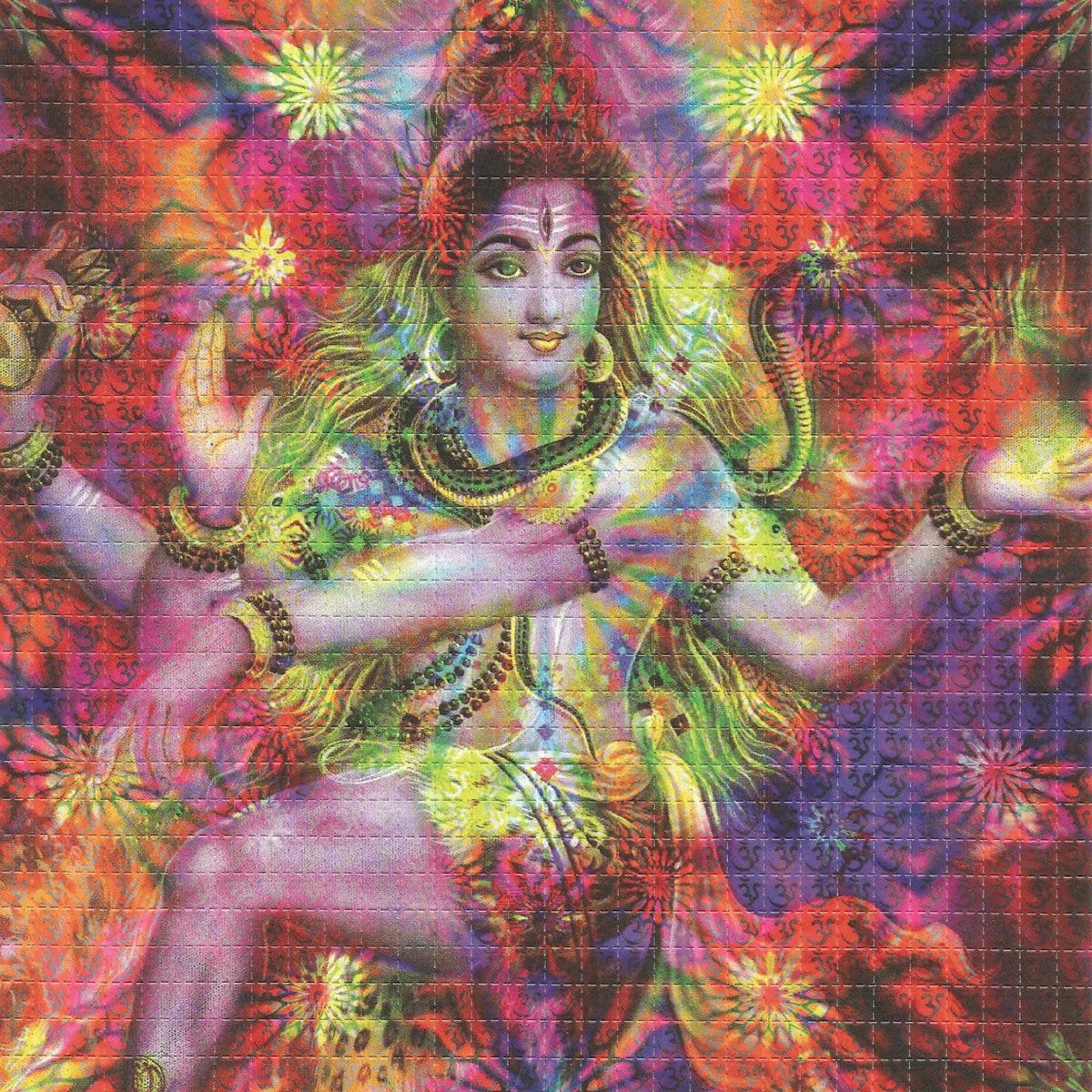
Shiva Acid LSD is an informal name for blotter paper printed with imagery of the Hindu deity Shiva. It is not a distinct LSD strain or chemical formulation. When such blotter genuinely contains LSD, the psychoactive compound is lysergic acid diethylamide (LSD; LSD-25), which has a defined chemical structure described in PubChem. Artwork cannot establish chemical identity, purity, or dose, so analytical drug checking is more reliable than a blotter’s appearance.
| Question | What the evidence supports |
|---|---|
| Is Shiva Acid a strain? | No. LSD-25 is a defined chemical compound, and Shiva describes branding or artwork. |
| Does Shiva artwork indicate potency? | No. A print can be reproduced and dosed differently. |
| Does artwork prove LSD is present? | No. Appearance cannot establish chemical identity. |
| Can reagents measure micrograms? | No. Colorimetric reagents are presumptive rather than quantitative. |
| What provides stronger identification? | Professional laboratory drug checking. |
Shiva Acid LSD History and Lord Shiva Blotter Art
LSD was first synthesized in 1938 by the Swiss chemist Albert Hofmann while he worked at Sandoz Laboratories. Its psychoactive properties became apparent in 1943 after Hofmann accidentally absorbed a small amount. The compound belongs to the ergoline class and is derived from lysergic acid, which comes from alkaloids produced by ergot fungi.
After LSD was prohibited in the United States, it became a Schedule I substance under the Controlled Substances Act, as described in the DEA drug fact sheet on LSD. On the illicit market, LSD has often been sold on absorbent paper, a format also noted by the National Institute on Drug Abuse. Printed blotter designs became a visual tradition of their own. Collectors such as Mark McCloud, who founded the Institute of Illegal Images, have preserved sheets as examples of underground graphic art.
Shiva imagery fits within that tradition. Shiva is a principal deity in Hinduism, often associated with destruction and transformation, and Indian religious imagery appeared on many psychedelic era designs. Interpretations of the Lord Shiva LSD meaning therefore vary. Some reflect an artist’s intent, and others come from later user speculation. No authoritative record establishes a single origin for Shiva themed blotter.
Historical Evidence vs. Psychedelic Folklore
Documented history includes Hofmann’s synthesis, the role of Sandoz, the prohibition of LSD, and the existence of preserved blotter art collections. Claims about specific batches of classic 90s LSD blotters are different. Stories that a certain Shiva sheet was unusually strong, clean, or rare usually rest on anecdote. A surviving sheet can show its design and printing, but it cannot show what a particular batch contained when it circulated. Forum accounts of legendary Shiva batches should be treated as folklore unless supported by laboratory data.
Microdots are a related case. They are small tablets rather than printed paper, so they cannot carry blotter artwork in the usual sense. The phrase Shiva microdot LSD generally reflects informal naming, not a verified product category.
Shiva Acid LSD vs. Standard LSD-25: The Strain Myth
Does LSD have strains? LSD-25 is a defined molecule, not a cannabis-like family of strains. Names attached to blotter prints can identify artwork, branding, or reputed batches, but they do not create chemically distinct forms of LSD.
The strain concept comes from botany. Cannabis varieties differ in genetics and in the mix of compounds they produce. LSD is a semisynthetic molecule, so every genuine sample contains the same active compound regardless of its label. Real differences between samples come from other factors. These include how much LSD is present, whether degradation products or synthesis byproducts such as iso-LSD are present, how the material was stored, and whether the sample contains LSD at all.
Why Identical Shiva Blotters Can Be Chemically Different
A design is only a printed image. Anyone with access to a template can reproduce it, and the same artwork can be applied to paper treated by different people at different times. Two sheets that look identical may therefore differ in several ways:
- One may contain LSD and the other may not.
- Both may contain LSD at very different amounts per square.
- One may contain a different psychoactive substance sold as LSD.
- Dosing across a single sheet may be uneven.
- Storage may have degraded the compound in one but not the other.
For this reason, a Shiva print gives no dependable indication of what a square contains.
Shiva Acid LSD Effects, Pharmacology, and Duration
LSD acts mainly as an agonist at serotonin 5-HT2A receptors, as reviewed in Nichols’ pharmacology review of psychedelics. Reported effects include altered perception, changes in mood and thought, and distorted sense of time. NIDA also notes that LSD can produce rapid emotional shifts, anxiety, and in some people lasting perceptual disturbances.
Dose is measured in micrograms, with one microgram equal to one millionth of a gram. LSD is active at doses in the microgram range, which is why small errors in estimating a dose can matter. Set and setting, meaning a person’s mindset and physical environment, are widely recognized as influencing the quality of an experience, though they do not change the pharmacology of the drug. Tolerance to LSD develops quickly with repeated use, so effects diminish if doses are taken in close succession.
LSD dose and LSD purity are different. Dose describes how much active LSD is present in a sample. Purity describes the chemical composition of the material. Blotter artwork reveals neither, and home colorimetric tests do not reliably quantify either.
On duration, NIDA reports that effects can last up to about 12 hours. The actual length varies with dose and individual factors. Shiva artwork has no influence on how long effects last. Anyone concerned about drug interactions, particularly with psychiatric medications, should consult a qualified clinician.
Is Shiva LSD stronger? No potency can be inferred from Shiva artwork. Identical looking blotters can come from unrelated batches and contain different quantities or substances. A reported microgram amount is a claim unless supported by suitable quantitative laboratory analysis.
How to Test Shiva Acid: Reagents and Drug Checking
What Drug Checking Can Actually Establish
Online discussion often uses the word testing to cover three separate questions.
- Identification asks which compound is present.
- Concentration asks how much of it is present.
- Purity asks what else is in the sample.
Colorimetric reagents address only a narrow part of the first question. Analytical laboratories use methods such as chromatography and mass spectrometry, which separate and identify compounds and can be used for quantification when properly calibrated. Even laboratory results describe only the specific sample submitted, not other sheets bearing the same design.
Ehrlich and Hofmann Reagents
Ehrlich reagent reacts with many indole containing compounds, and LSD has an indole structure within its ergoline framework. A color change is therefore consistent with LSD but does not confirm it, because other indoles, including some tryptamines, can react similarly. The Hofmann reagent is a related colorimetric test with comparable limits. Neither reagent can measure dose or purity.
Can you identify Shiva Acid with a reagent test? Ehrlich and Hofmann reagents can provide presumptive chemical evidence, but they cannot establish exact dose or purity and should not be described as definitive identification. Professional analytical drug checking provides stronger evidence about an unknown sample.
Reagent Test Kits for LSD
Commercial reagent kits differ in formulation, concentration, and instructions. Reaction colors and timing should be interpreted only according to the instructions for the specific kit. Testing consumes a portion of the sample, and a result from one square does not necessarily represent the rest of a sheet. Used appropriately, a kit can offer one piece of evidence, but it does not replace laboratory analysis.
LSD-25 vs. 25I-NBOMe
LSD and 25I-NBOMe are chemically and pharmacologically distinct. LSD is an ergoline with an indole structure. 25I-NBOMe belongs to the NBOMe group of synthetic phenethylamines, which are potent serotonin 5-HT2A agonists. NBOMe compounds have been associated with severe poisoning and deaths, and they should never be treated as interchangeable with LSD. 25I-NBOMe was placed under temporary Schedule I control in the United States in 2013.
Because NBOMe compounds lack an indole structure, they would not be expected to produce the same Ehrlich reaction as LSD. A reagent result alone is still insufficient, since mixtures and unexpected reactions are possible. Anyone who suspects a poisoning should contact Poison Control at 1-800-222-1222 or call emergency services.
LSD Purity vs. Blotter Art: What Artwork Cannot Tell You
Blotter artwork provides no reliable information about purity, dose, synthesis quality, storage history, or chemical identity. Print quality, perforation style, and the reputation of a design are all features of the paper and not of the substance applied to it. A well made sheet can be treated with an unknown compound, and a crudely printed sheet can contain LSD.
The practical point for harm reduction is that no visual feature of a Shiva blotter, however distinctive, should be used to estimate what it contains. Laboratory drug checking, where available, offers the most dependable evidence about a specific sample.
Frequently Asked Questions About Shiva Acid
What is Shiva Acid LSD?
Shiva Acid LSD is an informal name for blotter paper featuring imagery of the Hindu deity Shiva. The word Shiva describes artwork or branding and does not refer to a scientifically recognized LSD formulation.
Is Shiva Acid different from regular LSD?
No. Pharmacology recognizes no chemical form called Shiva Acid. If a Shiva blotter does contain LSD, the active psychedelic compound is LSD-25, or lysergic acid diethylamide.
Is Shiva LSD stronger than other LSD blotters?
No. Artwork cannot predict potency. Different batches with the same design can contain different amounts of LSD or entirely different substances. Only quantitative laboratory analysis can establish dose reliably.
Does Shiva blotter artwork indicate LSD purity?
No. Blotter artwork says nothing reliable about purity, dose, synthesis quality, storage history, or chemical identity. Any popular design can be reproduced by unrelated manufacturers.
How can you test Shiva Acid LSD?
Professional drug checking provides the strongest evidence of chemical identity. Ehrlich and Hofmann reagents can give presumptive results consistent with LSD, but home color tests cannot determine exact dose or prove purity.
Does an Ehrlich reagent confirm LSD?
Not definitively. Ehrlich reagent reacts with many indole containing compounds, and LSD has an indole structure. A color change is consistent with LSD but does not equal laboratory confirmation, because other indole compounds can produce similar reactions.
How long do Shiva Acid effects last?
If the substance is LSD, effects can last up to about 12 hours according to NIDA. Duration varies with dose and individual factors, and Shiva artwork has no influence on it.
What is the difference between 25I-NBOMe and LSD?
The two are chemically and pharmacologically distinct. NBOMe compounds have been linked to severe poisoning and deaths and should never be treated as interchangeable with LSD. Laboratory drug checking is the most reliable way to identify an unknown substance.
Conclusion: What Shiva Acid LSD Really Means
Shiva Acid LSD is a name for a style of blotter art, not a type of LSD. The imagery belongs to the cultural history of psychedelic print making, while the pharmacology belongs to a single compound, LSD-25, if it is present at all. Artwork cannot confirm identity, dose, or purity. Reagents offer presumptive information only, and analytical laboratory testing provides the strongest evidence. Claims about legendary batches or special Shiva strains are best treated as folklore until supported by documented analysis.
Evidence and Sources
- Shiva, Hindu deity, Encyclopaedia Britannica
- Albert Hofmann, Encyclopaedia Britannica
- Lysergide (LSD), PubChem, National Library of Medicine
- Nichols DE. Psychedelics. Pharmacological Reviews, 2016, via PubMed
- LSD research topic, National Institute on Drug Abuse
- LSD drug fact sheet, U.S. Drug Enforcement Administration
- Poison Control, American Association of Poison Control Centers
33 reviews for Shiva Acid – 150µg LSD Blotter Inspired by Divine Consciousness
Add a review
Related products
Price range: $230.00 through $1,300.00
This product has multiple variants. The options may be chosen on the product page 
Price range: $230.00 through $1,300.00
This product has multiple variants. The options may be chosen on the product page 
Price range: $240.00 through $2,600.00
This product has multiple variants. The options may be chosen on the product page 
Jayda Ames (verified owner) –
The laughter was healing.
Melina Travers (verified owner) –
The most beautiful experience I’ve had—period.
Miller Vickers (verified owner) –
It peeled back my mind gently.
Emery Knox (verified owner) –
I felt like I was thinking in colors.
Marisol Kinney (verified owner) –
This is my new go-to for soul exploration.
Azalea Glass (verified owner) –
No ego, no fear—just flow.
Tess McFarland (verified owner) –
Helped me let go of judgment, fear, and control.
Titus Mosley (verified owner) –
A sacred tool for transformation.
Cecilia Pope (verified owner) –
Not just a trip—a return to truth.
Elliot Hamlin (verified owner) –
Every breath felt like a new beginning.
Oakley Harlan (verified owner) –
Completely immersive. Felt like I became the art I was looking at.
Miles Grimes (verified owner) –
It peeled back my mind gently.
Colter Burnett (verified owner) –
A sacred tool for transformation.
Lacey Carver (verified owner) –
This is what creativity feels like.
Ronnie Sutter (verified owner) –
I’ve never felt so free and aware.
Braxton Hodge (verified owner) –
This trip gave me answers I didn’t know I was seeking.
Harmony Rios (verified owner) –
This is what creativity feels like.
Adam Green (verified owner) –
Everything went perfectly from beginning to end.
Brooklyn Mitchell (verified owner) –
Very happy with the attention to detail.
Lilith Chaney (verified owner) –
More powerful than words can describe.
Gabrielle Cruz (verified owner) –
The attention to detail was appreciated.
Rhett Donaldson (verified owner) –
The tabs were professional and delivered in perfect shape.
Zachary Carter (verified owner) –
Great experience with no complications.
Tiana Howell (verified owner) –
I understood people better after this experience.
Harmony Rios (verified owner) –
Each second was a meditation.
Ashley Foster (verified owner) –
Everything arrived in excellent condition.
Bowen Pittman (verified owner) –
The veil lifted—and it was beautiful.
Stephanie Hamilton (verified owner) –
A smooth experience from start to finish.
Nathan Nelson (verified owner) –
Very satisfied with the overall experience.
Billy Reynolds (verified owner) –
Everything worked out perfectly.
Andrew Jackson (verified owner) –
The process was smooth and professional.
Isla Henderson (verified owner) –
Great attention to detail throughout the process.
Matthew Wilson (verified owner) –
Excellent experience overall. Everything was straightforward.